Total Pageviews

Thursday, May 14, 2009

The Inexpensive Electric Car

At some point one of the major car manufacturers is going to wake up to the fact that there is a huge market out there for a simple, no bells and whistles, robust, easily repaired, distinctive but not particularly stylish electric car. This will cause them great problems but will also bring them huge benefits. First the problems.

Such an electric car will cut deeply into the sales of their other models. It will greatly reduce their sales of spare parts such as filters, engine parts, brake pads (most of the braking in electric cars is regenerative) and so forth. In addition if they make this car so that parts from one model fit other models both across the models and across the years, they will eventually pretty well saturate the market. From then on they will have steady but much smaller sales volumes. So why should they bother. Here comes the good part.

They will have an enormous market and the first company that realizes this will cut deeply into the sales of all other car companies. Fortunately, unlike when America dominated the car market, we have lots of other countries making cars. One can picture Tata of India or Renault of France or BYD of China joining the dots and deciding to produce this car.

And just think what it would mean for the environment and our chance of surviving not only as a species, but in a fairly comfortable sort of life style such as we have now. Never mind the reduced use of fossil fuels as you charge this car with wind, hydro or solar power but such a car would reduce the mining of metals, garbage to land fills, degradation of our roads due to leaking fuel and oil, use of lubricants, pollution of our water ways and on and on.

So lets see what sort of car this would be.

First, like those iconic cars, the Model T Ford, Volks Wagen, Deux Cheveaux, and Mini, it would look distinctive (not attractive) and would not change over the years. But this would be more than skin deep. After the initial shake down process to get the bugs out, the inner workings of the car would not change. The same door handles and window winders, the same instruments (how many do you need in an electric car), interior lights, head light bulbs and so forth would fit the first car built and one built 10 years later. Sure there will likely be advances in, for instance, the efficiency of head light bulbs and these will be incorporated but the new bulbs will fit in the socket of any car in the series. And for that matter, if new more efficient electric motors or better batteries are developed, they will likewise fit in any car of any age.

The car will be designed to be very easily fixed by a mechanic of modest ability with a basic set of tools and the excellent manual that will be produced by Time Life books or Readers Digest. These manuals will set an industry standard for beauty and clearness. They will be tested by the tea lady, secretaries and wives of the executives of the car company and if they can't do any necessary repair on the car, back to the drawing board. Either the manual or the car or both will have to be changed. (no fair changing the tea lady)

There will be no warranty on the car. None whatsoever. At first this will be a negative selling point but as people gain confidence in the incredible reliability and robustness of the car, it will become one of the main selling points. Of course the savings from not having a warranty will be passed on in full to the customer. People will then take care of their car from the beginning and not thrash it during the warranty period. Anyone who doesn't want to get his hands dirty will easily find a garage to do any necessary work.

Just as radical, there will be no advertising. Advertising costs money and is built into the price of goods. Fortunately today there is another solution. If you have a really desired, unique product, with the internet, it goes "viral". Initially, the workers in the factory will be sold the first cars. As they drive them around, they will be noticed. People will start to enquire about them. An added benefit of a slow start up is that if there are any bugs that need sorting out, it can be done without the need for huge recalls. Initially, the car will only be sold in New Zealand but with our tourism, as the number of cars visible on our roads grows, we will start to get orders from overseas. By the time the big boys wake up to the fact that there is a new kid on the block, we will have magazines and radio hosts clamoring for interviews and the car will be well and truly launched.

The bumpers around the car will be high tech. Perhaps pneumatic with a pop out valve that absorbs energy by the squeezing of air out of the vent; sort of an all car airbag. The car would be able to take, say, a 10kph bump from any side without damage to the body of the car. Parts damaged by slightly faster collisions will be repairable by bolt on bolt off parts. Crush zones as in all modern cars would help to protect the passengers in more serious crashes.

The battery in this car will be made up of modules of a size agreed to with as many other car manufacturers as can be brought on board. Say a 20 by 30 by 50 mm unit that could be combined in series and parallel to achieve whatever voltage is required and configured to fit any available space(s). The car will be designed around this battery module just as rifles are designed around existing ammunition. And don't forget recycling. The battery must be designed so that it is very easily recycled to get back the minerals in it. An alternate solution would be to adopt the battery of Project Better Place as they have already designed the battery exchange stations.

As soon as technically feasible, solar panels will be incorporated into the body of the car. Technology is being developed so that panels which are not co-linear can all contribute whatever amount of power they are producing to the total without the lower output panels interfering with the higher output panels. Prius has come out with a panel that fits on the roof, between the front and back window which is reputed to give an extra 10 to 15km per day in the sun. A fully clad car might give 30km extra. There is also technology developing which allow windows to produce power from the sun.

A Skunk works philosophy will be adapted in designing the car. The Skunk works is the aircraft design unit that brought us the U2, the Blackbird and the Stealth fighter bomber. Their philosophy is to take as much as they can off the shelf and only innovate where necessary to achieve the desired characteristics in the plane they are developing. In the case of the simple electric car the manufacturer will use the best paint package already developed for long lasting rust proofing, a tire rim size that is most common in the market, a standard socket for head lights, an existing bumper if a suitable one is available, well proven rack and pinion (not powered) steering gear and so forth. Through all the design, durability, range, cost, and ease of repair will be the major considerations. Actually it can all be boiled down to cost except here we are talking about cost in the long term; cost over the life of the car.

I wonder which car company will be the one to break ranks and give us the car we want. If it is an American company, the world is their market. If it is a Kiwi company, America and the world is our market.
Link

Saturday, May 2, 2009

Tanning leather with walnut husks

I have to say, right from the start, I know nothing about tanning hides. My boys bring skins home from time to time from rabbits, Tahr, deer and wild pigs. We have also had some skins from pigs we raise and even a few from an aborted ostrich venture. We have tried some of the methods such as baking soda and kerosine but that seems to me to be more perserving the hide rather than actually tanning it into leather. We have a Tahr skin on the floor done by the baking soda method but I suspect that if it ever got wet and the baking soda washed out of it, it would rot.

We have a large walnut tree which gives us 4 to 6 20litre buckets of walnuts each year and some 15 small trees that have been planted in various places. One year, we left a bucket of unshucked walnuts outside and it rained that night. When I poured the walnuts out on a flat surface to dry, the water was the colour of very strong tea. Tannin, I thought. Perhaps we can tan hides with that.

This year when we harvested the walnuts we kept the husks which had collected on the net and the husks which we had to peel from some of the shells. This husk is fleshy and green when the walnut is growing but by the time the walnut falls, the husk is black and papery.

At present we are in the middle of tanning a catle beast hide (cow for those of you north of the equator) and I will describe what we have done and what we do in the future as time goes on. No idea how it is going to work out so I'll add information as we go along.

We got the hide from a friend the day it was skinned from the cow. It had lots of fat and some meat on it and hair on the outside. One of my boys and I hung it over the rail of our trailer and started to flense it. I can't say we did a very good job. We got off pretty well all the meat but quite a bit of fat was left and I managed to make a couple of holes through the hide. I need much more practice.

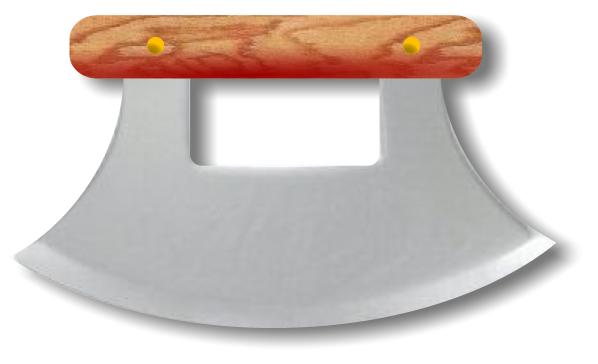
I know Sodium Hydroxide (lye) is supposed to dissolve fat and loosen hair so we put 500g of lye into a bath tub out in a field, with enough water to cover the hide and we pushed the hide around in this solution. We left it there for 4 days, stirring it around a couple of times a day. The initially very flexible hide turned very stiff. After 4 days we turned the hide out on to a piece of ply wood, hair side up and started to scrape off the hair. We used a variety of tools, all dull, including a weeding tool that looks like an eskimo ulu on the end of a rake handle.

Once we had the hair off the hide, we put about 15kg of salt and two feed sacks of walnut husks into the bathtub with enough water to cover the hide. There were also a few handfuls of small walnuts that we hadn't bother to shuck. In went the hide and we stirred it around for a few days. My son decided that this was not a very convenient vessle for the purpose so he removed the top from an oak wine barrel and transferred the whole lot to the barrel. It was indeed much more convenient. Very easy to plunge and stir the whole lot with a stick.

After a few days, the hide started to turn brown with a lovely......well....walnut colour. Within two weeks the penetration was about a fifth of the way in (seen by cutting a sliver of hide off the edge. We decided to try something

On a fairly dry day, we pulled the hide out of the barrel and draped it over the barrel. The idea was to let it dry so that when the hide was put back, it would suck in more of the tannin. We will continue this way for a while, until the hide is brown through. It actually feels a little leather like already (wishful thinking?).

Latest development. My son made up a flensing rig. It is a 200mm diameter turned log of about 2m long with a couple of lets set into one end. The log thus sits with one end on the ground and the other end at about belly button level. He then sharpened a 40cm long mower blade along the edge. The hide is draped over the log, you lean against the upper end of the log and scrape away from yourself with the blade. Seems to work a treat. We are reflensing the cow hide and allowing it to dry somewhat as we do it. Where the leather is thin, it is dark brown all the way through. The rest is dark about a fifth of the way through. Will immerse it again in a couple of days and the dry leather should suck up more of the tanning liquor.Link

Thursday, April 16, 2009

The Mt Cass Wind Farm

Permission has just been denied for the construction of the Mt Cass Wind farm in N. Canterbury, New Zealand. After reading the report from the Wind Farm hearings, I have the strong impression of a wide consensus amongst a large number of highly qualified experts that the impact of the wind farm will be minimal. Moreover, with the proposed fencing, trapping of pests and a great reduction in grazing, it was considered highly likely that there would actually be an improvement in most areas of contention. Be that as it may, there are wider issues.

There is a body of opinion, supported by research, computer models and paleontology that we are close to causing a major, sudden climate shift. That is to say, a sudden change when we reach the threshold which initiates a number of run away positive feed backs (clathrate break down for instance). This opinion is held by the majority of the most prominent scientists in the world today, not the least of which is Jim Hansen, the chief climatologist at the Goddard Space Agency of NASA

And no, I don't think that our wind farm by itself will reverse climate change. However, I believe one should act as you would like others to act. I don't throw paper on the street, not because I think that my little piece of paper would make any difference but because if everyone did it we would be knee deep in garbage. I believe positive actions should be based on the same principle. If we give any credence to the climate change theory, then we very much hope that others will install wind farms to reduce our carbon foot print. We should play our part and not expect others to save us while we do nothing.

The threat of climate change has elements of what a rock climber would call exposure. The climb may be easy or hard but there is a huge drop below so the consequences of a fall are serious. If indeed a climate shift occurs, the consequences are serious indeed. Any flora or fauna that we think we are protecting on the Mt. Cass ridge will likely perish. That will be the least of our problems. The present agriculture of the Waipara Valley which is on the edge of wine grape tolerance, will collapse along with great swaths of the agriculture of the world. Yes we will learn what alternative crops to grow both locally and world wide but in the mean time millions will starve.

You may find it difficult to believe in the possibility of sudden climate change. You are not alone. A small but significant proportion of the scientists of the world are also climate change sceptics and they could be correct. Science is not a consensus process. What is right is right, and times without number in the past the minority has been correct so there is a possibility that the sceptics are correct and we won't experience a sudden dramatic, disasterous change in climate in the near future. However, there are other reasons for wind farms which are far more immediate, necessary for New Zealand and self evident

Our New Zealand Balance of Payments is catastrophic. We spend much more money than we earn as a country. The importation of energy in the form of liquid fossil fuel is a significant contributor to this sorry stare of affairs. President Obama has understood the implications of this problem for the USA and is acting accordingly. His aim is to make the USA independent of overseas energy. As a small country we are far more vulnerable than America. We have however a huge advantage over the Yanks. We already generate something like 50% of our energy from hydro and another 10% from geothermal. And.... we have very good wind resources If we develop them

Just as an aside with regard to our economy. Money itself has no value. It is an enabler. It is like the oil in a car. It does no good sitting in the sump. It only has value when it circulates. Money passes from hand to hand in one direction as services and good pass from hand to hand in the other direction. Money symbolizes the worth of the good or service given. When we send money overseas to purchase energy, it is like having a leaky sump gasket. Eventually enough oil leaks out and the engine seizes up. Similarly with money. Money, however, which is used to buy power from a local provider is used by them to purchase Kiwi goods and services and these providers in turn buy goods and services from other Kiwi Businesses. The money circulates and enables our economy. We need to buy our energy from a local producer rather than from an overseas oil giant. We need to get our economy into a positive balance of payments. To continue the analogy, we need to get New Zealand into a situation such that more oil is coming into the engine than is leaking out. For a home, business or country, the alternative is poverty.

There has been much controversy recently over why the price of our electrical power is increasing at such a rate. Logically, with our already paid for hydro installations with our geo-thermal power, our cost of electricity should be pretty stable. With our huge huge wind resources, our power costs should stabilize and even come down in real terms. We just have to develop them. Energy is a significant component of all manufacturing and agriculture and we are very dependent for our economic well-being on exports. Having a stable or decreasing energy cost component in our manufacturing and agricultural goods gives us a distinct advantage on world markets. If we are to survive in an ever more hostile, unstable world economy, we need every possible advantage.

Anyone watching the news over the past few years will be well aware that many many of our businesses have fled overseas to more favorable economic climates and to where labour is less expensive. The economic climate can be improved by our government if she has the will to do so. There is not much we can do about labour cost but consider this. In businesses in which few people are needed to produce goods and in which energy (to power machinery) is paramount, cheap labour becomes less of a factor in the bottom line. For all industries in this position, cheap energy will be the deciding factor in whether the business stays here or locates overseas.

And finally, practical electric cars are about to reach the market. At last count there were 9 serious car manufacturers about to put electrics or hybrids on the market. Note that such serious players as California and Israel are reticulating their areas with vehicle charging outlets and battery exchange stations in anticipation of this development. The development of the electric car helps us in two ways. First it reduces our energy imports, directly improving our balance of payments. Secondly, by playing our part in reducing the demand for liquid fossil fuels, it ensures that the price of fossil fuels will never rise again as it did last year. Simple supply and demand. Our trucks will never be able to convert to electricity and keeping the demand for oil low ensures that the liquid fuel that they run on is affordable and their businesses are viable.

One other consideration is applicable to the people of the Hurunui area. We own, in some sense, our electrical company, Main Power. Don't ask me to explain the details. I do not understand them. However, if they make a profit, you may have noticed a nice return on your electrical bill. At present Main power is a power distribution company but with a wind farm, they become a electricity generation company. Instead of putting out money to buy power which they sell us, they will be producing power for us and selling the surplus. There are no guarantees but I would suspect that our rebate might increase once we are generating power within the Hurunui.

In summary
A large number of our most able Kiwi experts have voiced the opinion that the ecological impact of the wind farm will be minimal and with measures which the Power company has committed to (offsets), could well be positive

If climate change does unfold as predicted by a wide range of the worlds most serious scientists, the implication for the world in general and New Zealand in particular will make the combined disasters of the first world war and subsequent flue epidemic pale in comparison. It may not happen. Some scientists are still sceptical about the predictions and they could be right. The consequences if they are wrong will be apocolyptic. Having our own in-house electric generation will go some way to mitigate the effects of climate change.

The economic effects on our disastrous Balance of Payments of replacing imported energy by home generated energy are too obvious to need further explanation

As electric cars come on line we must be generating the power to charge them from internally generated renewable sources. Charging our electric cars using imported fossil fuel largely defeats the benefits from this development.

There is a reasonable chance that we, in the Hurunui, will be paying less for our power if Main Power becomes a generator of electricity.

Saturday, February 28, 2009

Willows in braded streams

New Zealand's South Island has a rapidly rising range of mountains close to it's West Coast which is caused by the Australian plate in the West diving under the Pacific plate. In South Island, a great deal of material is shed from the mountains to be carried toward the east coast by streams and rivers. Wide plains have been formed by this material as braided rivers fill up, jump their banks, form new channels which in turn fill up and so on. The rivers work like a grouter spreading material back and forth across the land between the mountains and the sea.


All across the flood plains these braided rivers exist. They are seen most prominently as you land in Christchurch airport from the north. In many places, willows have been planted in the streams and they have spread upstream and down. There is considerable controversy with regard to the benefit or otherwise of the willows.

Some people feel that they cause flooding, that a flood can wash down trunks to pile up on the upper side of bridges and cause them to fail, that they take up water which could otherwise be used by farmers and that they are an eyesore. Some people seem unhappy that the streams aren't the way they were when they were children as if any change from the childhood situation is by definition bad.

There is a committee to try to enable various uses of the river, sometimes conflicting, without one interfering too badly with another. Some of these uses include:
a) people with farms along the stream who own the steam bed to the centre of the stream,
b) rabbit hunters,
c) gun sighters,
d) people collecting wood for their wood burners,
d)fishermen,
e) hikers,
f) 4 wheel drivers and
g)fossil hunters.

On a recent trip spread over two Saturdays from the mouth of the river to near the top an interesting fact came to light.

On the trip we had farmers adjacent to the stream talk to us as we reached their farms. Many of them remember fondly around the 50's when the Waipara was an open braided river. Many of them mentioned that they felt that the willows endangered the bridges since washed out trunks could collect against abutments and lead to their failure with the pressure of water. Almost all noted that back around the 50's we had some serious floods but since then there haven't been any bad floods. This was attributed to a lack of serious rainfall events since then. I wonder.

It would be most interesting to collect rainfall figures from local farmers and to collate them for the past century. Some farmers have records going back even more than a century. I have a strong suspicion that we would find rainfall events just as serious over the past 50 years when willows expanded their territory to fill the streams as over the previous 50 when there were few if any willows. If that turns out to be the case, the only obvious explanation is that the willows have reduced flooding. Quite a reasonable hypothesis when you think about it.

Willows roughen the stream in a macro sense. With willows there is more friction for the flowing water. The water has to burble and swirl past tree trunks and as it slows, it spreads out over its flood plain. All this slows the flow and lowers and lengthens the flood peak. Could this be the reason that flood peaks have been much less serious in the past 50 years than in the previous 50 rather than the lack of rain. Only collating rainfall events will clear up this point. While we are at it, lets look at some other likely effects of the willows.

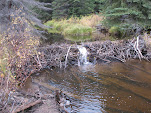
Just like when there are beaver dams in a stream which slow down the flow of the water to the sea, with willows, the water will be held longer on the land. The Canterbury plains are one great large alluvial plane which is ideal for holding ground water. The slower a stream flows, the more time there is for the recharge of this ground water. Beavers do this in aces. It seems reasonable that if the willows are slowing the flow of the water to the sea and spreading it over a larger area that they will have the same effect of directing more water underground. Incidentally, if this is a significant factor it may in part help to explain lower flood peaks. More water is going underground. Underground water, of course is very much slowed in its flow downhill and is protected from evaporation. All good for people using well water.

In New Zealand we still have a nature that can supply those of us who are willing to make the effort with some of our daily bread. One can still get a rabbit for the pot with a modest effort or a deer or pig with a bit more effort. The willow streams provide fire wood. Here there is an interesting dichotomy. The same people who decry the willows seem to resent someone who chops some down for fire wood. Go figure. Envy?? I don't know. Everyone on the trip I mentioned above seemed to be uncertain of the legal situation. Most thought that anyone could cut down whatever they wanted. Others thought that it was only OK to take dead trunks. Whatever the case, it is a great resource for rural New Zealand and willows coppice and grow very fast so a reasonable amount of harvesting could be done with very little reduction in the standing crop. An ideal situation one would think. How about the use of water by the willows. Willows are very thirsty trees which may help to explain why they do so well in stream beds.

In a Nor Wester, water which transpired from willows on the Eastern plain will most likely be swept out to sea and lost to New Zealand and in this situation, willows could use up some water that would otherwise be available for use. Perhaps balancing this is if the Nor western is humidified by the trees, there may be less evaporation from cultivated fields. However, I think we are clutching at straws with this line of argument.

When the wind is blowing from the East, by contrast, rising up over the alps and releasing its water, the situation is different. In this case all the additional water transpired into the westward moving air should be precipitated out to flow down the stream again. It would be interesting to quantify these effects to see if they are significant. How about the effect on fish.

Trout have been introduced to many of our streams and are found in pools all along the streams. Trout go into riffles but tend to live in pools. Anyone who has walked a stream with and without willows will know where the pools are. Clumps of willows hold the gravel together, the current washes around the roots and hollows out pools. A willow filled stream is a series of pools connected by riffles. A stream lacking willows in our area is virtually all riffle. The only place you find pools in a stream without willows is in the higher reaches in the foot hills where the river has hollowed out pools in the rock. On the out wash plain, there is virtually no deep slow flowing water until you get almost down to the tidal zone. A paralell situation exists in streams on both the east and west coasts of North America. Here it is the presence of large logs in the streams which has a similar effect of slowing the water and causing pools to form. It has been observed that streams with "big wood" in the water are far better for both spawning and rearing of salmon.

Willows have another interesting effect. Willow leaves have little red bumps on them. These are willow grubs. Fishermen know to tie lures which mimic these in the willow grub season. It is any ones guess how much food the willow grubs contribute to the trout in the stream. Another interesting subject for research and quantification.

As humans we have a tendency to notice the bad things that happen. We will note when a storm damages our property. We don't take any special note when no damage occurs along with a rainfall event. We notice when a stream floods and takes out a bridge. We don't really notice when there are no floods and the bridge sits there perfectly happily and does what bridges are supposed to do. We almost need a disaster to emphasize what is real. If, for instance, someone could wave a magic wand and eliminate all the willows from one of our river systems, we would then see what the results are. If we had severe flooding and damage to property, we might then appreciate the role of the willows. Baring such a magic wand, the only course we have is to use records of rainfall and flood peaks where they exist and to try to deduct the effect of the willows. This is much less sharp and clear and is always open to interpretation but it is what Humans do well if allowed to. Before we condemn willows, we should embark on a few studies to try to quantify what their role actually is.

Thursday, February 19, 2009

Malthus, pyramid schemes, starvation and birth control

Malthus, the much maligned, stated that populations increases exponentially; ie 1,2,4,8,16 ......, while food production increases arithmetically; ie 1,2,3,4,5 ...... In reality, populations such as humans which lack predators are limited by starvation. A possibly more useful way of stating the principle, with apologies to Parkinson is that Population expands to use up any advance in food production*.

Richard Dawkins on P391 of his excellent book The Greatest Show on Earth stated it succinctly and I quote.  "If there is ever a time of plenty, this very fact will automatically lead to an increase in population until the natural state of starvation and misery is restored."  One would hope that humans who, at least individually, show a modicum of foresight might learn to show collective foresight.

Malthus didn't count on various technical advances we would make in food production ever since we left the hunter gatherer life style but was completely correct. Each increase in food production has been used up by population increase. The recent, much vaunted green revolution which started around the 1960's was the latest of such jumps in food production and gave India and some other countries, a few decades without starvation. A recent estimate is that there are now 700m more people on earth due to this latest green revolution.Link
So with a few delays, Malthus has proven to be completely correct.


Note (Sept 2019)  In his excellent recent set of programs, David Attenborough states, as the film shows the earth rising over the horizon of the moon, that since we landed on the moon 50 years ago, the world population has more than doubled.  

What he didn't know is how our knowledge of contraception would advance. It has often been observed that when populations reach a fairly high level of economic well being, birth rate falls. Everyone is mystified by this and explains that women are delaying having babies as they pursue a career; people are not having any children so that they can enjoy the fruits of their labor and so forth. 

No argument there but how do you think they are avoiding having children. Abstinence??? I don't think so!! Abstinence went out of fashion more than half a century ago. One of the reasons for not having children (not often stated) is so you can enjoy non-abstinence uninterrupted. The simple fact of the matter is that with a certain level of economic development, contraception becomes affordable. 

The proof of this is a number of countries which have made contraception affordable before they achieved a western level of development. They did it by subsidizing contraception and lo and behold their birth rate fell. Of course, with birth rate under control, economic development is much more likely. There are less mouths to eat up  advances in productivity.

While we are at it, lets look at the most recent  green revolutions that began in the 60's. The Yield of a number of grain crops was greatly increased. Some say tripled. This production was achieved by careful selective breeding but the new varieties only fulfilled their potential with irrigation, fertilizer, herbicides and  insecticides. Despite being free of starvation for a number of decades. the change was not an unmitigated success. Part of the dark side has been:

   a) mining of the water table to provide water for the new, highly productive varieties, lowering it disastrously, notably in China and India,
   b) accessing deeper layers of water which are contaminated with arsenic, notably in Bangladesh and parts of India,
   c) Pesticide pollution of aquifers, which along with arsenic contamination has led to a greatly increased incidence of cancer, especially in Bangladesh and parts of India
   d) salination of soils, rendering them unfit for agriculture.
   e) more land in production pushing nature and her free provision of food, fuel, fibre medicine waste disposal and clean water further into a corner*.

*(you would have thought that land would have been taken out of production due to higher yields.- go figure)

   f) production of greatly increased grain yield but with less vitamins and minerals per kg of grain than in traditional varieties resulting in nutrient malnutrition,
   g) huge loss of a genetic diversity as locals switched to the new varieties, abandoning their traditional varieties.
   h) the loss of small farms to large land owners as the peasants borrowed to buy fertilizer, got into debt and defaulted on their loans.
   i) an increase in population of about 700,000,000 mouths that are only with us because of this most recent green revolution.

We really have got to the point of diminishing returns. Every advance in agriculture production makes us poorer and poorer. It makes us poorer by:

*decreasing the availability of food, fuel, fibre, clean water and clean air that we obtain gratis from nature as more land is put into agriculture for profit.
*decreasing the ability of nature to process our wastes safely
*decreasing the variety of foods available to us as areas which once grew fruit and vegetables are given over to the more profitable growing of grain crops for cash.
*reducing the space we have to live in as we are crowded by more and more people.
* facilitating diseases of crowding that we would otherwise not have had and increasing the possibility that a pandemic will be much more severe.
* pushing us closer to a disastrous collapse in our Gia support system as we test the theory of sudden climate change with gay abandon.

There is talk now of the need for a second (actually more like the 100th) green revolution, this one based on splicing new genes into varieties of grain. This will probably work and will further increase production. As has happened since agriculture began, population will increase until the new advances in production are used up. In the mean time all those extra people will further degrade the natural environment that we depend on for our existence.

If you want to see the other likely consequenses, go back and read what resulted from the 60's green revolution.

Note: It has been reported that a number of genetically changed plants caused organ failure when fed to rats.

Extra agricultural production only pushes us closer to the brink. The last thing you want when you are standing at the edge of a cliff is a great leap forward.

As was mentioned above, since the 60's it has been noted that when a country achieves a certain level of prosperity, birth rate falls. This is a modern phenomenon. It didn't happen anywhere in Europe before the last century. Britain's birth rate remained high all through the industrial revolution with well off Brits having as many children as their poorer cousins. Think back to your grandfather and great grandfather's family. How many children did each of your ancestors have as far back as you can trace. The difference, as previously mentioned,  in the 'modern era' is contraception.

Contraception has been available at least from Roman times, but it only became truly effective when it was modernized and put into the hands of women. Both the pill and the effective IUD (as opposed to previous less than adequate models) only became practical from about 1960 onward and they have had a huge effect in countries where they are affordable either because the economic level of the population makes them so or because the government has subsidized them.  In both cases, birth rate has fallen precipitously. Ignoring immigration, which is another story, most European countries have decreasing populations. What a success - and they are fighting against it tooth and nail. That is also another story.

I lived in South Africa for 15 years, much of the time in the homeland of Gazankulu.  Despite an educational level of around grade 2 amongst many of the women, they would come into the clinic for their 3month jab to keep them from getting pregnant.  There is a vast difference between not having a formal education and being stupid.  These women were clever and fully realized the advantages of having less children.  Their men were not so smart.  They would have beaten the women if they knew what was happening.

We must learn to live in our respective countries with a stable and then a reducing population. This , of course will result in a population in which the age distribution curve is heavily skewed toward older people. We have to work out ways to live and live well in such a society. For far too long we have been living in a pyramid scheme in which each generation had to be larger than the previous one. 

This was necessary so that there were enough young people to fill the more menial jobs before they rose up to higher levels.  It was also necessary in order to have enough working people to provide the pensions of the retired. This, quite frankly, is a stupid system.  The pension contributions of the working public should go into buying up the means of production.  Pensions are then paid  from the dividends from these companies and even from selling the shares to presently working people.  The elderly become a boon rather than a drain on the economy as they spend their pensions.  

Our system can't go on.  We must stop importing so-called cheap labor to fill the positions of the children we are not having. In the long term, cheap labor is very expensive.

Note that people are now worried about robots taking over our jobs.  Surly these two phenomenon fit together beautifully.  We have less jobs available and less young people to fill the positions.  The critical factor is taxing  the companies who are producing their goods by automation instead of by people.  Too many large corporations now get away with paying little if any tax.  If collected this tax money then should go to the unemployed, whether young or pensioners.  The companies should also face up to reality.  If people have no money they can't buy the goods they produce by automation.  It is in the interest of the companies to have money in the pockets of the people.


Pyramid schemes collapse and the mini collapse we are going through at present (2008ff) is nothing compared to what is to come if we keep increasing agricultural production rather than concentrating on reducing population. If we continue this way, we will soon have an answer to the question of who is correct regarding sudden climate change. If the climate change sceptics are wrong, we may very soon achieve the lovelock number.

Note (2017) Get the book by David R Montgomery, Growing a revolution


* Starvation killed an estimated 50m Chinese over the 19th century, 20m Indians in the latter half, 1m Irish between 1845 and 1852, 1/3 of the population of Ethiopia from 1888 and 1892 and 3m in Bengal in 1943. Imagine the effect of the failure of the wheat and rice crop for just one year due to sudden climate change or even from a mega volcano one spring. (link)

** If you double your population or your GDP, you pretty well double your use of water, wood and minerals, double your production of pollution and garbage and double the area of land you cover in buildings.  You continue to eat into unoccupied land, you eliminate all the benefits unoccupied land brings to the human population for free. Below is a table of how long it takes to double all of the above as a function of yearly GDP growth rate. You can calculate it for yourself with a high-school calculator if you put in (for 3% growth rate, for instance) log 2/log1.03.  The '2' is a doubling time, 1.03 is the interest (growth rate).

Annual growth and number of year to double the economy

1%
70 years

2% 35 years
3% 23 years
4% 18 years
5% 14 years

How many countries in the world do you know that can find twice the water, wood, minerals and produce twice the pollution and garbage and still have any quality of life.  The only two I  can think of off hand are Canada and New Zealand.  We don't want to live like this.
Link