Total Pageviews

Saturday, March 25, 2017

Bottled Water

We are in the middle of a bit of a stramash in New Zealand regarding bottled water.  Some folks are all a twitter (jealous?) of companies which are bottling this natural resource and selling it overseas.  I sort of see where the nay-sayers are coming from.  Bottling water is a license to print money.  What the complainers want to do is to put a price per liter on the water these companies use but this is the thin edge of the wedge.  If you charge these folks, why not other users such as industries and agriculture for their water use.  This would be a complete can of worms for an agricultural export country such as New Zealand.

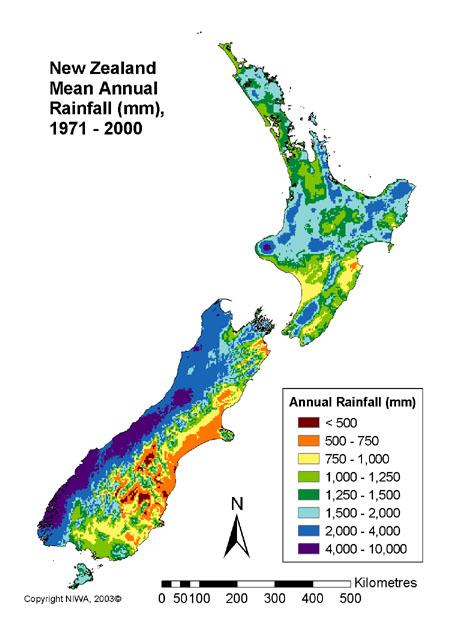
Just to put things in perspective, New Zealand is not a desert.  We have some dryish places like the East Coast of South Island where I live but even here we have above 500mm per year. The West coast of South Island, is quite literally a temperate rain forest.


So let's first look at how much water  various industries use.  For bottled water each bottled liter uses 1.39liters of water, for soda, 2.02, for beer 4, for wine 4.74 and for hard liquor, 34.55 liters.  Note that this is only for the processing.  It doesn't include, for instance, the water needed to grow grapes or hops or the water to produce the bottles .  The table below gives some of the agricultural figures.

Typical values for the volume of water required to produce common foodstuffs

Click heading to sort table. Download this data
Foodstuff
Quantity
Water consumption, litres
Chocolate 1 kg 17,196
Beef 1 kg 15,415
Sheep Meat 1 kg 10,412
Pork 1 kg 5,988
Butter 1 kg 5,553
Chicken meat 1 kg 4,325
Cheese 1 kg 3,178
Olives 1 kg 3,025
Rice 1 kg 2,497
Cotton 1 @ 250g 2,495
Pasta (dry) 1 kg 1,849
Bread 1 kg 1,608
Pizza 1 unit 1,239
Apple 1 kg 822


Wednesday, March 8, 2017

Interglacials, Phosphine and Diphosphane

As usual in my blogs, this theory is a bit of speculation; a hypothesis or if you like brainstorming so read it as such.  

First let's get the terminology right.  We are in the middle of an ice age which started some 2.5million years ago. It is called the pleistocene although some define the Plistocene as having started 1.8m years ago.   Within this ice age have been approximately 30 glacials and an equal number of interglacials.  At present we are in the Holocene interglacial and the previous one, centered about 125,000 years ago, was the Eemian (given different names by various scientists).  The Holocene Interglacial started about 20,000 years ago by definition, at the peak of the recent glacial but melting really got underway about 11,500 years ago.

Not to get too precious about this but we have to decide what words we are going to use for which periods. It is confusing to the layman and doesn't aid in informing the general public.  Above is the way I learned it but any terminology would be fine with me as long as we all agree on what we mean when we say 'ice age".  If the term Ice Age is to be used for the glaciation between the Eemian and the Holocene, then we have to have a new term for the 2.5m year period of warm and cold we have been experiencing.

What is problematic, is to explain is why Carbon dioxide rises steeply as the ice melts and oddly enough seems to follow the ice melting rather than leading it.  The most accepted theory today has to do with the ocean circulation powered by the production of heavy, cold salty water at both ends of the earth and the relationship between the temperature of the surface of the sea and the amount and speed it can take up Carbon dioxide (or release it) from/to the atmosphere.  The basic physics is pretty simple and undeniable.  Cold water can hold more Carbon dioxide than warmer water.  The chain of cause and effect after this is a tad more tenuous.

The following hypothesis in no way negates the ocean current/water-temperature theory.  It is just  suggesting another source of Carbon dioxide as the ice melts.

Regardless of the source, what seems to happen is that as the ice begins to melt, Carbon dioxide rises a little later and  the released Carbon dioxide then accelerates the melt etc. etc.

Previously, I  hypothesized that over the approximately 100,000 years that ice covered large parts of the continents, a huge amount of methane clathrate would have accumulated under the ice.  Methane clathrate forms when methane is in contact with water under a pressure equivalent to about 300m of water or more.  The cooler the temperature the less pressure is needed but under sufficient pressure a clathrate can exist even up to 30 degrees C.  This higher temperature clathrate is not really relevant to our discussion since the bottom of deep ice sheets tends to be around zero degrees C so clathrates will begin to form when the ice reaches, say 400m or so.  The extra depth is necessary since the top 70m or so of the ice tends to be firn (porous snow which is turning into ice due to the weight of snow above it) which is lighter that ice.  All above figures are approximate.

Incidentally, there is also a carbon dioxide clathrate so any Carbon dioxide coming out of the ground to meet the bottom of a deep glacier would likely form a clathrate as well.  The formula for Carbon dioxide clathrate is thought to be CO2.6H2O*

* In a Carbon dioxide saturated clathrate, there is a sixth of a mole (gram molecular weight) of Carbon dioxide for every mole of water.  So a mole of water (18g) could contain 7.3g of carbon dioxide(a sixth of 44g)  In a liter of saturated CO2 clathrate you would have 407g of CO2.  This is 9.26 moles of Carbon dioxide.  Since one mole of any gas occupies 22.4liters at STP, then one liter of methane clathrate at STP would release 207 liters of the gas if it disintegrated.  Pretty amazing, no? The formula for saturated methane hydrate is CH 4 · 5.7H 2O.  Work out what volume of methane could be released from one kg of water ice saturated methane  to form methane hydrate.

 
The source of the methane includes organic material buried by the ice, which when deprived of oxygen decays by methanogenesis.  Other sources are deposits of coal, oil, tar sands, natural gas and shales.  Since an accumulation of ice tends to push down the land  approximately a third of the height of the ice (ie a km of ice will depress the land a third of a km) a sort of natural fracking may occur.  In other words,  cracks could well be opened up which would release gas that had been capped by layers of impermeable rock. In addition there are methane seeps all around the world which would create clathrates under ice without any need to invoke the cracking of the earth under the weight of ice.

I'm not sure what the composition of "swamp gas" is but when you operate a biogas generator, the composition of the gas is approximately 70% methane and 30% Carbon dioxide.  If this is similar for organic material breaking down under an ice sheet then both CH4 and CO2 clathrate would accumulate.

I also hypothesized that since the ice at the height of a glacial would be pushing  into areas too warm for ice to form, it would only need a nudge from the Milankovitch cycle to start the melt.  If sufficient melting occurred then enough  methane would be released to produce a negative feed back and accelerate the process.  Hence the transition into an interglacial.

Note that the greater the ice sheet, the more unstable which may explain why every Milankovitch nudge didn't cause an interglacial in the latter half of the present ice age. Apparently it was necessary for the ice sheet to be really big and hence really unstable.

When I suggested the methane theory to a number of scientists, they assured me that such an outpouring of the very powerful greenhouse gas, methane, would appear in the ice cores from Greenland and Antarctica.  Further they said that there is no evidence that methane converts to Carbon dioxide within ice bubbles.  When the analysis was done and no methane signature was found.  I argued that methane has a half life of about 7 years and so would disappear rather rapidly and the Firn layer is some 70m deep and so gas exchange would occur through this layer, softening the edges of the signature.  I was assured that there still would be a methane signature and none was found.

So,,, what if the methane ignited as it was released from under the ice.  One could suggest lightening as an igniter but this seems rather unlikely and once the methane is sufficiently diluted in the air, it is no longer ignitable.  Methane will ignite when it is between 5 and 15 percent of the air.  Of course pure methane will ignite at the edges where it is mixing with the air, just like happens in your gas hob.   If it came out in sufficient quantities and with sufficient velocity, it would produce its own mini lightening and ignite but this too seems to be somewhat far fetched to explain the ignition of all this methane from all sources.

No, the methane, if it is ignited and thus is responsible for the increase in atmospheric carbon dioxide, it has to be ignited as it enters the air before it has been diluted too much to burn and it needs a source of ignition that it carries with it.

Then I remembered phosphine (PH3)  It is also produced by the rotting of organic material in swamps along with diphosphane (P2H4).  Methane is the main component of swamp gas.  These two phosphorous compounds ignite on contact with the air and would ignite the methane.   This phenomenon is observed around the world in swampy areas. A common name for this in English is Will o' the Wisps.

From Wikipedia (Sorry, links don't work.  They work in the original article)
In modern science, it is generally accepted that most ignis fatuus are caused by the oxidation of phosphine (PH3), diphosphane (P2H4), and methane (CH4). These compounds, produced by organic decay, can cause photon emissions. Since phosphine and diphosphane mixtures spontaneously ignite on contact with the oxygen in air, only small quantities of it would be needed to ignite the much more abundant methane to create ephemeral fires.[32] Furthermore, phosphine produces phosphorus pentoxide as a by-product, which forms phosphoric acid upon contact with water vapor. This might explain the "viscous moisture" described by Blesson.

All this is great but leaves a huge number of questions unanswered.  Since two ice sheets are in the process of disintegrating at present (West Antarctic and Greenland) we may see evidence for or against this hypothesis as the ice melts.

Questions:
1/ Are there indeed large amounts of methane (and Carbon dioxide) stored under the ice sheets as  clathrates.

2/ Do these deposits contain phosphine and diphosphane.

3/  Has anyone observed a  Methane coming from under an ice sheet, say, when a river appears from under the ice and which therefore exposes part of the bottom of the ice sheet to atmospheric pressure. (low pressure allows clathrates to break down)

4/  Has anyone ever observed the spontaneous ignition  of methane (other than above swamps where it regularly occurs).  Note that in daylight, a methane flame is almost invisible.

5/  If there is phosphine and diphosphane in such methane deposits, what happens to it as methane plumes rise through ocean water.  Is it scrubbed out or does it rise with the methane.  The composition of the gas from the ocean bottom as it leaves the water and enters the air could be quite different from an outpouring of gas on land. For instance, if a mixture of methane and Carbon dioxide bubbles were rising through a column of water, likely the Carbon dioxide would be scrubbed out.  It would, though, show up as a decreased alkalinity of the surrounding sea water.  I don't know what the relationship is between water and phosphine and diphospane.

To increase the credibility of the above hypothesis for the source of at least some of the carbon dioxide that is seen in the atmosphere as the ice sheets melt, we would have to see a similar phenomenon with the presently disintegrating ice sheets.
Wednesday, February 22, 2017

Freezing the Arctic with Wind Turbines

I have just read the most abysmally stupid idea for combating climate change.  Some 'professor' proposes to put some 10 million wind pumps all over the arctic ocean at a cost of trillions of dollars to pump sea water onto the ice where it will freeze and thicken the ice.

Leaving aside the difficulty of building and maintaining anything which is floating amongst the ship crushing ice flows in the Arctic, how about putting all these wind turbines on land and off shore all over the world to generate electricity and replace fossil fuel use.  Use some of these trillions for energy storage systems as well and promote electric cars.  Attack the source of the problem, not the symptoms.

Besides, when surface sea water freezes naturally, it produces fresh water ice.  The salt is rejected, forms brine which sinks to the bottom of the ocean.  As heat conducts through the ice into the atmosphere, more fresh water ice is frozen to the bottom of the existing ice and more brine is produced.  This fresh water ice is strong and melts...well at the freezing point of ice.

If you pump sea water on to the ice where it freezes, it will be full of salt.  That slushy weak ice will melt out rapidly when spring comes and will likely melt out the underlying fresh water ice just like when you put salt on an icy sidewalk.

Add to that, even if this hair brained idea did work, what would the effect be when we are up to 500 or 600 ppm CO2 and the funds ran out at the next economic crisis (none of the fundamentals were changed by the Obama presidency) and the first item cut from the budget is maintaining all these wind pumps in one of the harshest environments in the world.

This whole idea reminds me of the ambulance at the bottom of the cliff type policy that we use with our refugees.  Instead of eliminating the source of the refugees, we spend huge amounts of money trying to care for them.  They don't want to be in our strange (to them) land.  They want to be in their homes amongst their friends.

To stop the creation of refugees, the next time someone decides to start a completely unjustified war in someone else's country,  the whole world should put full sanctions on them.  Yes America and the UK, I am talking about you.

Even worse, when you refuse to come to the party and reduce your carbon pollution, once again sanctions should be imposed until you wake up.  Here I am only addressing the US.  The UK is making a pretty reasonable fist of reducing their carbon emissions.

This ridiculous idea of trying to artificially create more ice is  philosophically, practically and scientifically fought.  Get real and address the cause.  Use these trillions to get us free from fossil fuels.

Saturday, February 11, 2017

Australian Air Conditioning

This blog was triggered by an item on our NZ National Radio when they crossed to Kerry-Anne Walsh in Australia.  She reported that there is a heat wave in Aus with temperatures reaching and even exceeding 45C.  At the same time, Kerry-Ann reported that the Ausi electrical generation network can't cope with the load so they are instituting rolling load shedding* just when the people most need their air conditioning.

*Power grids are set up to shut down sectors when demand exceeds the power they can generate. Not pleasant if you are in the sacrificed sector when the temperatures are lethally hot and your air conditioner no longer works.

This is not just a matter of convenience or comfort.  When the wet-bulb* temperature rises above about 33C, a human can't cool off any more and such temperatures become fatal.

* A wet bulb temperature is a combination of temperature and humidity.  At 100% humidity and a temperature of 33C, you can no longer cool the body by sweating or radiation.  As the air gets drier and drier, you can tolerate higher temperatures because your sweating mechanism becomes more effective.  It has been suggested that with Climate Change, areas of the earth will become uninhabitable unless the people have air conditioning.  

Kerry-Anne also mentioned that part of the problem is the emphasis in Aus on Wind power as part of the grid generation and when you depend on wind, it doesn't always blow when you need it most.  ie - during one of these heat waves.  This got me to thinking.  Let me make a side step for a moment.

When I lived in Gazankulu in South Africa, I set up a fish farm  for one of the local sub tribes.  It was fed water from a near by lake and the water was pumped by a MonoPump powered by an array of solar panels.  A mono pump is a positive displacement pump* so if it turns a little it pumps a little water and if it turns a lot it pumps a lot.  (unlike centrifugal pumps that need full speed to pump their water).  It had a DC motor. DC motors can be set up to turn in proportion to the amount of power they receive.  Note that AC motors must have their full power or they tend to burn out.

*A piston pump is one example of a positive displacement pump.  It's output is proportional to the number of rotations it makes.  Centrifugal pumps which are the ones most used and which are powered by Alternating Current (AC) must operate at their rated speed to be effective. The mono pump mentioned above has a stainless steel shaped rod rotating within a rubber sheath and the way it is configured results in a positive displacement pump.

When the sun came up in the morning and touched the panels the pump started to operate slowly and as the sun rose, it pumped more and more.  Why do I mention this.

The two things you have to take from this story is that with suitable electronics, the rpm of a DC motor is in proportion to the amount of power you feed it and a positive displacement pump will pump in proportion to it's rate of rotation. 

Back to the air conditioning.

An air conditioner, in essence,  is nothing more than a gas pump and two fans.  Let me divert again and explain a touch of physics.  I hope no physicist are reading this.  They would have a conniption fit at my explanation.  I apologize right at the beginning but if you are not into physics, the 'story' makes more sense this way.

When you compress a gas as you squeeze it, it heats up and if you have somewhere cooler than the gas, the heat will flow to this cooler location.  Think of it as if you are squeezing the heat out of the gas.  If you compress it more and more, at some point it will condense into a liquid and a lot of heat will be squeezed out as the molecules come much closer together in the liquid.  When you let off the pressure and let the liquid evaporate, and in addition, let the resulting gas expand, it cools and can absorb heat from its environment.  This is an air conditioner.

You compress the gas even to the point that it liquefies and run it through a radiator outside the house with a fan blowing outside air across the radiator.   You then pipe the liquid into the house  and let it evaporate and expand in a second radiator with a fan blowing across it. The expanded gas cools and, of course cools the air which is being blown across it.  The pump takes the gas and once more compresses it.  Now let's pull this together.

All you need is a few solar panels on your roof pointing North*.  They are connected directly to an air conditioner with  3 DC motors (to power the gas compressor and the two fans).

*  I live in the southern hemisphere

For the most part, it is hot when the sun shines.  Yes I know there are some hot cloudy days but at a 95%+ level, Sunny = Hot.  So now you have an air conditioner that works harder and harder the higher the sun is both on a daily and a seasonal basis.  You can even slant the panels a little toward the West to take care of the continuing heating of the air even after the sun has reached it's zenith. 

Best of all you are not putting extra strain on the grid when it is under its greatest strain. and you are independent of 'The Man".  You take care of your own air conditioning with zero operating costs and ever reducing capital costs as solar panels become less and less expensive.

Have a well insulated house and you can forget about your air conditioning.  It works automatically and works hardest when you most need it.

Incidentally, most air conditioners can work in reverse.  That is to say, heating the house.  If you are in the central plains of America where there are lots of sunny days in the winter but it is very very cold, you can switch your air conditioner to heating mode.  It won't work very well on cloudy days but you will have to cut less wood to get you through the winter.  If you are all ecological, you could say with some justification, that you leave the trees alone to absorb more carbon dioxide from the air instead of burning them.

Apropos, no one would ever suggest that only one source of renewable power is the answer to weaning ourselves off fossil fuel*.  Each has it's advantages and together they are much more effective than any single source.  And single technologies are more effective  if they are geographically distributed.  That is the advantage of our existing national grids.  They can bring power from areas where the wind blows or the sun shines to where the wind  is not blowing or the sun is not shining at the moment.

*April 1 - I just read an article in the Guardian that Aus is putting in a massive solar electric facility with batteries.  Great move.

If there is one country in the world with abundant renewable energy it is Australia.  I don't know why they burn coal at all.  Must be political.  It certainly isn't technical.
 
To put the cherry on the top, the problem in some areas is as much the humidity as the temperature.  With cooling occurring in the dwelling, if it is humid, water will be accumulating on the cooling surfaces of the air conditioner and dripping off them.  Put something to collect this water and you have a source of very pure water for drinking - a valuable addition to the system in some areas of the world.  In addition, the increased dryness of the air in the dwelling is as important as the temperature in being able to survive a heat dome. 


Post scriptum 

Two days later.

I just got to thinking.  There is no need to reinvent the system.  It already exists in most of it's parts.  For a first approximation simply go to your local car demolition yard and buy the air conditioning system of a wrecked car. presumably they   run on 12 volts DC.  You might also need  a12V battery into which to feed the electricity from your solar panels  to regulate the voltage.  You might also need some sort of cut out switch to ensure that you don't take the battery too low.  I believe that such a switch already exists in camping vehicles which have a second 'house' battery.  You then need a refrigeration technician to extend the pipes between the inside part of the system and the outside part and to charge up the system with refrigeration gas.  You may also want to purchase the fans that blow across the respective radiators from the wrecking yard.  Radiator fans should be just the trick.  For a very modest investment you could test out such a system and see how it's capacity compares with the needs of your house. From then on it is just a matter of some tweaking and development.  The basic system already exists.

Saturday, February 4, 2017

Vetting check list for rich immigrants

The rich from America and other Northern Hemisphere countries see the chaos coming and want a bolt-hole to run to if the situation in their own country gets too hot.  New Zealand is a prime target for the rich and 'famous'.  If they have been instrumental in the creation of the coming chaos, they should be left in their own country to enjoy the fruits of their labor.   The source of their fear is three fold. 

Economic
There is the threat of another crash but one that won't have an Obama to save the day.  Obama succeeded in avoiding the worst consequences (at least for the rich - the common people suffered) but he didn't manage to get reforms passed the way FDR did.  Before FDR the American economy crashed on about a 14 year cycle.  Post FDR there was half a century of economic stability.  Clinton and others deregulated and we had 2008.  In the natural course of events one would expect the next crash about 2022 (14 years after 2008).  I doubt it will take that long.

Climate Change
There is the threat of climate change and some indications that it will hit the Northern Hemisphere very hard.  The chaos, climate change will cause will make the nastiness caused by America's never ending wars look like a minor inconvenience.

Insurrection
Third there is the threat of insurrection in America.  Trump has appealed to a population that wants change and who wouldn't.  They could have had Bernie but a hugely corrupt DNC shafted that possibility.  Now we have Trump and if there was ever a divisive president he is it.  I don't think most American politicians realize why  the second amendment was put in the Constitution (right to bear arms).  It was put in place so that no government could ever abuse their population as was the norm in the 1700s.  The American population is heavily armed and many many of them have been sent to war after war.  They are battle trained.


Therefore, below, I present a vetting list for the "rich and famous" when they want to buy  a bolt hole in New Zealand to escape to.  Some of the following would automatically eliminate a candidate, some would trigger what our friend Trump calls extreme vetting.  Unfortunately some of our politician and civil servants are all-a-flutter at the prospect of catering to the rich.  I'm not saying by any means that they are receiving favors from these people.  Just that they are a little starry eyed.  Think - An innocent 16year old girl who has just got a date with a rock star.  All a twitter.

                         Vetting List 

*Anyone who doesn't pass the normal criteria of language, time spent in New Zealand, police checks and so forth that any other immigrant must pass.  You have to ask yourself, why would someone who is well established in their own country want citizenship in a country they don't live in. Why should we allow them to purchase a bolt hole in New Zealand to avoid the results of their actions.

*Any member of a Northern Hemisphere political establishment. Especially the GOP.

*Anyone in the Trump administration.

*Any American super delegate.

*Any CEO on an obscene salary.

*Anyone who works or worked for Goldman Sachs, Merril Lynch or any of the other companies who were implicated in the crash of 2008

*Anyone who works or worked for a bank. Especially if they hold or held high office.

*Anyone who was in the Bush administration. 

*Anyone in the Military.  The higher up, the more extreme the vetting.

*Any lobbyists.

*Anyone in the pharmaceutical industry.  The higher up, the more extreme the vetting.  

Climate change deniers
If the scientists are even half right, the present gradual climate change we are experiencing  will suddenly (within a few years) flip to a new state.  Some call this a light switch phenomenon.  You push against the spring until the light switch clicks and you have a new state (light to dark).  You have to push  hard in the other direction until the previous state is restored.  No need to detail the chaos that will occur if the scientists are correct.  Any climate change denier would attract extreme vetting, anyone who's actions had hindered the adoption of measures to mitigate climate change would be summarily rejected.

Economic reform deniers
Following the crash of 2008 there was a crying need to re-introduce the measures that were so successful in FDR's administration.  His reforms stopped the boom and crash cycle and led to half a century of economic stability.  Anyone who fought against the re-institution of these measures would be automatically rejected. Anyone who was for deregulation, likewise.

You may like to add to this list and I will be happy to entertain any suggestions.  The principle is clear.  We don't want people here who have contributed to the coming CF.  Why should they get a get-out-of-jail card and leave behind the situation they have created.

Of course, if you reverse this list, you see the type of people who could be admitted to lifeboat New Zealand