Total Pageviews

Showing posts with label climate change. Show all posts

Wednesday, November 18, 2020

Innovation

This blog was triggered by an article in New Scientist, 7, November, 2020 p16 Titled Innovation.  It was all about bringing the UK back into the lead in the world in Advanced Research Projects.


Not all innovation has to be research based, ground breaking and expensive.  There are many simple, well known measures that would make a huge difference.
 
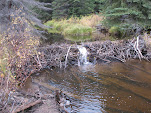
*Introduce beavers into the headwaters of every catchment and you mitigate floods, increase low water flows, clean the water, increase biodiversity recharge ground water, trap the nutrients coming upstream with salmon migrations into the surrounding ecosystem and create a great tourist attraction.

*Finance election campaigns from the exchequer instead of from vested interest contributions and you eliminate a large block of political corruption.  This is the prime reason that politician do the bidding of vested interests instead of the bidding of the people who elected them.  Solve this one and we would stop having to push the brown stuff uphill with a spoon. Do this and most of the rest will be simplicity itself to achieve.

*Remove all subsidies on fossil fuel and a big chunk of climate change mitigation will occur automatically. Renewable energy can stand on it's own feet economically, especially since the advent of mega batteries.  Do you realize that the 100mWh battery at Hornsdale in Southern Australia is on track to earn the total $66m Aus that it cost, within three years.  They have added another 50kWh of storage and I bet they add more.

*Eliminate Cap and Trade and legislate Tax and Dividend and money will be put into the hands of the poorest instead of the richest, stimulating the economy.  The rich simply squirrel it away and it doesn't power the economy.

*Outlaw foreign fishing boats in your EEZ and set large areas aside as no fishing areas and your catches in the fishing-permitted areas will return to what they were two centuries ago.
 
*Compensate victims of floods from the land or from the sea, generously - once - and that is it.  If they insist on remaining in the flood prone area, they will never be compensated again. Hire a small group of insurance experts to hold the feet of the insurance companies to the fire and make sure they compensate the clients fully for what they deserve according to their policy.

There are plenty more but you get the idea.  The function of government is to set the playing field so that things happen automatically.  They are supposed to take the wider view and enable actions that will benefit her constituents far into the future. 


Tuesday, January 20, 2015

PPCT

PPCT.  Who Pays the Piper Calls the Tune.  Why is this so hard to understand.  If politicians are being supported financially by rich individuals, banks, the Corporatocracy, by the arms manufacturers, these individuals and companies will call the tune.  The politicians will do their bidding.  Right wing governments seem to be particularly prone to this, having a built in sympathy for big business but left wing parties are also supported by big business.  Why should we be surprised when, even the left rarely does what is good for the people who elected them.

Look around you.  Is the middle class participating in the economy or is more and more money being accumulated by the top 1%.  Are the rights of workers being eroded, even down to the petty level that companies no longer have to give their workers a tea break*.  Are companies being allowed to  avoid taxes by various dodges such as joining with a small company in a foreign country with a different tax system.  Are companies sending their manufacturing overseas.  If you see these symptoms, you are in a country in which the government is in Thrall to big business.

* Recent move by the government here in New Zealand

Here is a particularly insidious example.  In the US of A, the land of democracy and freedom, the land in which the government is for the people and by the people, (yeah right!!) a vast majority of those same citizens agree that many gun reforms are necessary.  Agreement is pretty universal that one shouldn't be able to buy assault rifles, not buy guns with huge manazines, not buy heavy machine guns, for heaven sake and so forth.  It is agreed that there should be background checks and, for instance,  insane people and criminals should not be able to buy guns.  And yet the American Government ignores the people.  Who do you think is paying the piper in this example.  Follow the money.  Even more strange, a significant proportion of the NRA (National Rifle Association) agrees with the need for many of the suggested reforms.  Guess who is making money from a lack of gun control.  Always follow the money.

The only way out of this is to give politicians a set amount of money from the public purse and a set amount of air time on Government radio stations.  They should be afforded free time in halls and civic centres to address people and of course they can use the internet to their hearts content.

It would be worthwhile to provide each politician with a standard web site with the information arranged in a standard form so that any citizen, once he had got used to the format, could easily search for whatever information he is looking for.

These standard web sites could also be linked horizontally where, for instance, if you were looking up the voting record of a particular politician on a specific bill, you could jump sideways to another politician to see how he had voted on the same bill.

Part of the information would be entered for them such as their voting record, their history, any convictions they have had and so forth and the rest of the web site would be for them to present their case.They would be allowed to apply for a correction to any of these permanent records but not to alter them themselves in any way.

Does this sound expensive; giving politicians money for their campaigns from the public purse.  If you think so, just look at the cost of the present system.  Money is being concentrated in the hands of the now famous 1%, The rich are paying far less than their fair share of taxes, corporations are avoiding taxes and they send their manufacturing overseas and join with small overseas companies to avoid taxes.  Even Warren Buffet says that he pays a smaller tax, by percentage, than his secretary.  Big business is taking their profits overseas and are still allowed to operate as if they are American businesses and the middle class is being gutted.   The cost of the present system is huge and effects all of us.

Worse still, there is a very good chance that the present system will destroy our civilization due to sudden climate change as we push the light switch just that little bit too far.  It may send us back into a dark age or even a stone age.  Fossil fuel is being burnt in greater and greater amounts each year and governments are not taking the simple, well known, technical measures that would address this*.  All of this, despite report after report by the IPCC (International Panel on Climate Change) that we are heading for hell in a hand basket.

*With the exception, surprisingly, of China.  Yes she is building more coal fired power stations and her output of Carbon dioxide is increasing but at an ever reducing rate.  China is going flat out to change over to renewable energy and is likely to be the star in this endeavour amongst the countries of the world.

A good start would be to simply transfer the estimated trillion dollars of subsidies from the fossil fuel industry which is hugely profitable and give it to renewable energy companies.

The next step might be to institute Tax and Dividend a la Jim Hansen.  Neither of these measures and a host of other simple, well understood, necessary measures will be taken as long as politicians are financed by vested interests.

PPCT

Saturday, August 3, 2013

A methane spike

Recently (early 2013) there have been back and forth arguments about the possibility of a rapid methane emission from the Arctic Continental Shelves and especially from the very wide shelf off the north coast of Russia.  Sea level was 120 meters lower during the last glacial and apparently there is still permafrost under the sediment of the ocean bottom from this period despite the overlying layer of water which is above zero degrees centigrade. This layer is said to be up to 1.5km deep.   Although we don't yet have a very good handle on the subject, it is hypothesized that this permafrost is locking in enough methane as methane hydrate, either within or below the permafrost, to greatly increase global warming if it was released suddenly.

Since the permafrost is apparently still there and has been over the  10,000 years since the last glacial ended, the conduction of heat downward to this layer must be very gradual and hence,,  so the argument goes,, a sudden belch of methane is unlikely.  For the purpose of this blog, I will assume that such a reservoir does exist and speculate on a mechanism(s) by which it could be released suddenly.

Before starting, though, we should look at the true strength of Methane as a green house gas.  While it is oft quoted as 20 or 25 times as effective as Carbon dioxide, this is "on a 100 year basis".  As odd as it seems, instantaneously, methane is more than 100 times as effective as Carbon dioxide and hence a 4ppm increase in methane in the atmosphere would have a greater effect in the short term (a few decades) than our present 400ppm Carbon dioxide.    Click on the above link to see why this is so.  Reverse engineering the figures, I came up with a figure of 140.  In other words, the approximately 2ppm methane in the atmosphere at present has the warming effect of 280ppm carbon dioxide.  Just recently (Dec 2013) the NSIDC site quoted a figure of x86.

It should also be noted that ever increasing amounts of methane are being observed bubbling out of Arctic Ocean.  It is possible that this may is due to more intense observation.  Whether or not methane emissions are actually increasing will become apparent over the next few years.  Curiously enough, despite a likely increase in methane emissions over the past decade or two, methane levels in the atmosphere have hardly increased and this needs some explanation.

This is an exerp. from the NSIDC web site on the subject.

The Siberian continental shelf is a vast region of shallow-water covered continental crust, comprising about 20% of the global area of the continental shelf. During the last glacial maximum, much of the shelf was exposed to the cold atmosphere and froze to a depth of about 1.5 kilometers (about 1 mile). Layers of sediment below the permafrost slowly emit methane gas, and this gas has been trapped for millennia beneath the permafrost. As sea levels rose at the end of the ice age, the shelf was once again covered by relatively warm ocean water, thawing the permafrost and releasing the trapped methane. Methane is a potent greenhouse gas but is relatively short-lived in the atmosphere (about 12 years), leading to reduced global warming potential over time. In the short-term however, methane has a global warming potential 86 times that of carbon dioxide.


So what mechanisms could lead to rapidly increasing breakdown of Clathrates in or under the permafrost.

The added 120m layer of water over the Arctic continental shelves will have added extra stability to any underlying clathrates due to the increased pressure.  Therefore a greater temperature rise will be necessary to start the disintegration than before the sea covered these deposits .  Once enough heat has reached the clathrates to start this break down, the pressure will begin to rise.  If the overlying cap of permafrost is strong enough and continuous enough, this increase in pressure will have a negative feed back on the further break down of the underlying clathrate*. 

* Think of putting a piece of clathrate into a very strong sealed container at room temperature.  As the clathrate begins to break down, pressure in the vessel increases.  The warmer it is, the higher the pressure has to rise before clathrate break down ceases.  For instance, clathrates are stable at 17 degrees centigrade at a pressure equal to a depth of 1600m.

The problem arises if  pressure from the   methane which has been released from the clathrate is sufficient to crack the overlying permafrost and create a tunnel or crack up to the ocean bottom.  Now instead of the weight of the sediment (SG about 2), the pressure of the overlying water and the mechanical strength of the frozen sediment keeping the pressure on the clathrates, you have only the pressure of the water column from the ocean surface to the clathrate layer.  Some of the clathrate has already broken down and the methane is just waiting for a breach in the overlying  permafrost for it to rise to the surface.

On the other hand clathrates have latent heat just as does ice which creates a negative feed back on the rate of clathrate break down.  Clathrates can only break down as fast as the inflow of heat allows.  Already broken down clathrate will release its methane suddenly but remaining clathrate will break down only as fast as heat can reach it.  As more an more gas is evolved, the tunnelling increases and sea water with it's heat content gains access to these layers.  You have a sort of geyser as in Yellowstone park.  The process accelerates.

You also have an air (methane) lift effect.  Gas rising through any channel between  the clathrate deposit and the bottom of the ocean further reduces the pressure on the clathrate increasing its break down. The shallower the bottom of the sea where such a break occurs, the greater the reduction of pressure on the clathrate deposit.  Now yet another effect is kicks in.

At some locations along the continental slope, it is likely that all that is holding the sediment together is the permafrost and clathrate ice.  Once this layer starts to loose it's integrity due to the break down in the clathrates, small tremors can induce large slumps, releasing the pressure on large deposits of clathrate.  Picture the land slide on Mt St Helen that released the pressure on underlying gas-saturated magma.  I'm not suggesting anything so dramatic but the basic principle is the same.

Another factor at play is that the clathrate itself likely caps deeper deposits of free methane.  Heat from the centre of the earth seeps upward to meet the "cold" seeping down from the sea floor*.  Above about 200C clathrates don't form. On average, temperatures rise 25 degrees per km you go down into the earth.  Below the permafrost layer, one would expect to find free methane.    If methane is seeping up from deep deposits of liquid or gas hydrocarbons, from coal measures or from  shale, as it hits the deep cold pore water of sediments it is absorbed by water and forms clathrates. This caps underlying methane and any crack is quickly sealed as methane seeps up such cracks and forms clathrate.  It has been observed that some of the methane seeping out of permafrost areas on land is young methane (likely from the break down of organic material) and some is old (likely from deeper hydrocarbon deposits).   Such rising methane will sit below its cap of clathrate ice just waiting to be released.

When it was initially calculated how fast our ice sheets could melt, only thermodynamics was taken into account.  At that time it wasn't realized the effect of, for instance, moulons increasing the slide of ice into the sea and it also wasn't realized that a warmer ocean was melting floating ice sheets from below.  As these ice sheets disintegrated, ice flow to the ocean increased and the contribution to sea level of ice was larger than thermodynamic considerations would have predicted.

We may be making the same mistake here with clathrates as we only consider how fast heat can be conducted down through the layers of sediment toward the deposits of clathrates.  We could be in for some wee surprises as some of the above "convection" type phenomenon cut in.

ps.  There is another wrinkle in this story.  If the permafrost isn't conventional permafrost; in other words frozen ground, but is itself methane clathrate; ie permafrost with a methane component dissolved in it, it will not melt at just above 00C.  It's melting temperature will depend on how much methane is in the ice and on what depth, and hence what pressure, it is at.  It would be very instructive to have a few hundred cores taken on the Arctic continental shelf to see what is actually down there and at what depth.  Methane clathrate can exist at 200C with sufficient pressure.  Such cores would allow a much better estimate of how prone we are to a sudden release of methane.


Monday, April 8, 2013

The Beaufort Gyre

The Beaufort Gyre is a clockwise rotating ocean current situated in the Arctic Ocean  north of Alaska (on the Bearing Strait side). This gyre has some interesting connections with climate change.  Let's go back a few steps and trace the cause/effect chain.


In times when the Arctic Ocean is largely covered with ice, most of the radiant energy from the sun is reflected back out into space.  The air above the Arctic also radiates energy into space*.   The air becomes cold, dense and sinks.  When it approaches the surface of the earth it spreads out southward across the Tundra.

*Any material which is above 00 Kelvin {minus 273 centigrade} radiates energy

Coriolis gives the south flowing air a bend to the right so we have North East winds (flowing toward the south west).  In other words this results in a clockwise rotating weather system.  The wind pushes on the water and ice and causes the clockwise rotating Beaufort Gyre.  Now something interesting happens.

You would expect that with a rotating gyre, water would be flung outward resulting in a slightly lower water level in the middle.  Think of those rotating mercury filled dishes which form perfect mirrors for studying the stars.  However, something peculiar happens with the Gyre.  The middle has been observed to  be a little higher than the surrounding water*.  Coriolis is once more the answer.

* This probably explains the accumulation of Sargasso weed and plastic in the middle of the world's other oceanic gyres.

The water which is being pushed clockwise around the gyre is also bent to the right.  In a clockwise rotating current, 'right' is into the centre.  Since the surface water of the Arctic Ocean is fresher than the warmer saltier deeper water, this bulge is of fresher water.  The fresh water comes from rivers and melting ice and the halocline is about 200m deep on average.  The Beaufort Gyre Exploration Project reports that the amount of fresh water stored on the surface of the Arctic Ocean is equal to a number of years flow of rivers emptying into the Arctic ocean.  However, the Beauford Gyre can reverse direction.  As reported by the BGEP, the cycle is from 4 to 8 years in each direction.

All it takes is a low pressure area over the Arctic with rising air causing surface air to be sucked in from the surrounding area.  With a bend to the right, this will result in a counter clockwise rotating weather system and if it is strong enough and persists for long enough, it will result in a counter clockwise rotating Beauford gyre.  Such a situation is likely to happen with increased frequency as the Arctic Ocean becomes more and more ice free and open water absorbs the radiant energy that used to be reflected back into space.  This will cause an ocean which is warmer than the surrounding land and lead to rising air and off-shore winds.

With a counter clockwise rotating body of water in the Northern Hemisphere, a bend to the right is away from the center.  This layer of fresher surface water along with any floating ice trapped in the gyre, will be moved away from the centre of the gyre, resulting in lower water in the center.  This may be exacerbated by the "liquid mirror" effect.  If strong enough, this should result in upwelling of the deep, warmer, saltier water which underlies the surface water.  The normal (historical) clockwise rotating Beaufort Gyre keeps fresher surface water and floating ice in the Arctic and helps the production of multi year ice by keeping the ice in the Arctic Ocean.  Fresher water also freezes more easily.  A counter clockwise Beaufort Gyre would push surface water and ice into the trans-polar drift and out of the Arctic.

A related effect will be the freshening of the North Atlantic surface water and if great enough could shut down or weaken the Gulf Steam*. When would we be likely to see a reversed Beaufort Gyre?

* As odd as it seems, this could result in a year or two with winter temperatures on the West coast of Europe similar to those on the East Coast of North America at the same latitude.

It could be that it already has happened.  If you look at the October 2012 edition of the NSIDC report, they already report rising air over the Arctic ocean with winds from the south.  It makes sense that fall would be when we would first see this situation.  The land is cooling rapidly as the sun leaves the north while the sea has an accumulation of heat from the summer.  Offshore (southern) winds,  with Coriolis, will  cause a  counter clockwise rotating weather system which in turn will reverse the direction of the Gyre.  As mentioned, such a system will also fling floating ice and surface fresher water outward, possibly to be caught by the Transpolar Current and expelled from the Arctic through Fram Strait.  Whether this 2012 reversal of the air circulation was strong enough or lasted for long enough to reverse the Beaufort Gyre is unclear.

There is enough heat in the deeper Atlantic water to melt all the surface ice about three times over.  This looks to be another of these much anticipated tipping points. Warmed surface water gives rise to a counter clockwise Beauford gyre which in turn expels surface fresher water from the Arctic and brings up deep salty warmer water to melt more ice which leads to more warming as more of the surface of the ocean becomes open water.

 A thinner surface layer of fresher water is also easier to disrupt  than the present thicker layer.  The disappearance of the Arctic ice  would then accelerates far faster than would be expected from considerations of climate sensitivity or thermodynamics.

There is another little wrinkle in this scenario.  If you look at wave dynamics, the circle of rotation of a particle in a wave, halves for every ninth of a wave length you go down into the water*.  So the mixing effect of short waves on layers of water decreases rather quickly.  The effect of longer waves penetrates deeper than short waves.  With a shallower layer of fresher water and the huge waves caused by hurricanes, mixing can be much more effective*.  It seems likely that at some point as the fresher layer thins and storms increase, we will see a relatively sudden (over a few years) warming and increase in salinity of Arctic surface waters*.

*As the ice thins, much larger, longer waves can be anticipated.

The internal waves between layers of water of different density is something else again.  The height of a wave is inversely proportional to the density difference between the layers.   The density difference between adjacent layers of water is small so the waves are large.  They also break as they reach shallow water just as water/air waves do, mixing the layers.

*Suppose you have a wave which is 18m from peak to peak and the wave is 1m high.  On the surface, a particle is describing a 1m circle as the wave goes by.  At a depth of two meters (1/9th of a wave length), a particle is describing a 50cm circle.  By the time you get to 10 meters, the circle of rotation is only 3cm.  The higher and longer the wave, the deeper the effect is felt.  The mixing due to such waves is particularly strong when the waves move into shallow water and break.  The break is not only on the surface between water and air but also between layers of water of different densities.  Wave height is inversely proportional to the density difference between the two media in contact where the wave occurs.

Of course we then get to the possibility of really large waves; of land slumps under water.  As methane evolves out of the bottom of the Arctic ocean, the Clathrate which is at present holding the sediment together melts.  A small tremor can then induce a land slide, causing localized but rater intense tsunamis.  As these bounce back and forth across the Arctic, some severe mixing is likely

Quite exciting if you are in to horror movies.


Friday, March 22, 2013

Removing atmospheric Carbon Dioxide

Some hair brained suggestions have been made for removing Carbon dioxide from the air or even from the smoke stack of coal fired power stations.  Suggestions have also been made about putting little mirrors in the Le grange point between us and the sun to cool off the earth.  Just imagine how much fun this would be  at the next economic crisis when funds are cut for  constantly  renewing these mirrors and we already are up at, say, 500ppm carbon dioxide. not to mention a likely reduction in photosynthesis from the shading which would itself, cause a reduction in the uptake of carbon from the air.

I have read that in order to remove carbon dioxide from the stack of a coal fired power station (or one growing biomass) we would need to use an extra 30% more power.  In other words you would have to burn 30% more coal.  I wonder if you would also have to burn 30% of the 30% which equals 9% more coal to sequester the  30% extra coal you burnt.  Then you would have to burn 30% of the 9% which equals another 2.7% to take up this extra 9% worth of carbon dioxide.  Lets go one more.  30% of the 2.7% is 0.81%.  So far we are up to a total of 42.51 percent more coal burnt in order to sequester the carbon dioxide produced.  Sorry I'm being facetious.  It could be that the boffins already calculated this sequence and it came to 30% overall.  Perhaps they will put in wind turbines to generate the power to remove the carbon from the smoke stacks!!!! (instead of simply using the power from wind turbines to replace the use of fossil fuels)

It is axiomatic that we have to first stop putting more sequestered carbon into the atmosphere.  Just imagine the stupidity of trying to pull Carbon dioxide out of the atmosphere while coal fired power stations are pouring more into the air.  Not rocket science - right??

However this blog is about measures we can take to remove Carbon dioxide from the air.


Let's get real about this.  Has anyone noticed that the level of Carbon dioxide goes up and down by 7ppm during the year or more accurately, 8 up and 6 down.  Natural processes are far stronger than anything we are likely to come up with.  How about if we could get the system to go up 6 and down 8.  Let's see what natural processes we could encourage.

And while we are at it, the world production of Carbon dioxide from fossil fuel in 2008, which is the latest figures I can find, was 2.988 x 10¹³ kg.  The mass of the earth's atmosphere is about 5 x 10¹⁸kg.  Dividing one by the other and we see that we are putting enough Carbon dioxide into the atmosphere to raise the level of Carbon dioxide by 5.97ppm each year.  In actual fact the net rise in Carbon dioxide is around 2.5ppm per year (and rising).  So about 3ppm is being taken up somewhere.  If we stopped the use of all fossil fuel, this net uptake of about 3ppm would not stop.  At least at first, we could expect Carbon dioxide to decrease at about 3ppm per year.  However, we could even do better than this.

There are a lot of carbon sinks we could encourage. 


Amount of CO2 in the atmosphere
The figure of 5 x 10¹⁸kg of atmosphere was from wikipedia.  Here is a calculation that comes up with a slightly different figure.
*The pressure on each square metre of land at sea level is 10.3 tons.  In other words, the column of air above each square meter weighs this amount.
*The area of a sphere is 4πr2 so the area of the earth with a radius of 6371km is 4π x 63712 = 5.10 x 10⁸ square kilometers.
*There are 106 square meters in a square km so the area of the earth is 5.10 x 10¹⁴ square meters
  *5.10 x 10¹⁴ square meters times 10.3tons per square meter equals 5.25 x 10¹⁵ tons of atmosphere## (= 5.25 x 10¹⁸kg

*The Carbon dioxide concentration is just about to reach 400ppm so I will use this figure.  Note that this is the parts per million by volume.  To calculate the weight we must multiply by 44/29.  44 is the molecular weight of CO2 and 29 is approximately the molar weight of air.  The weight of Carbon dioxide in the atmosphere is therefore 5.25 x 1015 x 400 / 106  x44/29 = 3.186 x 10¹²tons of CO2 in the atmosphere.

Now that we have a handle on the size of the problem, let's look at how we could allow Gaia to remove the Carbon from the air.

1/  Stop the Production of Palm Oil and clear fell logging and let Open fields revert to jungle
A mature jungle, by definition, does not produce any net oxygen or remove any carbon from the atmosphere.  The rate of trees falling and rotting is equal to the rate of photosynthesis.  (that is the meaning of mature - or at least one definition of the term).  In the tropics where the soil is above about 25degrees C, humus doesn't accumulate so mature tropical jungles, while they sequester (hold) a lot of Carbon,  do not remove any net Carbon  from the atmosphere.

A growing tropical jungle is a different beast all together.  You only have to look at what happens when a forest giant falls in a mature jungle.  The little saplings which have been stunted from a lack of light shoot up at an astounding rate. Pretty soon that part of the forest is impenetrable.  The trees compete and eventually a few are left and they contain huge amounts of wood with its sequestered carbon.  As a tree continue to grow, it continue to sequester more carbon dioxide and this continues until it dies and returns its carbon to the atmosphere.

Let's say a certain type of wood is 50% water*.  That is to say it is half wood, half water.  So in 100kg of freshly cut wood you have 50kg of actual wood.   About 50% of dry wood is carbon.  Carbon has an atomic weight of 12.  Oxygen, 16.  So CO2 has a molecular weight of 44.  Every kg of carbon sequestered in wood represents 1kg x 44/12 equals 3 and 2/3 kg of carbon dioxide removed from the atmosphere.  To grow  100kg of wet wood the tree has actually removed 183kg of carbon dioxide from the air.

* note that in the above link, they use the amount of water divided by the amount of dry wood.  I think this is a little confusing as they get 100% moisture or even more, depending on the species of tree.  I think the amount of water divided by the freshly cut wood is less confusing.

So if we stop producing palm oil and let the jungle take over again, a huge amount of Carbon will be sequestered from the air.

2/  On any land where logging is practiced, build the logged wood into long term structures and replant.
If you look at the above link under the words "50% of dry wood is Carbon" you will see a calculation that for Douglas Fir on the coast of BC with a 70 year rotation Assuming you build the lumber into long lasting structures.  Such  a forest will result in the removal of 5 tons of CO2 per hectare per year.  This assumes that only the milled timber goes into long term structures and doesn't assume any use for the waste wood such as paper, press board or charcoal for soil improvement and sequestration so it is a very conservative estimation.  There are 100 hectares in a square kilometer so each square kilometer planted in Douglas fir on the coast of BC would remove 500 tons of CO2 per year.  The results are so variable for different areas and different species that I am not even going to try to estimate how much CO2 could be removed from the atmosphere by  logging and using the wood for long lasting structures.  However, using just this approximation you can see that it is substantial.  Pyrolyze all the waste wood making cooking gas, gasoline, diesel and air line fuel and you displace oil extraction.  Incorporate the charcoal into agricultural soils and you sequester considerable carbon, long-term in the soil.

3/  Turn wood waste into charcoal and use in tropical soils
Humus does not accumulate in tropical soils the way it does in the soil under temperate forests.  However, it has been found that charcoal can replace humus in tropical soils.  It is stable and serves the same purpose of storing nutrients and releasing them to plants.  This is called Terra Preta and it has been found in certain areas in the jungle where generations of people have incorporated charred organic material into the soil that they use for growing crops.  Tropical soils are very poor for agriculture partially due to their lack of ability to store nutrients.  Add charcoal to these soils and they are markedly improved.

4/  Stop,,,,, Completely Stop the Harvest of Whales
Many species of whales feed at depth and poop on the surface.  This has been termed the Whale Pump and in pre-hunting times must have brought mega quantities of nutrients up into the photic zone. Whales also take nutrients from polar waters to oligotrophic* tropical waters where they go to give birth.  While many species of whale do not feed in the birthing areas, they feed their babies who poop nutrients into the nutrient poor tropical waters.  The phytoplankton gets  nitrates, phosphates and all sorts of other 'ates' from this rich source of manure and absorb carbonate from the water to build their bodies.

* Nutrient poor.

The Carbon gradient from the air to the water is therefore increased and the sea water can absorb more Carbon dioxide from the air.  It is estimated that about half of the Carbon dioxide we have produced has been absorbed by the oceans.  If this was not so, we would be approaching an atmospheric concentration of around 550 ppm now instead of 400ppm.  As with any reaction, as it proceeds it slows down.  At some point, the oceans will be saturated with respect to carbon dioxide and will cease to absorb any more.  At that point, other things being equal, our 2-3ppm yearly increase in Carbon dioxide will jump to 4 to 6ppm.

Long before that happens, though, the oceans as we know them will be dead.  Already there are indications that Pteropods, a swimming snail that serves the same function in the food chain as krill, are having trouble forming their shells because of ocean acidity.  Note here that if we restore the whale pump, not only will the oceans  be able to take more carbon dioxide out of the oceans  but the danger to the ocean food chains will also be reduced.  It will also increase the amount of fish we can take sustainably from the oceans.

5/ Put Half of the Oceans off Limits for Fishing.
Our catches of fish are pitiful compared to what they once were*.  We have destroyed so many populations that it is amazing that the oceans still function.  The amounts of carbon stored in the fish, invertebrates plankton and so forth must have been huge.  We have fished out the oceans, eaten the fish, pooped out the residue and released all this Carbon dioxide into the air.  Let the fish stocks recover and they will once more hold mega quantities of carbon.

*Read the book Sea of Slaughter by Farley Mowat to get an idea of just what we have destroyed.

Even better, have you ever seen recreational fishermen, line fishing just on the borders of the tiny marine reserves  we have set aside. The catches there are great as adult fish from the reserves look for new sources of food outside the reserves.  Imagine what the fishing would be like if we set half of our areas aside as no fishing zones.  There would no longer be any need for FADs, drift nets, bottom trawls or purse seines.  The fishing would be so great that only hook and line methods would be necessary*.  We not only sequester carbon but improve our fisheries at the same time.

*Mowat's book again.


6/ Protect our Corals
Sea level is going up at about 3mm per year.  No matter what we do, it won't slow down any time soon.  There will be an overshoot even if we stop all carbon emissions tomorrow.  Over the whole transition from a glacial, 20,000 years ago to our present Holocene interglacial sea level rose at about 6mm per year although there were intervals in which the rate rose to about 56mm per year.  Coral skeletons are CaCO3 and are a tad over 60% carbon dioxide as are the shells of mollusks (oyster reefs) and any other structure made from Calcium carbonate.  As the sea level rises, the constraint of the surface is removed and corals can grow upward.  If our corals are healthy, they will absorb large quantities of carbon dioxide as they grow upward.  If we stop acidifying and warming our oceans and take a few other measures to re-establish the health of our coral reefs such as not fishing certain species,  corals will help us get rid of atmospheric CO2.


7/ Let Grasslands Recover
Many new civilization mine their dirt until there is nothing left and the civilization collapses. Most of the carbon which had been stored in the soils goes into the atmosphere.  At the very least we have to adopt farming practices that stop this process.  Even better would be if we could restore the environment that existed, for instance, on the great plains of North America.  The plants of grasslands are mostly under ground.  This an adaptation to fire.  Grass fires are intense but if short duration and the roots and stems of the grass remains to sprout leaves at the next season.  However, we don't want fires and there is a far better option.    Have a look at this Ted Talk by Allan Savory,  Better still, read The Omnivore's Dilemma, by Michael Pollan starting at chapter 10.  Also read Growing a Revolution by David R Montgomery.   By the time you have read both of these you should be convinced that there is far more our farmers can do despite their protestations that they are doing all that is possible.   And they will have a far more fulfilling farming experience and an improved bottom line.


8/ Reflood Bogs
Bogs, or wetlands as they are often called sequester carbon at a great rate.  This is especially so if the bottom of the bog is anaerobic.  Cellulose, which is 50% Carbon is refractory under anaerobic conditions,  The Hula in Israel is a good example.  It is a wetland in the rift valley upstream of  the Kineret (sea of Galilee).  The Israelis drained it and turned it into farmland.  The peat which had accumulated over Milena started to oxidize and release nutrients and carbon .  It polluted the Kinerit from which Israel draws her water.  A few decades ago, Israel realized the problem and re flooded the Hula.  Now it once more sequesters carbon and cleans water flowing through it to the Kineret 

9/ Put Nutrients back on to the land
The Chinese have managed to keep an agricultural civilization going on the same piece of land for over 5000 years.  She did this by recycling all animal and human wastes back on to the land.  The flush toilet is going to be China's undoing unless they have systems to cycle the nutrients from sewage plants back on to the land.  This sort of fertilizer has the added advantage of containing much organic carbon so it feeds the micro-organisms of the soil.  Think of the plains of Africa or North America in their pristine state.  Every bit of waste, every body went back into the soil.  The Indians of the great planes even put the bodies of their dead on platforms for the birds and insects to return to the Great Spirit.  We have depleted the carbon content of our soils.  Restoring the system would pull even more Carbon out of the atmosphere.


10/  Allow Beavers to Repopulate Every Stream Possible
Beavers have a number of effects with respect to carbon sequestration.
1) by raising the water table around their dams, Beavers increase the growth of all the vegetation.
2) by capturing the spent salmon after they have spawned, Beavers hold a valuable source of nutrients which came up from the sea.  These nutrients are cycled away from the dam in the droppings of all the animals that get some of their food from the beaver pond and its immediate surroundings.  Plant growth including forests is stimulated, sequestering more carbon.
3) by burying cellulostic material,  Beaver dams settle out silt from the water and capture 'bed-load'.  All the bits of cellulose and even their lodges and dams are eventually buried and become a deep carbon rich deposit.  When agricultural man found this rich bottom land, he drained it and mined it with his crops much as was done in the Hula.  The more Beaver dams we can allow to flourish, the more carbon we will remove from the atmosphere

11/ Protect Boreal forests
The tree line is moving northward with climate change.  This mimics what happened when the continental glaciers left the land.  Forests reestablished and much carbon was sequestered.  The forests are going to creep northward.  We must just let them do so without hindrance.

Final Note
Most of the systems above involve getting nutrients back into natural systems and then protecting them so that they can build up their biomasses and lock up carbon dioxide.  With a population that is already decreasing in many of the countries of the world and the means available to assist countries that haven't reached this favourable situation, we should soon be able to return land to nature*.  Most important, though, is that we cease to use fossil fuels.  Besides they are far to valuable to burn.

*See the TED talk by Monbiot  on re-wilding.

Sunday, November 25, 2012

Greenland Melting

I suspect that the  melt rate of Greenland in the years to come and hence it's effect on sea level will prove to be another little surprise from Gaia.  Having said that, I am only applying simple high school physics to a horribly complex phenomenon (the weather patterns in the Arctic) so add as many pinches of salt as you see fit as you read on.

Just to the north of Greenland we have the Arctic Ocean and as anyone who is following the situation will tell you, the floating ice is melting 'rather quickly'.  This summer  caught almost all the predictors of ice melt by surprise once again.  The ice was already melting at a rate equal to the previous most extreme year when on Aug6, 2012 a hurricane formed and sent the ice extent graph plummeting.  Climate change deniers site this hurricane as a once off, freak event.  Boy! are they in for some surprises.

Ice extent reaches its minimum each year around September 15.  Some scientists who are prepared to say it as they see it instead of hedging their bets, predict that  September 15, 2016  will see a virtually ice free Arctic Ocean.  Following 2016, with various up and down fluctuations, it is predicted that an open Arctic ocean will occur earlier and earlier each year.

Since open water absorbs most of the solar radiation falling on it instead of reflecting it back into space, the Arctic Ocean is becoming a giant solar collector.  The question is what mechanism might transfer this heat to the Greenland ice sheet and cause vastly increased melting.  There are a few bits and pieces we have to look at first.  Let's have a look at Katabatic winds for a start.

For the sake of illustration, let's assume that the whole Greenland Ice block is at 00C.  An air mass moves over Greenland which is also at 00.  Nothing happens.  The ice neither warms or cools the air and the situation is stable.  Then an air mass of 100C moves over Greenland.  The air in contact with the ice is cooled, shrinks, becoming more dense than the surrounding air and starts to flow down slope.  We have a Katabatic wind and since air is flowing down the flanks of Greenland, it sucks more air from it's surroundings to, in turn, be cooled and  flow down slope.  Now an interesting phenomenon kicks in.  If you have ever pumped up a bicycle tire with a hand pump, you will have noticed that the pump heats up where the flexible tube connects to the pump.  For the physics purists, work has been done on the air as it is compressed and this work shows up as warmed air.  The same thing happens when you compress air by taking it to lower altitudes.  This is called the Adiabatic Lapse rate and it is 9.80C per vertical kilometre*.  The  very top of the Greenland Ice sheet is 3.7km above sea level so a body of air falling from the peak to sea level without gaining or loosing heat to it's surroundings, would heat up by 360, Of course this doesn't happen and if it did, it would stop the Katabatic wind as the air warmed and became equal in temperature to the surrounding air.  What actually happens is that this heat is given up to its surroundings; namely to the ice !!!  Next, let's have a look at hurricanes.

* Note - the dry lapse rate is applicable when talking about descending air.

In the open oceans of the tropics, the sea surface must be above 250C  in order for a hurricane to form.  Storms are caused by rising air reaching the dew point (temperature at which the water vapour in the air begins to condense into water).  Each gram of water uses 540cal* of heat to evaporate.  It  gives out exactly the same amount of heat when it condenses.  Just to put the whole thing into context, to heat a gram of water by one degree requires one calorie so you need 100 calories to raise a gram of 00 water to boiling.  While we are at it, the heat needed to melt one gram of ice is 80 calories.  We will need these figures a little later.  So back to the formation of a tropical hurricane.

*Any physics purist will tell you I should be using SI units.  I chose to use calories because they are defined in terms of the heat needed to raise the temperature of a gram of water by one degree C and so are easier to get your head around in this context.

With minor perturbations, the whole extent of the open tropical ocean is at more or less the same temperature.  Say the water is a little warmer at one point and this causes the air above it to rise.  If this air reaches the dew point, heat will start to be given out as the water vapour condenses into liquid water,  accelerating the air upward.  Air then rushes in along the surface of the sea to replace this air and is given a counter clockwise spin (in the Northern Hemisphere) by the Coriolis effect.  It depends on how much water vapour is in the air whether this will simply develop into a thunder storm or a hurricane and apparently, 25 degree  water is the border between thunder storms and hurricanes because of the amount of water vapour that the warmer water can put into the air.  As air flows into the centre of the weather system, it picks up water vapour from the ocean and this continues to power the hurricane.  What is important here from our point of view is that all the power of the Hurricane comes from the "suck" at the middle of the hurricane.  Incidentally, the effect of Coriolis is relatively weak near the equator.  A body of air travelling a kilometer is only coming a few tens of meters nearer to the axis of the earth (the spinning skater is only pulling in her arms a little)

The situation in temperate and arctic zones is quite different.  The pressure in the centre of the hurricane that occurred this summer (Aug6,2012) in the Arctic was 964mb which puts it right on the border between a category 2 and a category 3 hurricane.  The surface water temperature was under 10 degrees.  So what was happening.

What actually causes a hurricane is the pressure gradient from areas adjacent to the developing weather pattern  to centre of the storm.  In a tropical hurricane in a big open ocean, all the gradient is due to the suck at the middle of the storm.  In the Arctic, if you have a high pressure system, say, on adjacent land, the gradient can be strong enough to cause a hurricane.* So why are hurricanes important.

*There may be another factor at work here.  The Coriolis effect increases, the closer you are to the poles.  This could give an extra spin to a cyclonic system.

Hurricanes pump heat up into the atmosphere.  They pump this heat at a couple of orders of magnitude greater than, say, thunder storms and even thunder storms are pretty narly tranmitters of energy.  Remember that 540cal that is needed to evaporate a gram of water, which is released when the water vapour condenses back into water.  Here you have  the heat in the ocean evaporating water which is sucked upwards until it starts to condense and gives out its heat into the atmosphere.  Water falls out of the sky leaving much of its heat behind in the air*.  Here we are talking, not about radiation or conduction which are pretty gentle methods of heat transfer, but rather mass transfer (convection process) which  can move much greater amounts of heat.  Two more factor and we can tie all this together.

* heat left in the water goes back to the ocean

When a low pressure system (storm) sidles up to the coast of Greenland, it induces katabatic winds *  down the slopes of Greenland.  This is not so surprising when you think about it.  You have a weather system which is pushing heat up into the atmosphere, probably resulting in air over the adjacent slopes of Greenland which is warmer than the ice.  As mentioned, it is necessary that the air body over the ice is warmer than the ice, for Katabatic winds to form.  In addition, this low pressure system just off the coast is sucking on the air that is flowing down the slope. And finally:

* See the section on "Impacts"in this link.

Hurricanes in the Atlantic apparently tend to follow along the temperature difference between the Gulf Stream and the surrounding cooler water.  I haven't quite got my head around how this works but for now I'll just accept it as fact.  In the Arctic, a hurricane will apparently follow along the edge of the ice pack.  In other words, the ice pack which is still quite solid off the Northern coast of Greenland will hold Arctic Hurricanes off at arms length.  What happens when this ice pack is finally gone a few years hence.

Hurricanes are more and more likely to form in the Arctic as the ocean becomes ice free earlier and earlier and hence absorb more energy.  Add to this that there is less and less ice to keep the water cool as it melts.  (Once the ice cube in  your drink is all melted, you drink warms up rather rapidly).

  With no ice pack protecting the north coast of Greenland, the hurricane can get  up close and personal to the coast of  Greenland.  We have a whole new order of magnitude of heat being pumped up into the atmosphere right beside the ice sheet and this upward flow of warmed air, potentially coupling with katabatic winds flowing down the slopes of Greenland melting the ice.  One additional little wrinkle in this story; a tight little Walker Cell.

You remember we said that to melt a gram of ice takes 80cal and that when a gram of water vapour condenses, it gives out 540g of heat.  In other words, if all the heat from the condensation of one gram of water vapour was applied to ice, it could melt just under 7 grams of ice.  I suspect we are going to have another little surprise regarding our estimates of how fast the Greenland ice sheet will melt.

Saturday, January 22, 2011

Australian Floods

After a prolonged gut wrenching drought, large parts of Australia are experiencing epic floods.  It seems very likely that such, so called, 200 year floods could now occur every decade or so.  I could easily be wrong.  Predicting the climate is only slightly more reliable than predicting the weather.  The question is whether or not the Australian community is willing to bet on not having such floods over the next few decades.  And even if another such flood does not occur in the next few decades, it will reoccur at some time in the future.  Are the Ausi Communities willing to leave to their children the legacy of a repeat of the present disaster......

Or are the Ausis willing to bite the bullet and put out the effort to make sure that future flood events bring great benefit instead of great loss to Australia.  After all, in a country plagued by drought, arguably, enough water has fallen on Australia to last her for a decade.  Most of this manna from heaven has flowed out to sea.  What could the Ausis do.

Climate Change
First, forget climate change.  Sure many commentators predict that with climate change Australia will have bigger floods and harsher droughts but it isn't necessary to invoke climate change.  Just look at history.  Australia has had severe floods in 1890, 1893, 1896, 1898 and 1974.  This is just a sample.  There were many more.  The floods of 1893 and 1974 were higher than the present (2011) flood.  Brisbane and other towns of Queensland and Victoria have flooded before and will flood again.

Mark the floods
The second item on the agenda is not to forget the extent of the floods which have just occurred.  It is an all too human characteristic to forget how bad it was as soon as it is over.  Communities need to put up markers showing how high the water came.  This can be stakes similar to road mile markers wherever the maximum extent of the flood crosses a road, plaques in sidewalks, markers on walls of buildings which survived and so forth.  Every person will know how high the water came in his area but must be made aware of the extent of the inundation in the years to come as they visit or move to other communities.  Anyone thinking to buy a house or business must know if the building is in the flood plain.  When this is suggested in council, note who objects.  Could the objector have a building in the flood zone that he want to get rid of.

Move Buildings or Rebuild Up slope
At present Aus is rich. She is arguably the only country which didn't have a recession in the 2008 'downturn'.  She is rich because she is selling off her family jewels (minerals), mainly to China with only the gangue removed but that is another story.  The point here is, at present she could afford to take radical measures.  In the future this could well change.  What I would suggest is this.  The government gives full compensation to anyone in the flood zone.  The owner of the house or business could opt to simply take the money and bank it or they could use it to rebuild up slope.  However, any business or house in the flood zone has a note put in her LIM report that this building is in the flood zone and will not be flood-insured in the future.  In addition, if it is flooded again, no government compensation will be given.  This is a one-off.  Use it as you will.  

Clear the Flood Plain
Demolish and haul away every building possible except for businesses which absolutely have to be in the flood plain.  Turn the flood plain into parkland, wilderness or farm land and do not build levies.  In fact, as soon as a village has been moved up-slope, tear down the levies.  Levis increase the height of flood peaks downstream.  You want flood waters to be able to spread out as far as possible.  This greatly lowers the flood peaks downstream as the water spreads out and than drains back into the channel.  Floods also deposit much needed new soil on the flood plain which then doesn't reach the ocean and pollute Australia's coral reefs. Plant deep rooted trees in the flood plain which not only will create very attractive recreational areas but will slow the flow of water when the next flood comes.

Rebuild with Flood Proof Buildings
Any buildings that have to be in the flood plain, rebuild to be flood proof. This can include having very sound deep founded foundations, houses raised on stilts, blow out panels on the ground floor which give way when a flood comes, saving the building and so forth.  It will be expensive and should only be undertaken for buildings which absolutely have to be in the flood plain.  With respect to buildings, there are two types of location on a flood plain.  One is an area where, during a flood, there are strong currents.  Generally this is near to the channel but not always.  The second is where water simply rises and then falls but without much of a current.  Building solutions are different for each of these types of location.

and how about the benefits from such floods

Live with the Environment
Aus may well be entering a period of extreme weather.  This means very prolonged drought interspersed with very destructive floods*.  Desert people all over the world have learned to live with such conditions.  The Nabateans who lived around the time of Christ in the area of Petra had floods and drought and worked out ways of saving the water for the dry periods.  In the scale of things, their efforts were arguably greater than the Ausis would have to make.

* many would argue that she has always been in this situation

Turn water back into the interior
The Snowy mountain project does this to a small extent.  Find every place where it is possible to turn the water which is flowing toward the Tasmanian sea back into the interior.  This can include tunnels bored through the mountains so that when the water in a given dam rises to just below full, water pours down a tunnel and comes out to the West of the mountains.  This is not a small project but Australia is the leading mining country of the world and has the technology to do it.  At present she also has the wealth.  The only really good way to store water in a desert is underground and as much water as possible should be put into the interior where it can soak down and replenish the water tables.  It might be necessary to flood farms here and there but it is far less expensive to compensate a few farmers who run a sheep per 10 hectares of land than a to compensate the people of a village or city which is destroyed.  Besides, when the waters finally soak into the ground, the farmer in question has an unlimited supply of ground water available to him.

A second method is to use  electricity from the down flowing water and using it to pump water to the West.  However simple tunnels have to be the first choice where possible.  The works necessary to pump a significant portion of the recent floods into the interior would likely be beyond even Australia's resources.

Take advantage of the Rebuild
Rebuilding houses and business premises in new locations can have huge benefits to Australia.  All buildings can incorporate high thermal mass, external insulation, built in water heating solar panels and photo-electric panels, insect and fire proof construction and so forth.  Aus could end up with houses which are far more ecologically friendly, more comfortable, invulnerable to fire, flood and insects and use far less energy.  It would be similar to "The New Deal" in America which left her far better off than before the depression.  Aus could end up far better off than before the flood.

Disasters are also opportunities.  The greater the disaster the greater the opportunities.  Disasters are a bit like death.  If there was no death we would still be a bacterial slime.  Death clears the way for new forms of life.  The great extinctions of the world cleared the way for new ecology's.  On a much smaller scale, disasters such as the Australian floods can be opportunities for small leaps forward.

Sunday, October 10, 2010

Forget Climate Change

Do I think the climate is changing?  
Yup.

Do I think humans are responsible?  
Pretty much. The basic physics is pretty simple*.
 
*So is a computer;  just a bunch of switches that are either on or off or if you like a bunch of one's and zero's but look at how complex it gets when you combine them together in various ways.  At the core, climate change is pretty simple but then it gets really really complicated. I can quite sympathize with the doubters.
 
And could the climate change rather quickly?  
Very possibly. It's done so before without the help of humans.  The ice-core-record shows that under natural, persistent but slower pushes, the climate sometimes flips.

Would this be so bad?  
Sure would!! If climatic zones change and with them the wheat, rice and corn growing zones, we will have epic scale starvation**. Even more fun, when the Arctic ocean becomes ice free, it becomes a massive solar collector. Just watch Greenland melt as  the Arctic becomes more and more ice free each year . Watch the subways of New York and London flood*.  More fun still, if enough melting occurs in Greenland in a given year, it could shut down the Gulf Stream and lead to temperatures on the European coast equivalent to the temperatures at the same latitude on the American coast.  That's an irony for you.  Global warming causing severe freezing in Europe.

**Once we had mountains of wheat, butter, eggs etc stored up - a year or two of food for the world.  Now it is down to less than two months.
*  A serious aspect of climate change is not so much that the climate is warming but that is is changing from what we have experienced over the past 5000 years or so.  A good example is that rising sea levels will cause severe chaos.  
 
Of course, then, the heat that used to be transferred northward, remains in the south, killing corals and other heat-vulnerable organisms. 
 

So what's all this about forgetting climate change?
The fact is that there are a whole raft of other reasons to take the very measure that would also address climate change. You don't believe in climate change?? You don't believe that we are causing it??  Perhaps you think we are causing it but it would be a good thing.   Fine!  Lets look at some other reasons to stop using fossil fuels.  Many of these are the very reasons that would appeal to your isolationist, mid west, religious fundamentalist, evangelical, right wing, American politician.

1/  Selling off Our Countries for Fuel
In order to keep our cars and trucks running, we, in the 'west', buy huge amounts of crude oil from other countries. Oil flows towards us, money the other way. What do these countries do with this money. They buy up the infrastructure of our countries. They buy up our sea ports and air ports, our businesses, our real estate, wall street and main street. All over the so called 'developed world' and especially in America we are becoming tenants in our own land. All so that we can run our cars when we should be taking public transport. All so we can drive a huge car with boasting rights rather than a smaller car that does everything a car needs to do. All so we can run gas guzzlers instead of electric cars charged from renewable energy.

And what else do they do with the money.  They finance radical groups who we call terrorists from our side of the fence .  These folks give us 9/11, Oct.7 and other similar media events.   It is a moot point whether OPEC countries finance the terrs from belief or simply to buy off these groups so that they won't themselves be attacked  but the result is the same.

It's time we stopped being grashoppers and become ants (Aesops Fables).  It's time we got serious about installing wind turbines and solar panels.  It's time we backed down the Car companies and oil companies and insisted on decent reasonably priced electric cars.  What's ironic is that if we do this, the demand for oil will drop, it's price will come down and the incentive to switch to electric cars will be reduced. In fact, just recently I read an article by one of the Saudi Princes stating that they must keep the price of Crude down so that the world will have no incentive to change to renewables.  At least he understands how the system works. Sorry mate, it is already too late, the transformation to EV's, wind turbines, solar panels and mega batteries has reached the point where it is unstoppable. 

  Anyway, with a typically human lack of foresight some of us will be flick flacking back and forth from 'buy the electric car' - to - 'buy the petrol car'. It reminds me of the prince in Shreck hopping from one foot to the other, trying to decide which princess to pursue.

2/  Strategic vulnerability
Needing huge quantities of oil to keep our society going, we are very vulnerable to the suppliers or another major power shutting us off. If we are shut off, the west will precipitate yet another war to ensure supply which will guarantee the creation of the next generation of terrorists. If all our domestic fleet changed to electric cars running on renewable electricity, we would probably have enough oil internally to power the remaining vehicles which are harder to power with electricity such as earth moving machinery and large trucks*. For that matter, we could ship most things by electric rail in containers and deliver them locally by electric trucks*. Just think for a moment which countries control our oil supplies. Not the countries we want to hand over our sovereignty to.

 * Tesla has apparently now come up with an electric truck (end 2019) which is a game changer.  Looks like we could power our mega, long range trucks with electricity.

On the flip side, our lust for oil is causing the bully of the world, the USA, to foment war and depose democratically elected leaders in country after country to keep control of the oil rich areas.  The USA supports egregious dictators so that they can control 'said dictator' with a mix of the carrot and the stick.  This pushes the people of those countries into the arms of radical terrorist groups, often of a religious fundamentalist persuasion,  and makes it necessary to impose all sorts of measures within our countries that reduce our democratic freedoms.  
Note: Read The Untold History of the United States by Stone and Kuznic

3/  Acidifying the Oceans
Much (~50%+) of the carbon dioxide which is being produced is being taken up by the oceans and the sea is not yet in equilibrium with the air.  If we stopped releasing carbon dioxide today, the oceans would still absorb more. The Carbon dioxide is acidifying the oceans. Sea water is buffered system which means it can absorb acid without much change in pH (measure of acidity). However, when the first buffer is used up, a little more Carbon dioxide will rapidly drop the pH. At some point in this rapid drop in pH, aragonite and calcite (two forms of calcium carbonate) will become the buffer "of choice" and the shells of corals, oysters, clams, pteropods and so forth will start to dissolve.  In a couple of areas of the ocean this process is already under way, caused by natural processes exacerbated by man made Carbon dioxide.
Note: Pteropods serve the same function in many waters as  Krill serves in the Antarctic.

This will be the beginning of the end of the oceans as we know them. Gone will be whole food chains and shelter for a huge number of animals and their young. Something will take over. There will still the same amount of plankton available - the same amount of sun energy. Who knows. Maybe we will have a sea dominated by jelly fish. The jelly-fish-eating turtles should be happy.  Incidentally, it has already been observed that jelly fish are increasing and this has a double effect.  Jelly fish hoover up large numbers of larvae of other species including of many commercial species.  It's a hugely negative, positive-feed-back system.


4/  Polluting the atmosphere
Our burning of fossil fuels is producing acid rain from the oxides of sulfur and nitrogen.  It produces p10's, and smaller particles, (small particles of carbon which penetrate deep into the lungs) and  carbon monoxide. Oxides of nitrogen  are another health hazards produced by burning fossil fuel.  Burning coal releases mercury and releases far more radioactivity than a similar electrical capacity nuclear power station. All this causes suffering and medical costs. Phasing out the combustion of fossil fuels would remove much of this pollution. We would still be left with pollution from burning wood and animal dung, mainly in third world countries,  but, in time, perhaps we can replace these with electricity.

Here is another irony for you.

Scientists refer to all the particulate material, solid and liquid,  as aerosols and some estimate are that if all the aerosols disappeared, we would have a jump in temperature of up to 2 degrees C.   Aerosols have a life time of weeks in the atmosphere so this effect could happen rather rapidly if we clean up our act. An interesting effect was seen when planes stopped flying for a few days after 9/11. It is ironic that one type of pollution (aerosols) is keeping us from feeling the full effect of the other form of pollution (carbon dioxide).  Now we are talking about engineering a solution!!!!

The idea has been floated of putting a bunch of mini mirrors between us and the sun at one of  the Legrange points*.  These would need constant renewal.  Just imagine the impact at the next economic crisis when maintaining the Legrange mirrors is cut from the budget and we are at, say, 500ppm Carbon dioxide.
 
* The one located between us and the sun.


Some ning nong has proposed that we pump sea water on to Arctic ice in the winter to thicken the ice.  Another disastrous proposal and, even if it worked (it wouldn't) what happens at the next economic crisis.

At present Asia is contributing massive amounts of pollution to the atmosphere.  Her crops are failing because of the pollution.  It will be interesting what will happen when she finally cleans up her act.  Her people are beginning to demand action just as westerners did as their air pollution reached toxic levels.  In addition, while China has been building massive numbers of coal fired power stations to power her economy, she is also the leader in the world in installing solar and wind generation.  She doesn't want to be dependent on fossil fuel, much of it from the western world, so over the next few decades, her pollution could rapidly decrease.

The technology to remove pollutants from smoke stacks has been around since about the 1950's so China only has to decide to clean up their air and it could happen extremely quickly.

5/  Trashing Nature
No need to bring up the oil leak in the Gulf of Mexico. It is fresh in every one's mind but how about mountain top removal. In parts of the States, this is the preferred method of getting to seams of coal. You strip off the top of the mountain and dump it into a near by river valley until you come to the coal. When you finish the first seam, you strip off the next layer of gangue (waste rock) and dump it into the valley to get to the next seam and so forth.

You could have put wind turbines on the top of the mountain and over time produced more energy than is contained in the coal. The  river valley would have been left in its pristine condition for future generations.

While you are mining this way, you often expose  iron pyrites (FeS) to the air and water. It oxidizes and produces sulphuric acid (H2SO4) which trashes the streams below where you dump the fill.

6/  Using a resource which is far to valuable to burn
Coal and oil as a source of reduced (chemically) carbon are extremely valuable feed stocks for a whole raft of industries. If they were used as feed stocks rather than as fuel, they would last for Millennia instead of decades. The rate of Carbon dioxide production would sharply decrease. With less demand, the price of fossil fuel would come down and along with it, all the products produced from coal and oil.   It is just plain silly to burn such a valuable resource when renewables are available and economic*.

Besides, a low level of Carbon dioxide emissions will likely stave off the next glacial period.  We should be sliding into one of these right now# but our emissions have pushed it further out into the future.  We don't want to waste this valuable defense in one great splurge and then have to sit by while our cities are bulldozed by the next continental glaciers.

*Wind generated electricity is (2010 prices) coming in at around 8.3 cents per kWh at present.  Domestic consumers pay around 20c per kWh.  Lots of profit at those prices. It will only get better year after year. Note: as of 2023 I have seen one report of wind generated electricity coming in below 3cUS per kWh.  One wonders why electricity prices continue to climb.

* An item in the news 23Nov, 2016.  Mexico is putting in a solar electric system that they estimate will bring the price of electricity down to 2.4c per kWh

# Read Richard Alley's book, Earth - The Operators Manual 
    Also Ruddiman's book, Plows, Plagues and Petroleum
 

7/  Destroying the societies in other countries
Great wealth has a totally disruptive effect on countries. This is sometimes referred to as the resource curse. Nigeria is a case in point. The wealth is fed into these developing countries to the top brass (the mafia) in order to corrupt them and keep them on the side of the exploiting country*. The Mafia uses this wealth to suppress their own people. For instance, despite having no oil, the people in the countries surrounding Nigeria are far better off than the citizens of Nigeria.

*Read Hoodwinked by John Perkins . Also Confessions of an Economic Hit Man.

8/  Propping up the Corporatocracy Which is Trashing our Economies, our Ecology and our chance of survival
Again read Hoodwinked by John Perkins. He says it far better than I could.

9/  Oil is getting more expensive
The price of crude and hence petrol and diesel is going one way. I bet the next peak hits well above the previous $140 per barrel and the next trough is higher than the previous $75 a barrel. At the same time, as we mount the technological curve, renewable are getting cheaper*. Its a no brainer.

*Boy, I got this one wrong - at least in the short term (2015).  OPEC realized that her high oil prices were creating a push toward renewables and has upped the supply of oil to keep prices down.  Just now we have had an announcement of Sanctions being removed from Iran (July 2015) so more oil may enter the market.  Oil is pricing at about $55 per barrel and has been for a number of years. As electric cars take over, the price of oil will be under even more pressure.

10/  Jobs
The coal industry is highly automated.  There are not many jobs there.  There are far more in the installation and maintenance of solar and wind facilities.  Best of all, the money is going into the hands of the workers, not into the pockets of the fat cats.  If you were a coal worker and exposed to all the carcinogens that you and your family, living near the coal works, are exposed to, wouldn't you rather be retrained to work in a clean outdoor environment.
 
11/  Wars
To secure her energy supplies, The 'West' goes to war.  Not needing hardly any fossil fuels would eliminate these wars.  The results would be: 
*Not sending young men and women into harms way
*Not killing soldiers and civilians of other countries
*Not creating a new tranche of  terrorists
*Not creating a new tranche of refugees
*Not propping up dictatorships in other countries
*Not wasting the wealth of the west on the military when there is a crying need for repairing infrastructure, educating the young, providing good health care and so forth.

12/  Economic Stimulus
It is often ignored by economists (who are likely in thrall to the fat cats) that the best way to stimulate the economy is to get money into the hands of the lowest economic strata of society.  They spend it all just to keep their heads above water. People who are better off, squirrel away extra money so it doesn't enter the economy. Vastly more jobs (and healthy jobs) are created by the installation and maintenance of renewable energy than working in a coal mine.  Money flows one way, goods and services the other way.
 
13/ The selfish argument
Some 15 years ago, I installed some solar panels.  I put them on top of a purpose built open garage type structure in the thought that eventually I would buy an EV.  The panels have long since paid off their cost despite costing three to five times as much as they would cost today and a couple of years ago, I bought a Leaf.  Wow.  Even when one of my sons is charging his EV and I have to charge from the grid, it costs me a fifth as much to drive a km as it does with my ICE car (I still keep it to haul trailer loads of manure, which my Leaf isn't capable of doing).  I don't know how much it costs to drive a km when I charge from my solar panels but it is probably just the amortization of my tires.  
 
14 Using a resource which may be needed to save off the next plunge into a glacial period
At some point in the future, the Milankovitch cycles will head us back into the next glacial period.  It will set going a bull dosser that starts from the high lands of Baffin Island and pushes south until there is a km or so of ice where New York sits at present.  If we have lots of fossil fuel left, we could conceivably use fossil fuels to stave off the coming disaster 


Even if you don't think Global warming is happening or that if it is happening, we are not doing it, or that we are doing it but it is a good thing, it is still worthwhile to slash our use of fossil fuels.