Total Pageviews

Showing posts with label carbon dioxide. Show all posts

Thursday, October 25, 2018

The End of the Ice Age

Sorry to rain on your parade but it ain't over.  We are still in the middle of an Ice Age.  It has been going on for about 2.8million years and is not over.  It is actually, if named  correctly, an epoch.  Namely the Pleistocene Epoch.  This Epoch is colloquially called the Ice Age.

During the Pleistocene Epoch (Ice Age)  there have been many icy periods (Glacials or glacial periods) and relatively ice free periods (Interglacials or Interglacial periods).  We are at present in the Holocene Interglacial and the previous one around 125,000 years ago was the Eemian Interglacial. Between the Eemian and the Holocene Interglacials was a glacial period in which glaciers extended from the Arctic to a bit past the American Canadian border. You could say that the Holocene Interglacial started 20,000 years ago since that was the peak of the previous Glaciation but melting really got underway a little less than 12,000 years ago so that is usually taken as the beginning of the Holocene Interglacial.

We should already be beginning our slide into the next Glacial period (not Ice Age - remember, we are still in an ice age) but the plow, rice paddies and the destruction of forests slowed our slide into the next galcial just long enough for the Industrial revolution to kick in and send us into a warming phase.  Read Plows, Plagues and Petroleum by Ruddiman for chapter and verse on the plow, plagues and rice paddies.  Despite early (from about 8000 years ago) human influence delaying our slide into the next glaciation, we apparently were finally just starting into the next glacial period when the industrial revolution reversed the trend.

The final straw in our slide into the next Glacial was the demise of the population of North America due to European diseases and the black death in the 'Old world'  Both resulted in forests regrowing and the sucking down of Carbon dioxide just enough to start the accumulation of snow way up on the high lands of Baffin Island.  Apparently there is still a halo of dead lichens around this area where the expanding permanent ice and snow killed the lichen.  Green house gases then increased enough to reverse the accumulation of snow.

Some scientists are predicting that we are going into a sort of Maunder Minimum in which sun activity decreases.  No way, though, that this will reverse our warming.  We have put way too much Carbon dioxide into the atmosphere.

Our output of green house gases, by the by, long before the industrial revolution, is the explanation of why this interglacial has been so much more stable, weather wise, than previous interglacials.

With our output of Green House Gases and especially Carbon dioxide, we have put off the next glacial and with a little luck we may put it off until the next Interglacial.

However, we now have too much of a good thing and it is time to put carbon back into the soil, into trees and to stop adding more to our atmosphere.  We have the technology.  Any reasonably bright year 12 student could tell the politicians exactly what they should be doing but the politician won't listen.  They want to be elected next time and need the money from the vested interests to succeed.  Until we make it illegal for anyone to contribute anything to any politician for any reason whatsoever, we will be pushing the brown stuff uphill with a spoon.  Never was the old adage, Who Pays the Piper Calls the Tune more true.

One of the barriers to the use of renewable energy is it's unpredictability.  In the long term, you know more or less how much wind and sunshine you will get at any location but it comes in unpredictable booms and busts.  There are may fixes including notably,  demand balancing of our grids (electricity priced to reflect the extent of availability over  demand and devices that use electricity selectively when it is most available and hence least expensive).  However, a really good battery for stationary applications would go a long way to help.  Fortunately there are technologies in the wings, which could fill in the gaps left by other methods and systems.  There are Vanadium and Iron flow Batteries,  Liquid metal batteries and  the Zinc bromide flow and gel batteries.

It looks like we are over the hump.  Tesla sold a mega battery to a wind farm in Australia.  What is particularly significant is that it is on track to produce revenue equal to a third of it's capital cost by the end of the first year of operation.  Economics trumps all other motivations.  This could be even better if the alternate battery technologies take off and become less expensive than Li batteries.

You might ask yourself, why I get so up tight over terminology - namely the misuse of the term Ice Age.    You will see in the popular literature and even in scientific papers, the use of the term Ice age to mean the glacial period between the present Holocene interglacial and the previous Eemian interglacial.  Why is this important.  We as humans are prone to lie to ourselves.  For instance, we note that the megafauna of North America disappeared when the Ice Age ended.  And we admit that man might have had something to do with it but it was probably climate change.  Nonsense.

First, as I said, we are still in an Ice age.   (The Pleistocene Epoch to be totally correct) so it hasn't ended.  But that is the least of the deception.  The Mega Fauna survived repeated cycles of glacials and interglacial and depending on how you define them, there have been between 30 and 50 such cycles within the present ice age (Pleistocene epoch).

No, the NA mega fauna disappeared at the end of the most recent Glacial period.  They survived quite happily the end of many previous Glacials and the subsequent interglacial and only the recent one caused their demise.  The only difference was the arrival of the first people who ate their way through these animals from one end of the Americas to the other.  If you don't think that primitive hunters could wipe out the mega fauna of the Americas, just look at the extinctions in Australia (50,000 years ago) and New Zealand (700 years ago) or in  any other  area when man first arrived.   Now we are finishing the job with habitat destruction.  Soon we will be alone in the world and then pooooof.   We are Gone Burgers. Evolution can begin again from whatever remnants remain.

ps.  Note that there are indications that around 12,000 years ago, there was a major meteorite hit on North America which left a layer of sediment recording it's existance.  This could have had an effect on the fauna of North America but there would only need to be a few 'refugia' left for the animals to make a come back.  Future work may shed more light on this possibility.

The Anthropocene actually started at different times in different locations with the arrival of man.  So much for first people being the guardians of nature.  In actual fact, they eliminated any animal that they could hunt faster than it could reproduce. Now modern man is finishing the job.

Saturday, August 3, 2013

A methane spike

Recently (early 2013) there have been back and forth arguments about the possibility of a rapid methane emission from the Arctic Continental Shelves and especially from the very wide shelf off the north coast of Russia.  Sea level was 120 meters lower during the last glacial and apparently there is still permafrost under the sediment of the ocean bottom from this period despite the overlying layer of water which is above zero degrees centigrade. This layer is said to be up to 1.5km deep.   Although we don't yet have a very good handle on the subject, it is hypothesized that this permafrost is locking in enough methane as methane hydrate, either within or below the permafrost, to greatly increase global warming if it was released suddenly.

Since the permafrost is apparently still there and has been over the  10,000 years since the last glacial ended, the conduction of heat downward to this layer must be very gradual and hence,,  so the argument goes,, a sudden belch of methane is unlikely.  For the purpose of this blog, I will assume that such a reservoir does exist and speculate on a mechanism(s) by which it could be released suddenly.

Before starting, though, we should look at the true strength of Methane as a green house gas.  While it is oft quoted as 20 or 25 times as effective as Carbon dioxide, this is "on a 100 year basis".  As odd as it seems, instantaneously, methane is more than 100 times as effective as Carbon dioxide and hence a 4ppm increase in methane in the atmosphere would have a greater effect in the short term (a few decades) than our present 400ppm Carbon dioxide.    Click on the above link to see why this is so.  Reverse engineering the figures, I came up with a figure of 140.  In other words, the approximately 2ppm methane in the atmosphere at present has the warming effect of 280ppm carbon dioxide.  Just recently (Dec 2013) the NSIDC site quoted a figure of x86.

It should also be noted that ever increasing amounts of methane are being observed bubbling out of Arctic Ocean.  It is possible that this may is due to more intense observation.  Whether or not methane emissions are actually increasing will become apparent over the next few years.  Curiously enough, despite a likely increase in methane emissions over the past decade or two, methane levels in the atmosphere have hardly increased and this needs some explanation.

This is an exerp. from the NSIDC web site on the subject.

The Siberian continental shelf is a vast region of shallow-water covered continental crust, comprising about 20% of the global area of the continental shelf. During the last glacial maximum, much of the shelf was exposed to the cold atmosphere and froze to a depth of about 1.5 kilometers (about 1 mile). Layers of sediment below the permafrost slowly emit methane gas, and this gas has been trapped for millennia beneath the permafrost. As sea levels rose at the end of the ice age, the shelf was once again covered by relatively warm ocean water, thawing the permafrost and releasing the trapped methane. Methane is a potent greenhouse gas but is relatively short-lived in the atmosphere (about 12 years), leading to reduced global warming potential over time. In the short-term however, methane has a global warming potential 86 times that of carbon dioxide.


So what mechanisms could lead to rapidly increasing breakdown of Clathrates in or under the permafrost.

The added 120m layer of water over the Arctic continental shelves will have added extra stability to any underlying clathrates due to the increased pressure.  Therefore a greater temperature rise will be necessary to start the disintegration than before the sea covered these deposits .  Once enough heat has reached the clathrates to start this break down, the pressure will begin to rise.  If the overlying cap of permafrost is strong enough and continuous enough, this increase in pressure will have a negative feed back on the further break down of the underlying clathrate*. 

* Think of putting a piece of clathrate into a very strong sealed container at room temperature.  As the clathrate begins to break down, pressure in the vessel increases.  The warmer it is, the higher the pressure has to rise before clathrate break down ceases.  For instance, clathrates are stable at 17 degrees centigrade at a pressure equal to a depth of 1600m.

The problem arises if  pressure from the   methane which has been released from the clathrate is sufficient to crack the overlying permafrost and create a tunnel or crack up to the ocean bottom.  Now instead of the weight of the sediment (SG about 2), the pressure of the overlying water and the mechanical strength of the frozen sediment keeping the pressure on the clathrates, you have only the pressure of the water column from the ocean surface to the clathrate layer.  Some of the clathrate has already broken down and the methane is just waiting for a breach in the overlying  permafrost for it to rise to the surface.

On the other hand clathrates have latent heat just as does ice which creates a negative feed back on the rate of clathrate break down.  Clathrates can only break down as fast as the inflow of heat allows.  Already broken down clathrate will release its methane suddenly but remaining clathrate will break down only as fast as heat can reach it.  As more an more gas is evolved, the tunnelling increases and sea water with it's heat content gains access to these layers.  You have a sort of geyser as in Yellowstone park.  The process accelerates.

You also have an air (methane) lift effect.  Gas rising through any channel between  the clathrate deposit and the bottom of the ocean further reduces the pressure on the clathrate increasing its break down. The shallower the bottom of the sea where such a break occurs, the greater the reduction of pressure on the clathrate deposit.  Now yet another effect is kicks in.

At some locations along the continental slope, it is likely that all that is holding the sediment together is the permafrost and clathrate ice.  Once this layer starts to loose it's integrity due to the break down in the clathrates, small tremors can induce large slumps, releasing the pressure on large deposits of clathrate.  Picture the land slide on Mt St Helen that released the pressure on underlying gas-saturated magma.  I'm not suggesting anything so dramatic but the basic principle is the same.

Another factor at play is that the clathrate itself likely caps deeper deposits of free methane.  Heat from the centre of the earth seeps upward to meet the "cold" seeping down from the sea floor*.  Above about 200C clathrates don't form. On average, temperatures rise 25 degrees per km you go down into the earth.  Below the permafrost layer, one would expect to find free methane.    If methane is seeping up from deep deposits of liquid or gas hydrocarbons, from coal measures or from  shale, as it hits the deep cold pore water of sediments it is absorbed by water and forms clathrates. This caps underlying methane and any crack is quickly sealed as methane seeps up such cracks and forms clathrate.  It has been observed that some of the methane seeping out of permafrost areas on land is young methane (likely from the break down of organic material) and some is old (likely from deeper hydrocarbon deposits).   Such rising methane will sit below its cap of clathrate ice just waiting to be released.

When it was initially calculated how fast our ice sheets could melt, only thermodynamics was taken into account.  At that time it wasn't realized the effect of, for instance, moulons increasing the slide of ice into the sea and it also wasn't realized that a warmer ocean was melting floating ice sheets from below.  As these ice sheets disintegrated, ice flow to the ocean increased and the contribution to sea level of ice was larger than thermodynamic considerations would have predicted.

We may be making the same mistake here with clathrates as we only consider how fast heat can be conducted down through the layers of sediment toward the deposits of clathrates.  We could be in for some wee surprises as some of the above "convection" type phenomenon cut in.

ps.  There is another wrinkle in this story.  If the permafrost isn't conventional permafrost; in other words frozen ground, but is itself methane clathrate; ie permafrost with a methane component dissolved in it, it will not melt at just above 00C.  It's melting temperature will depend on how much methane is in the ice and on what depth, and hence what pressure, it is at.  It would be very instructive to have a few hundred cores taken on the Arctic continental shelf to see what is actually down there and at what depth.  Methane clathrate can exist at 200C with sufficient pressure.  Such cores would allow a much better estimate of how prone we are to a sudden release of methane.


Friday, March 22, 2013

Removing atmospheric Carbon Dioxide

Some hair brained suggestions have been made for removing Carbon dioxide from the air or even from the smoke stack of coal fired power stations.  Suggestions have also been made about putting little mirrors in the Le grange point between us and the sun to cool off the earth.  Just imagine how much fun this would be  at the next economic crisis when funds are cut for  constantly  renewing these mirrors and we already are up at, say, 500ppm carbon dioxide. not to mention a likely reduction in photosynthesis from the shading which would itself, cause a reduction in the uptake of carbon from the air.

I have read that in order to remove carbon dioxide from the stack of a coal fired power station (or one growing biomass) we would need to use an extra 30% more power.  In other words you would have to burn 30% more coal.  I wonder if you would also have to burn 30% of the 30% which equals 9% more coal to sequester the  30% extra coal you burnt.  Then you would have to burn 30% of the 9% which equals another 2.7% to take up this extra 9% worth of carbon dioxide.  Lets go one more.  30% of the 2.7% is 0.81%.  So far we are up to a total of 42.51 percent more coal burnt in order to sequester the carbon dioxide produced.  Sorry I'm being facetious.  It could be that the boffins already calculated this sequence and it came to 30% overall.  Perhaps they will put in wind turbines to generate the power to remove the carbon from the smoke stacks!!!! (instead of simply using the power from wind turbines to replace the use of fossil fuels)

It is axiomatic that we have to first stop putting more sequestered carbon into the atmosphere.  Just imagine the stupidity of trying to pull Carbon dioxide out of the atmosphere while coal fired power stations are pouring more into the air.  Not rocket science - right??

However this blog is about measures we can take to remove Carbon dioxide from the air.


Let's get real about this.  Has anyone noticed that the level of Carbon dioxide goes up and down by 7ppm during the year or more accurately, 8 up and 6 down.  Natural processes are far stronger than anything we are likely to come up with.  How about if we could get the system to go up 6 and down 8.  Let's see what natural processes we could encourage.

And while we are at it, the world production of Carbon dioxide from fossil fuel in 2008, which is the latest figures I can find, was 2.988 x 10¹³ kg.  The mass of the earth's atmosphere is about 5 x 10¹⁸kg.  Dividing one by the other and we see that we are putting enough Carbon dioxide into the atmosphere to raise the level of Carbon dioxide by 5.97ppm each year.  In actual fact the net rise in Carbon dioxide is around 2.5ppm per year (and rising).  So about 3ppm is being taken up somewhere.  If we stopped the use of all fossil fuel, this net uptake of about 3ppm would not stop.  At least at first, we could expect Carbon dioxide to decrease at about 3ppm per year.  However, we could even do better than this.

There are a lot of carbon sinks we could encourage. 


Amount of CO2 in the atmosphere
The figure of 5 x 10¹⁸kg of atmosphere was from wikipedia.  Here is a calculation that comes up with a slightly different figure.
*The pressure on each square metre of land at sea level is 10.3 tons.  In other words, the column of air above each square meter weighs this amount.
*The area of a sphere is 4πr2 so the area of the earth with a radius of 6371km is 4π x 63712 = 5.10 x 10⁸ square kilometers.
*There are 106 square meters in a square km so the area of the earth is 5.10 x 10¹⁴ square meters
  *5.10 x 10¹⁴ square meters times 10.3tons per square meter equals 5.25 x 10¹⁵ tons of atmosphere## (= 5.25 x 10¹⁸kg

*The Carbon dioxide concentration is just about to reach 400ppm so I will use this figure.  Note that this is the parts per million by volume.  To calculate the weight we must multiply by 44/29.  44 is the molecular weight of CO2 and 29 is approximately the molar weight of air.  The weight of Carbon dioxide in the atmosphere is therefore 5.25 x 1015 x 400 / 106  x44/29 = 3.186 x 10¹²tons of CO2 in the atmosphere.

Now that we have a handle on the size of the problem, let's look at how we could allow Gaia to remove the Carbon from the air.

1/  Stop the Production of Palm Oil and clear fell logging and let Open fields revert to jungle
A mature jungle, by definition, does not produce any net oxygen or remove any carbon from the atmosphere.  The rate of trees falling and rotting is equal to the rate of photosynthesis.  (that is the meaning of mature - or at least one definition of the term).  In the tropics where the soil is above about 25degrees C, humus doesn't accumulate so mature tropical jungles, while they sequester (hold) a lot of Carbon,  do not remove any net Carbon  from the atmosphere.

A growing tropical jungle is a different beast all together.  You only have to look at what happens when a forest giant falls in a mature jungle.  The little saplings which have been stunted from a lack of light shoot up at an astounding rate. Pretty soon that part of the forest is impenetrable.  The trees compete and eventually a few are left and they contain huge amounts of wood with its sequestered carbon.  As a tree continue to grow, it continue to sequester more carbon dioxide and this continues until it dies and returns its carbon to the atmosphere.

Let's say a certain type of wood is 50% water*.  That is to say it is half wood, half water.  So in 100kg of freshly cut wood you have 50kg of actual wood.   About 50% of dry wood is carbon.  Carbon has an atomic weight of 12.  Oxygen, 16.  So CO2 has a molecular weight of 44.  Every kg of carbon sequestered in wood represents 1kg x 44/12 equals 3 and 2/3 kg of carbon dioxide removed from the atmosphere.  To grow  100kg of wet wood the tree has actually removed 183kg of carbon dioxide from the air.

* note that in the above link, they use the amount of water divided by the amount of dry wood.  I think this is a little confusing as they get 100% moisture or even more, depending on the species of tree.  I think the amount of water divided by the freshly cut wood is less confusing.

So if we stop producing palm oil and let the jungle take over again, a huge amount of Carbon will be sequestered from the air.

2/  On any land where logging is practiced, build the logged wood into long term structures and replant.
If you look at the above link under the words "50% of dry wood is Carbon" you will see a calculation that for Douglas Fir on the coast of BC with a 70 year rotation Assuming you build the lumber into long lasting structures.  Such  a forest will result in the removal of 5 tons of CO2 per hectare per year.  This assumes that only the milled timber goes into long term structures and doesn't assume any use for the waste wood such as paper, press board or charcoal for soil improvement and sequestration so it is a very conservative estimation.  There are 100 hectares in a square kilometer so each square kilometer planted in Douglas fir on the coast of BC would remove 500 tons of CO2 per year.  The results are so variable for different areas and different species that I am not even going to try to estimate how much CO2 could be removed from the atmosphere by  logging and using the wood for long lasting structures.  However, using just this approximation you can see that it is substantial.  Pyrolyze all the waste wood making cooking gas, gasoline, diesel and air line fuel and you displace oil extraction.  Incorporate the charcoal into agricultural soils and you sequester considerable carbon, long-term in the soil.

3/  Turn wood waste into charcoal and use in tropical soils
Humus does not accumulate in tropical soils the way it does in the soil under temperate forests.  However, it has been found that charcoal can replace humus in tropical soils.  It is stable and serves the same purpose of storing nutrients and releasing them to plants.  This is called Terra Preta and it has been found in certain areas in the jungle where generations of people have incorporated charred organic material into the soil that they use for growing crops.  Tropical soils are very poor for agriculture partially due to their lack of ability to store nutrients.  Add charcoal to these soils and they are markedly improved.

4/  Stop,,,,, Completely Stop the Harvest of Whales
Many species of whales feed at depth and poop on the surface.  This has been termed the Whale Pump and in pre-hunting times must have brought mega quantities of nutrients up into the photic zone. Whales also take nutrients from polar waters to oligotrophic* tropical waters where they go to give birth.  While many species of whale do not feed in the birthing areas, they feed their babies who poop nutrients into the nutrient poor tropical waters.  The phytoplankton gets  nitrates, phosphates and all sorts of other 'ates' from this rich source of manure and absorb carbonate from the water to build their bodies.

* Nutrient poor.

The Carbon gradient from the air to the water is therefore increased and the sea water can absorb more Carbon dioxide from the air.  It is estimated that about half of the Carbon dioxide we have produced has been absorbed by the oceans.  If this was not so, we would be approaching an atmospheric concentration of around 550 ppm now instead of 400ppm.  As with any reaction, as it proceeds it slows down.  At some point, the oceans will be saturated with respect to carbon dioxide and will cease to absorb any more.  At that point, other things being equal, our 2-3ppm yearly increase in Carbon dioxide will jump to 4 to 6ppm.

Long before that happens, though, the oceans as we know them will be dead.  Already there are indications that Pteropods, a swimming snail that serves the same function in the food chain as krill, are having trouble forming their shells because of ocean acidity.  Note here that if we restore the whale pump, not only will the oceans  be able to take more carbon dioxide out of the oceans  but the danger to the ocean food chains will also be reduced.  It will also increase the amount of fish we can take sustainably from the oceans.

5/ Put Half of the Oceans off Limits for Fishing.
Our catches of fish are pitiful compared to what they once were*.  We have destroyed so many populations that it is amazing that the oceans still function.  The amounts of carbon stored in the fish, invertebrates plankton and so forth must have been huge.  We have fished out the oceans, eaten the fish, pooped out the residue and released all this Carbon dioxide into the air.  Let the fish stocks recover and they will once more hold mega quantities of carbon.

*Read the book Sea of Slaughter by Farley Mowat to get an idea of just what we have destroyed.

Even better, have you ever seen recreational fishermen, line fishing just on the borders of the tiny marine reserves  we have set aside. The catches there are great as adult fish from the reserves look for new sources of food outside the reserves.  Imagine what the fishing would be like if we set half of our areas aside as no fishing zones.  There would no longer be any need for FADs, drift nets, bottom trawls or purse seines.  The fishing would be so great that only hook and line methods would be necessary*.  We not only sequester carbon but improve our fisheries at the same time.

*Mowat's book again.


6/ Protect our Corals
Sea level is going up at about 3mm per year.  No matter what we do, it won't slow down any time soon.  There will be an overshoot even if we stop all carbon emissions tomorrow.  Over the whole transition from a glacial, 20,000 years ago to our present Holocene interglacial sea level rose at about 6mm per year although there were intervals in which the rate rose to about 56mm per year.  Coral skeletons are CaCO3 and are a tad over 60% carbon dioxide as are the shells of mollusks (oyster reefs) and any other structure made from Calcium carbonate.  As the sea level rises, the constraint of the surface is removed and corals can grow upward.  If our corals are healthy, they will absorb large quantities of carbon dioxide as they grow upward.  If we stop acidifying and warming our oceans and take a few other measures to re-establish the health of our coral reefs such as not fishing certain species,  corals will help us get rid of atmospheric CO2.


7/ Let Grasslands Recover
Many new civilization mine their dirt until there is nothing left and the civilization collapses. Most of the carbon which had been stored in the soils goes into the atmosphere.  At the very least we have to adopt farming practices that stop this process.  Even better would be if we could restore the environment that existed, for instance, on the great plains of North America.  The plants of grasslands are mostly under ground.  This an adaptation to fire.  Grass fires are intense but if short duration and the roots and stems of the grass remains to sprout leaves at the next season.  However, we don't want fires and there is a far better option.    Have a look at this Ted Talk by Allan Savory,  Better still, read The Omnivore's Dilemma, by Michael Pollan starting at chapter 10.  Also read Growing a Revolution by David R Montgomery.   By the time you have read both of these you should be convinced that there is far more our farmers can do despite their protestations that they are doing all that is possible.   And they will have a far more fulfilling farming experience and an improved bottom line.


8/ Reflood Bogs
Bogs, or wetlands as they are often called sequester carbon at a great rate.  This is especially so if the bottom of the bog is anaerobic.  Cellulose, which is 50% Carbon is refractory under anaerobic conditions,  The Hula in Israel is a good example.  It is a wetland in the rift valley upstream of  the Kineret (sea of Galilee).  The Israelis drained it and turned it into farmland.  The peat which had accumulated over Milena started to oxidize and release nutrients and carbon .  It polluted the Kinerit from which Israel draws her water.  A few decades ago, Israel realized the problem and re flooded the Hula.  Now it once more sequesters carbon and cleans water flowing through it to the Kineret 

9/ Put Nutrients back on to the land
The Chinese have managed to keep an agricultural civilization going on the same piece of land for over 5000 years.  She did this by recycling all animal and human wastes back on to the land.  The flush toilet is going to be China's undoing unless they have systems to cycle the nutrients from sewage plants back on to the land.  This sort of fertilizer has the added advantage of containing much organic carbon so it feeds the micro-organisms of the soil.  Think of the plains of Africa or North America in their pristine state.  Every bit of waste, every body went back into the soil.  The Indians of the great planes even put the bodies of their dead on platforms for the birds and insects to return to the Great Spirit.  We have depleted the carbon content of our soils.  Restoring the system would pull even more Carbon out of the atmosphere.


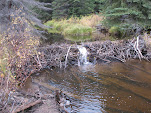
10/  Allow Beavers to Repopulate Every Stream Possible
Beavers have a number of effects with respect to carbon sequestration.
1) by raising the water table around their dams, Beavers increase the growth of all the vegetation.
2) by capturing the spent salmon after they have spawned, Beavers hold a valuable source of nutrients which came up from the sea.  These nutrients are cycled away from the dam in the droppings of all the animals that get some of their food from the beaver pond and its immediate surroundings.  Plant growth including forests is stimulated, sequestering more carbon.
3) by burying cellulostic material,  Beaver dams settle out silt from the water and capture 'bed-load'.  All the bits of cellulose and even their lodges and dams are eventually buried and become a deep carbon rich deposit.  When agricultural man found this rich bottom land, he drained it and mined it with his crops much as was done in the Hula.  The more Beaver dams we can allow to flourish, the more carbon we will remove from the atmosphere

11/ Protect Boreal forests
The tree line is moving northward with climate change.  This mimics what happened when the continental glaciers left the land.  Forests reestablished and much carbon was sequestered.  The forests are going to creep northward.  We must just let them do so without hindrance.

Final Note
Most of the systems above involve getting nutrients back into natural systems and then protecting them so that they can build up their biomasses and lock up carbon dioxide.  With a population that is already decreasing in many of the countries of the world and the means available to assist countries that haven't reached this favourable situation, we should soon be able to return land to nature*.  Most important, though, is that we cease to use fossil fuels.  Besides they are far to valuable to burn.

*See the TED talk by Monbiot  on re-wilding.

Friday, December 18, 2009

Jim Hansen's Climate Change Solution

Jim Hansen is the chief climatologist for the Goddard Space Institute of NASA. He has done much of the analysis of data showing that the world is warming. He has also suggested a way to reduce green house gases and, therefore, if the green house theory is correct, cool the planet back down. In case you haven't caught up with his suggestion, here it is.

And in case you are a climate change skeptic or even just an anthropogenic skeptic*, there are many other reasons to phase out fossil fuels

*you don't believe we are causing it.

Jim Hansen's solution is as follows. He suggests that fossil fuel should be taxed, initially a little but rising each year. If the coal or oil is produced at home, it is taxed at the extraction point. If it is from overseas, it is taxed as it crosses your border. The tax increments are such that in, say, 10 years it will make electricity generated by coal about equal in price to electricity generated renewably.* At first glance it looks as if this tax would cost each of us by increasing the price of electricity, and goods which are produced using fossil generated electricity (virtually everything) This increase in price would last for a decade or so as we mount the learning and technological curves of renewable energy.  Not so. Here's the good part of Prof Hansen's solution.

*actually we may have nearly gone beyond that point. Estimates for wind generated power run about 8.3c/unit (kWh) NZ.
{2020.  This blog is completely out of date.  New wind and solar is less expensive than even existing coal fired power}


Prof. Hansen proposes that every cent of the tax money collected is divided up equally and sent by electronic mail to the bank account of every legal adult in the country* and a half share per child up to two children per family. Electronic transfer costs virtually nothing.    For the average power user, this will compensate him for the increase in costs. The modest power user will end up with some cash in hand. The excessive power user will end up out-of-pocket.  There are some interesting implications from such a policy.

*An alternate idea would be to send an equal share to every registered tax payer.  The data base already exists and it would encourage anyone who is not a registered tax payer to register.  You don't have to be earning money at the time to get this dividend and in fact, a greater benefit to the economy is gained by unemployed people getting this money.**  Whatever system is adopted it should ensure that the maximum possible portion of the money collected goes to the people and the least to administration. 

{Cheques are expensive to create and send and many banks as of 2020 are phasing them out}

**When the poor get more money they spend it immediately just to keep their heads above water.  This is a much stronger stimulus to the economy that the rich getting this money.

Right at the outset there would be a strong motivation to exchange your SUV for a more modest car and to install LED lights as your incandescent and fluorescent bulbs burn out. You would want to insulate your house, paint the roof white in hot parts of the country and so forth. The more you save on your energy footprint, the more of this money remains in your pocket. In fact, it would be very worthwhile to invest all this money into energy saving measures for a few years to reap the benefits long into the future.

Then we have the effect on investment. Long before the cost of coal-generated and renewably-generated power became equal, in price, investment would start to shift towards renewables. The writing would be on the wall and everyone would want to get out of coal and oil before they lost the value of their investment. The actual amount of the tax is far less important than the inevitability of the increase each year.  The increase can be arithmetic (1,2,3,4,5 etc) or geometric (1,2,4,8,16,32 etc)

With a shift in investment a number of factors cut in. The economy of scale alone will bring down the price of building, installing running and maintaining renewable energy systems and hence the cost of electricity. Then there will be the cost-reducing-effect of competition as more renewable energy companies start up to access this burgeoning market. A great increase in revenue will enable more research and accelerate our climb up the technological and learning curves. All would contribute to the reduction of the cost of renewably generated electricity.

Note that as of today (late 2019) it appears that building and operating wind turbines is less expensive (more profitable) than just operating existing coal powered generators.  Add to this the recent experience with the mega battery that Elon Musk built for a South Australian wind farm.  Half way through it's first year, the battery is on track to earn the wind farm $20m by the end of the first year of operation.  A return of about 30% on the investment.  Do you wonder why we still have coal powered generation.

Since all types of renewable energy are fuel free, renewable generation systems will produce electricity for less than coal or oil generators, especially as coal and oil become ever more expensive. As the initial investment to install renewable energy 'plant' is paid off, the true cost of electricity will continue to fall.

At this point a curious result will occur. With the shift away from coal and oil the price of both coal and oil will decrease (supply and demand) and transport fuel for large trucks and earth moving equipment, which are more difficult to   power by electricity will decrease.* Any factories which use oil or coal as an industrial feed stock will find this resource less expensive.

*(2020) Note the transport truck developed by Elon Musk which only waits on an increase in the output of batteries to be rolled out.

Likewise, air travel with its high fuel cost component will become less expensive.

Air pollution will decrease and with it state financed medical costs. Of course, on the other hand, people will be living longer so the costs of pensions will go up.

A curious effect may be a ramp up of global warming.  With less aerosols going into the atmosphere, the umbrella effect of the aerosols will decrease.

Electric cars will begin to replace petrol driven cars and the ability to charge them when power is available (demand balancing), will help to balance our grids and will even make existing hydro power plants more financially viable. With Demand balancing in place, more water will be sent through the generators, less over the  spillway.

We may even be able to use the cars as a storage system when they are not in use.  Cars can be charged when power is available and hence cheap and feed power back into the grid when outside sources of power are scarce and hence expensive. This would generate a small but much appreciated revenue for the Electric car owner, especially during periods when he didn't need to use his car such as when on vacation overseas.

Another interesting implication of such a system is that it is a serious economic stimulus package.  Since an equal share is going to every tax payer, people at the bottom of the socio-economic ladder are gaining a nice nest egg.  Since they are generally struggling to put food on the table, they will tend to spend all this windfall.  All companies benefit and the tax take to the government increases.  All at the expense of the carbon polluters.  What the economists call 'velocity' increases and with it revenue to the government*.

*Big business finds ever more inventive ways of avoiding taxes.  The little guy has no choice.  PAYE comes out of his salary before he even sees it.

Incidentally, if the country from which you are getting your fossil fuel itself puts on tax and dividend, you do not tax their goods or fuel as they come into your country.    If there is no tax on carbon in your supply country you may impose such taxes and keep the tax revenue.  Once even one major importing country has put the tax in place, exporting countries will rush to impose it themselves so as to reap this revenue.

ps.  Just recently I have read Jim Hansen's publication, China and the Barbarians.   In it he makes a most interesting statement.  He suggests that China could, all by itself, bring the world to adopt tax and dividend.  He suggests that they introduce the system unilaterally or in concert with whatever other entities could be brought on board.  The European Common  Market was mentioned.  Of course the US of A would not join.  The senate and the congress are in the pocket of the fossil energy  lobby.  Now here is where it gets interesting.  Apparently, due to trade laws, this would entitle China to impose import tax on all goods (not only fossil fuel) from any country which hadn't introduced similar measures.  Go figure???  I don't understand these things but look at the result.  American goods in what is becoming one of its main trading partners and with any other countries which came on board, would become non-competitive.  They would simply be priced out of the market.  America would have the choice of either adopting the measures at the same rate as China and collecting the revenue itself or of sinking even faster into becoming a second or third world country.

So far, I haven't been able to see any down-side to Jim Hansen's solution. Of course, vested interests such as the oil and coal companies will scream their heads off and lobby for all they are worth against the idea. In America, the primary world polluter*, it is very unlikely that The Hansen Solution will be implemented. Big business completely controls the congress and senate and the president. The more money big business puts into lobbying against the Hansen Solution, the surer we can be that we are on the right track. Can anyone suggest a technical down-side to the Hansen solution.

*China has surpassed the USA as the major polluter but is working harder than almost any other country to shift to renewables.