Some hair brained suggestions have been made for removing Carbon dioxide from the air or even from the smoke stack of coal fired power stations. Suggestions have also been made about putting little mirrors in the Le grange point between us and the sun to cool off the earth. Just imagine how much fun this would be at the next economic crisis when funds are cut for constantly renewing these mirrors and we already are up at, say, 500ppm carbon dioxide. not to mention a likely reduction in photosynthesis from the shading which would itself, cause a reduction in the uptake of carbon from the air.
I have read that in order to remove carbon dioxide from the stack of a coal fired power station (or one growing biomass) we would need to use an extra 30% more power. In other words you would have to burn 30% more coal. I wonder if you would also have to burn 30% of the 30% which equals 9% more coal to sequester the 30% extra coal you burnt. Then you would have to burn 30% of the 9% which equals another 2.7% to take up this extra 9% worth of carbon dioxide. Lets go one more. 30% of the 2.7% is 0.81%. So far we are up to a total of 42.51 percent more coal burnt in order to sequester the carbon dioxide produced. Sorry I'm being facetious. It could be that the boffins already calculated this sequence and it came to 30% overall. Perhaps they will put in wind turbines to generate the power to remove the carbon from the smoke stacks!!!! (instead of simply using the power from wind turbines to replace the use of fossil fuels)
It is axiomatic that we have to first stop putting more sequestered carbon into the atmosphere. Just imagine the stupidity of trying to pull Carbon dioxide out of the atmosphere while coal fired power stations are pouring more into the air. Not rocket science - right??
However this blog is about measures we can take to remove Carbon dioxide from the air.
Let's get real about this. Has anyone noticed that the level of Carbon dioxide goes up and down by 7ppm during the year or more accurately, 8 up and 6 down. Natural processes are far stronger than anything we are likely to come up with. How about if we could get the system to go up 6 and down 8. Let's see what natural processes we could encourage.
And while we are at it, the world production of Carbon dioxide from fossil fuel in 2008, which is the latest figures I can find, was 2.988 x 10¹³ kg. The mass of the earth's atmosphere is about 5 x 10¹⁸kg. Dividing one by the other and we see that we are putting enough Carbon dioxide into the atmosphere to raise the level of Carbon dioxide by 5.97ppm each year. In actual fact the net rise in Carbon dioxide is around 2.5ppm per year (and rising). So about 3ppm is being taken up somewhere. If we stopped the use of all fossil fuel, this net uptake of about 3ppm would not stop. At least at first, we could expect Carbon dioxide to decrease at about 3ppm per year. However, we could even do better than this.
There are a lot of carbon sinks we could encourage.
Amount of CO2 in the atmosphere
The figure of 5 x 10¹⁸kg of atmosphere was from wikipedia. Here is a calculation that comes up with a slightly different figure.
*The pressure on each square metre of land at sea level is 10.3 tons. In other words, the column of air above each square meter weighs this amount.
*The area of a sphere is 4πr2 so the area of the earth with a radius of 6371km is 4π x 63712 = 5.10 x 10⁸ square kilometers.
*There are 106 square meters in a square km so the area of the earth is 5.10 x 10¹⁴ square meters
*5.10 x 10¹⁴ square meters times 10.3tons per square meter equals 5.25 x 10¹⁵ tons of atmosphere## (= 5.25 x 10¹⁸kg
*The Carbon dioxide concentration is just about to reach 400ppm so I will use this figure. Note that this is the parts per million by volume. To calculate the weight we must multiply by 44/29. 44 is the molecular weight of CO2 and 29 is approximately the molar weight of air. The weight of Carbon dioxide in the atmosphere is therefore 5.25 x 1015 x 400 / 106 x44/29 = 3.186 x 10¹²tons of CO2 in the atmosphere.
Now that we have a handle on the size of the problem, let's look at how we could allow Gaia to remove the Carbon from the air.
1/ Stop the Production of Palm Oil and clear fell logging and let Open fields revert to jungle
A mature jungle, by definition, does not produce any net oxygen or remove any carbon from the atmosphere. The rate of trees falling and rotting is equal to the rate of photosynthesis. (that is the meaning of mature - or at least one definition of the term). In the tropics where the soil is above about 25degrees C, humus doesn't accumulate so mature tropical jungles, while they sequester (hold) a lot of Carbon, do not remove any net Carbon from the atmosphere.
A growing tropical jungle is a different beast all together. You only have to look at what happens when a forest giant falls in a mature jungle. The little saplings which have been stunted from a lack of light shoot up at an astounding rate. Pretty soon that part of the forest is impenetrable. The trees compete and eventually a few are left and they contain huge amounts of wood with its sequestered carbon. As a tree continue to grow, it continue to sequester more carbon dioxide and this continues until it dies and returns its carbon to the atmosphere.
Let's say a certain type of wood is 50% water*. That is to say it is half wood, half water. So in 100kg of freshly cut wood you have 50kg of actual wood. About 50% of dry wood is carbon. Carbon has an atomic weight of 12. Oxygen, 16. So CO2 has a molecular weight of 44. Every kg of carbon sequestered in wood represents 1kg x 44/12 equals 3 and 2/3 kg of carbon dioxide removed from the atmosphere. To grow 100kg of wet wood the tree has actually removed 183kg of carbon dioxide from the air.
* note that in the above link, they use the amount of water divided by the amount of dry wood. I think this is a little confusing as they get 100% moisture or even more, depending on the species of tree. I think the amount of water divided by the freshly cut wood is less confusing.
So if we stop producing palm oil and let the jungle take over again, a huge amount of Carbon will be sequestered from the air.
2/ On any land where logging is practiced, build the logged wood into long term structures and replant.
If you look at the above link under the words "50% of dry wood is Carbon" you will see a calculation that for Douglas Fir on the coast of BC with a 70 year rotation Assuming you build the lumber into long lasting structures. Such a forest will result in the removal of 5 tons of CO2 per hectare per year. This assumes that only the milled timber goes into long term structures and doesn't assume any use for the waste wood such as paper, press board or charcoal for soil improvement and sequestration so it is a very conservative estimation. There are 100 hectares in a square kilometer so each square kilometer planted in Douglas fir on the coast of BC would remove 500 tons of CO2 per year. The results are so variable for different areas and different species that I am not even going to try to estimate how much CO2 could be removed from the atmosphere by logging and using the wood for long lasting structures. However, using just this approximation you can see that it is substantial. Pyrolyze all the waste wood making cooking gas, gasoline, diesel and air line fuel and you displace oil extraction. Incorporate the charcoal into agricultural soils and you sequester considerable carbon, long-term in the soil.
3/ Turn wood waste into charcoal and use in tropical soils
Humus does not accumulate in tropical soils the way it does in the soil under temperate forests. However, it has been found that charcoal can replace humus in tropical soils. It is stable and serves the same purpose of storing nutrients and releasing them to plants. This is called Terra Preta and it has been found in certain areas in the jungle where generations of people have incorporated charred organic material into the soil that they use for growing crops. Tropical soils are very poor for agriculture partially due to their lack of ability to store nutrients. Add charcoal to these soils and they are markedly improved.
4/ Stop,,,,, Completely Stop the Harvest of Whales
Many species of whales feed at depth and poop on the surface. This has been termed the Whale Pump and in pre-hunting times must have brought mega quantities of nutrients up into the photic zone. Whales also take nutrients from polar waters to oligotrophic* tropical waters where they go to give birth. While many species of whale do not feed in the birthing areas, they feed their babies who poop nutrients into the nutrient poor tropical waters. The phytoplankton gets nitrates, phosphates and all sorts of other 'ates' from this rich source of manure and absorb carbonate from the water to build their bodies.
* Nutrient poor.
The Carbon gradient from the air to the water is therefore increased and the sea water can absorb more Carbon dioxide from the air. It is estimated that about half of the Carbon dioxide we have produced has been absorbed by the oceans. If this was not so, we would be approaching an atmospheric concentration of around 550 ppm now instead of 400ppm. As with any reaction, as it proceeds it slows down. At some point, the oceans will be saturated with respect to carbon dioxide and will cease to absorb any more. At that point, other things being equal, our 2-3ppm yearly increase in Carbon dioxide will jump to 4 to 6ppm.
Long before that happens, though, the oceans as we know them will be dead. Already there are indications that Pteropods, a swimming snail that serves the same function in the food chain as krill, are having trouble forming their shells because of ocean acidity. Note here that if we restore the whale pump, not only will the oceans be able to take more carbon dioxide out of the oceans but the danger to the ocean food chains will also be reduced. It will also increase the amount of fish we can take sustainably from the oceans.
5/ Put Half of the Oceans off Limits for Fishing.
Our catches of fish are pitiful compared to what they once were*. We have destroyed so many populations that it is amazing that the oceans still function. The amounts of carbon stored in the fish, invertebrates plankton and so forth must have been huge. We have fished out the oceans, eaten the fish, pooped out the residue and released all this Carbon dioxide into the air. Let the fish stocks recover and they will once more hold mega quantities of carbon.
*Read the book Sea of Slaughter by Farley Mowat to get an idea of just what we have destroyed.
Even better, have you ever seen recreational fishermen, line fishing just on the borders of the tiny marine reserves we have set aside. The catches there are great as adult fish from the reserves look for new sources of food outside the reserves. Imagine what the fishing would be like if we set half of our areas aside as no fishing zones. There would no longer be any need for FADs, drift nets, bottom trawls or purse seines. The fishing would be so great that only hook and line methods would be necessary*. We not only sequester carbon but improve our fisheries at the same time.
*Mowat's book again.
6/ Protect our Corals
Sea level is going up at about 3mm per year. No matter what we do, it won't slow down any time soon. There will be an overshoot even if we stop all carbon emissions tomorrow. Over the whole transition from a glacial, 20,000 years ago to our present Holocene interglacial sea level rose at about 6mm per year although there were intervals in which the rate rose to about 56mm per year. Coral skeletons are CaCO3 and are a tad over 60% carbon dioxide as are the shells of mollusks (oyster reefs) and any other structure made from Calcium carbonate. As the sea level rises, the constraint of the surface is removed and corals can grow upward. If our corals are healthy, they will absorb large quantities of carbon dioxide as they grow upward. If we stop acidifying and warming our oceans and take a few other measures to re-establish the health of our coral reefs such as not fishing certain species, corals will help us get rid of atmospheric CO2.
7/ Let Grasslands Recover
Many new civilization mine their dirt until there is nothing left and the civilization collapses. Most of the carbon which had been stored in the soils goes into the atmosphere. At the very least we have to adopt farming practices that stop this process. Even better would be if we could restore the environment that existed, for instance, on the great plains of North America. The plants of grasslands are mostly under ground. This an adaptation to fire. Grass fires are intense but if short duration and the roots and stems of the grass remains to sprout leaves at the next season. However, we don't want fires and there is a far better option. Have a look at this Ted Talk by Allan Savory, Better still, read The Omnivore's Dilemma, by Michael Pollan starting at chapter 10. Also read Growing a Revolution by David R Montgomery. By the time you have read both of these you should be convinced that there is far more our farmers can do despite their protestations that they are doing all that is possible. And they will have a far more fulfilling farming experience and an improved bottom line.
8/ Reflood Bogs
Bogs, or wetlands as they are often called sequester carbon at a great rate. This is especially so if the bottom of the bog is anaerobic. Cellulose, which is 50% Carbon is refractory under anaerobic conditions, The Hula in Israel is a good example. It is a wetland in the rift valley upstream of the Kineret (sea of Galilee). The Israelis drained it and turned it into farmland. The peat which had accumulated over Milena started to oxidize and release nutrients and carbon . It polluted the Kinerit from which Israel draws her water. A few decades ago, Israel realized the problem and re flooded the Hula. Now it once more sequesters carbon and cleans water flowing through it to the Kineret
9/ Put Nutrients back on to the land
The Chinese have managed to keep an agricultural civilization going on the same piece of land for over 5000 years. She did this by recycling all animal and human wastes back on to the land. The flush toilet is going to be China's undoing unless they have systems to cycle the nutrients from sewage plants back on to the land. This sort of fertilizer has the added advantage of containing much organic carbon so it feeds the micro-organisms of the soil. Think of the plains of Africa or North America in their pristine state. Every bit of waste, every body went back into the soil. The Indians of the great planes even put the bodies of their dead on platforms for the birds and insects to return to the Great Spirit. We have depleted the carbon content of our soils. Restoring the system would pull even more Carbon out of the atmosphere.
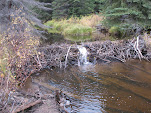
10/ Allow Beavers to Repopulate Every Stream Possible
Beavers have a number of effects with respect to carbon sequestration.
1) by raising the water table around their dams, Beavers increase the growth of all the vegetation.
2) by capturing the spent salmon after they have spawned, Beavers hold a valuable source of nutrients which came up from the sea. These nutrients are cycled away from the dam in the droppings of all the animals that get some of their food from the beaver pond and its immediate surroundings. Plant growth including forests is stimulated, sequestering more carbon.
3) by burying cellulostic material, Beaver dams settle out silt from the water and capture 'bed-load'. All the bits of cellulose and even their lodges and dams are eventually buried and become a deep carbon rich deposit. When agricultural man found this rich bottom land, he drained it and mined it with his crops much as was done in the Hula. The more Beaver dams we can allow to flourish, the more carbon we will remove from the atmosphere
11/ Protect Boreal forests
The tree line is moving northward with climate change. This mimics what happened when the continental glaciers left the land. Forests reestablished and much carbon was sequestered. The forests are going to creep northward. We must just let them do so without hindrance.
Final Note
Most of the systems above involve getting nutrients back into natural systems and then protecting them so that they can build up their biomasses and lock up carbon dioxide. With a population that is already decreasing in many of the countries of the world and the means available to assist countries that haven't reached this favourable situation, we should soon be able to return land to nature*. Most important, though, is that we cease to use fossil fuels. Besides they are far to valuable to burn.
*See the TED talk by Monbiot on re-wilding.
I have read that in order to remove carbon dioxide from the stack of a coal fired power station (or one growing biomass) we would need to use an extra 30% more power. In other words you would have to burn 30% more coal. I wonder if you would also have to burn 30% of the 30% which equals 9% more coal to sequester the 30% extra coal you burnt. Then you would have to burn 30% of the 9% which equals another 2.7% to take up this extra 9% worth of carbon dioxide. Lets go one more. 30% of the 2.7% is 0.81%. So far we are up to a total of 42.51 percent more coal burnt in order to sequester the carbon dioxide produced. Sorry I'm being facetious. It could be that the boffins already calculated this sequence and it came to 30% overall. Perhaps they will put in wind turbines to generate the power to remove the carbon from the smoke stacks!!!! (instead of simply using the power from wind turbines to replace the use of fossil fuels)
It is axiomatic that we have to first stop putting more sequestered carbon into the atmosphere. Just imagine the stupidity of trying to pull Carbon dioxide out of the atmosphere while coal fired power stations are pouring more into the air. Not rocket science - right??
However this blog is about measures we can take to remove Carbon dioxide from the air.
Let's get real about this. Has anyone noticed that the level of Carbon dioxide goes up and down by 7ppm during the year or more accurately, 8 up and 6 down. Natural processes are far stronger than anything we are likely to come up with. How about if we could get the system to go up 6 and down 8. Let's see what natural processes we could encourage.
And while we are at it, the world production of Carbon dioxide from fossil fuel in 2008, which is the latest figures I can find, was 2.988 x 10¹³ kg. The mass of the earth's atmosphere is about 5 x 10¹⁸kg. Dividing one by the other and we see that we are putting enough Carbon dioxide into the atmosphere to raise the level of Carbon dioxide by 5.97ppm each year. In actual fact the net rise in Carbon dioxide is around 2.5ppm per year (and rising). So about 3ppm is being taken up somewhere. If we stopped the use of all fossil fuel, this net uptake of about 3ppm would not stop. At least at first, we could expect Carbon dioxide to decrease at about 3ppm per year. However, we could even do better than this.
There are a lot of carbon sinks we could encourage.
Amount of CO2 in the atmosphere
The figure of 5 x 10¹⁸kg of atmosphere was from wikipedia. Here is a calculation that comes up with a slightly different figure.
*The pressure on each square metre of land at sea level is 10.3 tons. In other words, the column of air above each square meter weighs this amount.
*The area of a sphere is 4πr2 so the area of the earth with a radius of 6371km is 4π x 63712 = 5.10 x 10⁸ square kilometers.
*There are 106 square meters in a square km so the area of the earth is 5.10 x 10¹⁴ square meters
*5.10 x 10¹⁴ square meters times 10.3tons per square meter equals 5.25 x 10¹⁵ tons of atmosphere## (= 5.25 x 10¹⁸kg
*The Carbon dioxide concentration is just about to reach 400ppm so I will use this figure. Note that this is the parts per million by volume. To calculate the weight we must multiply by 44/29. 44 is the molecular weight of CO2 and 29 is approximately the molar weight of air. The weight of Carbon dioxide in the atmosphere is therefore 5.25 x 1015 x 400 / 106 x44/29 = 3.186 x 10¹²tons of CO2 in the atmosphere.
Now that we have a handle on the size of the problem, let's look at how we could allow Gaia to remove the Carbon from the air.
1/ Stop the Production of Palm Oil and clear fell logging and let Open fields revert to jungle
A mature jungle, by definition, does not produce any net oxygen or remove any carbon from the atmosphere. The rate of trees falling and rotting is equal to the rate of photosynthesis. (that is the meaning of mature - or at least one definition of the term). In the tropics where the soil is above about 25degrees C, humus doesn't accumulate so mature tropical jungles, while they sequester (hold) a lot of Carbon, do not remove any net Carbon from the atmosphere.
A growing tropical jungle is a different beast all together. You only have to look at what happens when a forest giant falls in a mature jungle. The little saplings which have been stunted from a lack of light shoot up at an astounding rate. Pretty soon that part of the forest is impenetrable. The trees compete and eventually a few are left and they contain huge amounts of wood with its sequestered carbon. As a tree continue to grow, it continue to sequester more carbon dioxide and this continues until it dies and returns its carbon to the atmosphere.
Let's say a certain type of wood is 50% water*. That is to say it is half wood, half water. So in 100kg of freshly cut wood you have 50kg of actual wood. About 50% of dry wood is carbon. Carbon has an atomic weight of 12. Oxygen, 16. So CO2 has a molecular weight of 44. Every kg of carbon sequestered in wood represents 1kg x 44/12 equals 3 and 2/3 kg of carbon dioxide removed from the atmosphere. To grow 100kg of wet wood the tree has actually removed 183kg of carbon dioxide from the air.
* note that in the above link, they use the amount of water divided by the amount of dry wood. I think this is a little confusing as they get 100% moisture or even more, depending on the species of tree. I think the amount of water divided by the freshly cut wood is less confusing.
So if we stop producing palm oil and let the jungle take over again, a huge amount of Carbon will be sequestered from the air.
2/ On any land where logging is practiced, build the logged wood into long term structures and replant.
If you look at the above link under the words "50% of dry wood is Carbon" you will see a calculation that for Douglas Fir on the coast of BC with a 70 year rotation Assuming you build the lumber into long lasting structures. Such a forest will result in the removal of 5 tons of CO2 per hectare per year. This assumes that only the milled timber goes into long term structures and doesn't assume any use for the waste wood such as paper, press board or charcoal for soil improvement and sequestration so it is a very conservative estimation. There are 100 hectares in a square kilometer so each square kilometer planted in Douglas fir on the coast of BC would remove 500 tons of CO2 per year. The results are so variable for different areas and different species that I am not even going to try to estimate how much CO2 could be removed from the atmosphere by logging and using the wood for long lasting structures. However, using just this approximation you can see that it is substantial. Pyrolyze all the waste wood making cooking gas, gasoline, diesel and air line fuel and you displace oil extraction. Incorporate the charcoal into agricultural soils and you sequester considerable carbon, long-term in the soil.
3/ Turn wood waste into charcoal and use in tropical soils
Humus does not accumulate in tropical soils the way it does in the soil under temperate forests. However, it has been found that charcoal can replace humus in tropical soils. It is stable and serves the same purpose of storing nutrients and releasing them to plants. This is called Terra Preta and it has been found in certain areas in the jungle where generations of people have incorporated charred organic material into the soil that they use for growing crops. Tropical soils are very poor for agriculture partially due to their lack of ability to store nutrients. Add charcoal to these soils and they are markedly improved.
4/ Stop,,,,, Completely Stop the Harvest of Whales
Many species of whales feed at depth and poop on the surface. This has been termed the Whale Pump and in pre-hunting times must have brought mega quantities of nutrients up into the photic zone. Whales also take nutrients from polar waters to oligotrophic* tropical waters where they go to give birth. While many species of whale do not feed in the birthing areas, they feed their babies who poop nutrients into the nutrient poor tropical waters. The phytoplankton gets nitrates, phosphates and all sorts of other 'ates' from this rich source of manure and absorb carbonate from the water to build their bodies.
* Nutrient poor.
The Carbon gradient from the air to the water is therefore increased and the sea water can absorb more Carbon dioxide from the air. It is estimated that about half of the Carbon dioxide we have produced has been absorbed by the oceans. If this was not so, we would be approaching an atmospheric concentration of around 550 ppm now instead of 400ppm. As with any reaction, as it proceeds it slows down. At some point, the oceans will be saturated with respect to carbon dioxide and will cease to absorb any more. At that point, other things being equal, our 2-3ppm yearly increase in Carbon dioxide will jump to 4 to 6ppm.
Long before that happens, though, the oceans as we know them will be dead. Already there are indications that Pteropods, a swimming snail that serves the same function in the food chain as krill, are having trouble forming their shells because of ocean acidity. Note here that if we restore the whale pump, not only will the oceans be able to take more carbon dioxide out of the oceans but the danger to the ocean food chains will also be reduced. It will also increase the amount of fish we can take sustainably from the oceans.
5/ Put Half of the Oceans off Limits for Fishing.
Our catches of fish are pitiful compared to what they once were*. We have destroyed so many populations that it is amazing that the oceans still function. The amounts of carbon stored in the fish, invertebrates plankton and so forth must have been huge. We have fished out the oceans, eaten the fish, pooped out the residue and released all this Carbon dioxide into the air. Let the fish stocks recover and they will once more hold mega quantities of carbon.
*Read the book Sea of Slaughter by Farley Mowat to get an idea of just what we have destroyed.
Even better, have you ever seen recreational fishermen, line fishing just on the borders of the tiny marine reserves we have set aside. The catches there are great as adult fish from the reserves look for new sources of food outside the reserves. Imagine what the fishing would be like if we set half of our areas aside as no fishing zones. There would no longer be any need for FADs, drift nets, bottom trawls or purse seines. The fishing would be so great that only hook and line methods would be necessary*. We not only sequester carbon but improve our fisheries at the same time.
*Mowat's book again.
6/ Protect our Corals
Sea level is going up at about 3mm per year. No matter what we do, it won't slow down any time soon. There will be an overshoot even if we stop all carbon emissions tomorrow. Over the whole transition from a glacial, 20,000 years ago to our present Holocene interglacial sea level rose at about 6mm per year although there were intervals in which the rate rose to about 56mm per year. Coral skeletons are CaCO3 and are a tad over 60% carbon dioxide as are the shells of mollusks (oyster reefs) and any other structure made from Calcium carbonate. As the sea level rises, the constraint of the surface is removed and corals can grow upward. If our corals are healthy, they will absorb large quantities of carbon dioxide as they grow upward. If we stop acidifying and warming our oceans and take a few other measures to re-establish the health of our coral reefs such as not fishing certain species, corals will help us get rid of atmospheric CO2.
7/ Let Grasslands Recover
Many new civilization mine their dirt until there is nothing left and the civilization collapses. Most of the carbon which had been stored in the soils goes into the atmosphere. At the very least we have to adopt farming practices that stop this process. Even better would be if we could restore the environment that existed, for instance, on the great plains of North America. The plants of grasslands are mostly under ground. This an adaptation to fire. Grass fires are intense but if short duration and the roots and stems of the grass remains to sprout leaves at the next season. However, we don't want fires and there is a far better option. Have a look at this Ted Talk by Allan Savory, Better still, read The Omnivore's Dilemma, by Michael Pollan starting at chapter 10. Also read Growing a Revolution by David R Montgomery. By the time you have read both of these you should be convinced that there is far more our farmers can do despite their protestations that they are doing all that is possible. And they will have a far more fulfilling farming experience and an improved bottom line.
8/ Reflood Bogs
Bogs, or wetlands as they are often called sequester carbon at a great rate. This is especially so if the bottom of the bog is anaerobic. Cellulose, which is 50% Carbon is refractory under anaerobic conditions, The Hula in Israel is a good example. It is a wetland in the rift valley upstream of the Kineret (sea of Galilee). The Israelis drained it and turned it into farmland. The peat which had accumulated over Milena started to oxidize and release nutrients and carbon . It polluted the Kinerit from which Israel draws her water. A few decades ago, Israel realized the problem and re flooded the Hula. Now it once more sequesters carbon and cleans water flowing through it to the Kineret
9/ Put Nutrients back on to the land
The Chinese have managed to keep an agricultural civilization going on the same piece of land for over 5000 years. She did this by recycling all animal and human wastes back on to the land. The flush toilet is going to be China's undoing unless they have systems to cycle the nutrients from sewage plants back on to the land. This sort of fertilizer has the added advantage of containing much organic carbon so it feeds the micro-organisms of the soil. Think of the plains of Africa or North America in their pristine state. Every bit of waste, every body went back into the soil. The Indians of the great planes even put the bodies of their dead on platforms for the birds and insects to return to the Great Spirit. We have depleted the carbon content of our soils. Restoring the system would pull even more Carbon out of the atmosphere.
10/ Allow Beavers to Repopulate Every Stream Possible
Beavers have a number of effects with respect to carbon sequestration.
1) by raising the water table around their dams, Beavers increase the growth of all the vegetation.
2) by capturing the spent salmon after they have spawned, Beavers hold a valuable source of nutrients which came up from the sea. These nutrients are cycled away from the dam in the droppings of all the animals that get some of their food from the beaver pond and its immediate surroundings. Plant growth including forests is stimulated, sequestering more carbon.
3) by burying cellulostic material, Beaver dams settle out silt from the water and capture 'bed-load'. All the bits of cellulose and even their lodges and dams are eventually buried and become a deep carbon rich deposit. When agricultural man found this rich bottom land, he drained it and mined it with his crops much as was done in the Hula. The more Beaver dams we can allow to flourish, the more carbon we will remove from the atmosphere
11/ Protect Boreal forests
The tree line is moving northward with climate change. This mimics what happened when the continental glaciers left the land. Forests reestablished and much carbon was sequestered. The forests are going to creep northward. We must just let them do so without hindrance.
Final Note
Most of the systems above involve getting nutrients back into natural systems and then protecting them so that they can build up their biomasses and lock up carbon dioxide. With a population that is already decreasing in many of the countries of the world and the means available to assist countries that haven't reached this favourable situation, we should soon be able to return land to nature*. Most important, though, is that we cease to use fossil fuels. Besides they are far to valuable to burn.
*See the TED talk by Monbiot on re-wilding.