Total Pageviews

Sunday, October 24, 2010

Terraforming New Zealand - Improving our water resources

Terraforming: To transform the landscape on another planet to resemble the landscape on earth. (wika dictionary)

And that is just about what has happened here in New Zealand. If there ever was a land that looked like another planet, it was pre-human New Zealand and we have terraformed most of it to resemble the northern hemisphere.

Before I start talking about continuing the terraforming, let me make one thing clear. I think that the efforts of Kiwis to turn back the clock to recreate, on islands, the pre-European or even pre-human flora and fauna is wonderful, amazing and very worthwhile. What a great shame we can't bring back the Moa the Hast Eagle and the sea birds.  And I don't confine the definition of islands to pieces of land surrounded by water. In Wellington, for instance, there are the NgaManu and Staglands nature reserves, both of which preserve and encourage native flora and fauna. They are land islands surrounded by pest proof fences in a sea of city and agriculture.

There are also some unlikely types of islands. There are fenced road verges.   In England, they have been found not only to be refuges of plants and animals that are disappearing from farm lands but are corridors for migration. There are military reserves all over the world. Tanks and armoured personnel carriers churn up the soil and practice shooting in these areas so you wouldn't usually think of them as nature reserves. However, people are not allowed in for fear of unexploded ordinance and people are much more destructive than tanks. All manner of species flourish in military reserves. I should imagine that road verges and military ranges in New Zealand also have these benefits.

Potentially, you also have places like wind farms. Put a pest proof fence around a wind farm and let a university come in and eliminate introduced species and bring in natives and you can have islands of native flora and fauna all over New Zealand. This is possible because with a "going concern" (the wind farm) on site with very little impact on the environment, you have enough money to maintain the essential fence. Last but not least, there are home gardens. Plant native trees or bushes and you have many little islands in an urban environment. They provide shelter, leaves for browsing and pollen and nectar for native and also for introduced birds and animals.

All these are great and very worthwhile endeavors but the fact remains that most of the two main islands of New Zealand have been terraformed. If we wanted to turn back the clock we would have to grub up virtually all our forage crops, eliminate cattle sheep and deer, poison our domestic bee, get rid of the earthworms, cut down all our fruit trees and most of our lumber trees and stop growing all of our vegetables. For vegetables we would be left with fern heads and cabbage trees. So lets continue to terraform New Zealand but lets do it slowly, carefully, and with all the precautions we can manage. We have the flora and fauna of all the world to choose from#.

# Have a look at p34 in New Scientist, Jan15,2011 for a take on exotics.


We have to be cautious. We have been stung by the introduction of the rabbit, stoat, weasel, cat, possum gorse and broom. Some would decry the introduction of the many species of deer, the Tahr and the Chamois and the introduction of radiata pine and Douglas fir. We do have a tendency, though, to only see the empty half of the glass.

The rabbit is a huge opportunity for someone who can trap them in large numbers and sell canned curried rabbit to India and canned sweet and sour rabbit to China. Gorse and broom are fantastic nursery species for the planting of forest trees and both fix nitrogen. Deer, Tar and Chamois provide New Zealand with the best hunting in the world. Possum are a source of about the best fur in the world and, mixed with Marino wool  makes the most incredibly tactile sweaters you simply can't keep your hands off of. Our introduced trees provide much of the material for the construction of our houses and support an export industry. For all of that, great caution in introducing new species into New Zealand is of the greatest importance.

And let's say for the sake of the argument that we wanted to bring in a large hunting eagle to nobble up the rabbits.  The black eagle of South Africa would be a likely candidate.  His main quarry is the Dasie.  We would have great trepidations that they would also take lambs.  What to do.  Well, we could bring in ten or so but all males or all females or we could bring in mixed pairs but neuter them.  Give the males a vasectomy so that they would behave completely normally but couldn't have young.

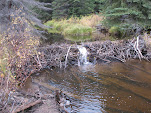
My own favorite candidate for the next introduction is the Canadian beaver. One unique characteristic of this animal is that you know exactly where every beaver is. They build dams and lodges and cut down trees; mainly willows.  If it became necessary for some unforeseen reason to eliminate them, it is relatively easy to do so.  Moreover beavers are self limiting.  When introduced into a new area they overshoot slightly and then fall back to the carrying capacity of the stream.  However, these aren't  reasons to introduce an animal. It only counters two reasons not to introduce them. You can't say with beavers "Oh but if it turns out badly, we will never be able to get rid of them". You also can't say what if the population explodes.  It doesn't happen with beavers. So what are the reasons 'to' introduce them. The reasons are many and varied.

Water Management
Here in Canterbury where I live, we are on a huge alluvial plane which has been created by the out-wash from our high mountains (alps) to the West.   Rivers drop their bed load as they leave the mountains and drop their silt and clay wherever the stream is slow enough. Historically, beds of rivers have filled up with this material, jumped their banks and start to deposit material in a new location. Our rivers act like giant grouting machines spreading material back and forth across the plains. In the 'modern' era we have stopped this process by building levies on either side of the rivers and by allowing companies to extract gravel (shingle) from the river beds.   Underlying much of Canterbury are alternate layers of shingle  and clay.  When we have high rainfall events in our mountains, within two or three days the river rises, the water rushes out to sea and the river falls again. Canterbury itself, while hardly a desert, is on the dry side of the island. This makes it ideal for agriculture as long as water is available. It has been proposed to build great numbers of small concrete dams in the feeder streams all through the headwaters of our rivers. This is to retain water during periods of high availability and release it when water is scarce. Small dams also hold the water longer on the land and increase aquafer recharge. Why not let the beavers do it for free.

Not only will they build the dams but will maintain them forever. No maintenance needed. No expense. And while concrete dams stop the free movement of various plants and animals along the streams, beaver dams do not.  Better still, our rivers have been primed for the introduction of beavers.  Many of them are full of Willows and Willow bark is a favorite food  of the beaver and the remaining branches, their favorite construction material.

Extending the Life of Man Made Dams
As soon as a hydro dam is built it starts to silt up. Bed load forms a delta wherever a stream flows into the dam and finer material settles all over the bottom. Beaver dams catch all this material before it arrives in a hydro-electric or irrigation dam and extends its life. For hydro-electric dams there is another effect.

Increasing the Electricity Generated from a Hydro Dam
One of the largest reducers  of the total energy which can be produced from a hydro dam is uneven water flow. If heavy rainfall occurs in the dam's catchment, water has to be let out over the spillway rather than going through the generators. This water is wasted. With beavers in a catchment, water is retained during high flows and released during low flows#. The flow of the water into the hydro dam is evened out, increasing the amount of power which can be generated from the same total amount of water flowing through the hydro lake.


# Read Three Against the Wilderness by Eric Collier.  Especially Chapter 27.  It goes beyond belief the extent to which beaver dams can moderate flood events. Available in the Amberley and the Christchurch libraries.
 
Creating Wetlands

The value of wetlands is too well known to need rehashing. Beaver dams create wetlands as the ponds fill up with silt and organic material. Water plants grow in the pond, die and sink to the bottom and  shore plants encroach from the sides until the pond is transformed into a wetland. Trees eventually colonize the wetland and another colony of beavers establishes itself and the cycle repeats itself. Over time, the valley bottom becomes higher and higher with a ever deepening water holding sponge. The water storage and release function of the beavers handiwork increases over time, further evening out water flow. Wetlands themselves catch silt and bottom load almost as well as the original beaver pond.

Clearing the Water
There are distinct advantages to clear water. Many fish, including trout and salmon prefer clear water, water plants can grow attached to the bottom when sunlight can penetrate and water treatment for human use is less expensive when there is no suspended sediment. Beaver ponds are very good at trapping bed load and suspended sediment.

Removing Nutrients
When too great a quantity of agricultural runoff seeps into a stream, it can become eutrophic* and inimical to normal flora and fauna. Beaver ponds create a detritus cycle which captures nutrients in a form which is excellent food for a wide range of animals while at the same time keeping the water clear. The detritus cycle depends on all the bits of cellulose (wood chips, twigs, leaves) that collect in beaver dams. Beaver dams also increase the surface area of a stream and hence the amount of sun it collects and therefore the amount of photosynthesis from phytoplankton and rooted plants. Photosynthesis also removes nutrients from the water.

*when nutrient levels are so high that toxic blooms of algae occur, die and poison the water.

Ecological Diversification
If you have a forest with a stream running through it, you have two sorts of environment available for plants and animals - namely the stream and the forest.  Add a beaver pond and you have, of course the pond. You also have an area around the dam which is opened up to sunshine which encourages the growth of herbs, grasses and shrubs.   The cleared area can be as much as a hundred meters from the shore although usually much less.    You create two new environments for plants and animals.

Fish Nurturing
Salmon hatch in gravel beds in streams and many salmon species search out quiet areas to grow before they return to the sea. If they have to fight currents all the time, all the energy from their food goes into swimming instead of growing. Beaver ponds are the ideal nurseries for the Salmon family. Moreover, adult salmon, after spawning, die and are held in beaver dams. The beaver dams catch this huge pulse of nutrients which comes up from the sea and stores it in the surrounding ecology. the food, thus created,  is available to the juvenile salmon when they hatch. Beaver dams greatly enhance salmon runs. They also provide quiet pools for trout.  If you have seen National Geographic films of salmon leaping high water falls with a single bound, you will understand that a beaver dam is no barrier to a migrating salmon intent on his once in a life time act of procreation.

If there was ever an animal that would benefit New Zealand it is the beaver.

Sunday, October 10, 2010

Forget Climate Change

Do I think the climate is changing?  
Yup.

Do I think humans are responsible?  
Pretty much. The basic physics is pretty simple*.
 
*So is a computer;  just a bunch of switches that are either on or off or if you like a bunch of one's and zero's but look at how complex it gets when you combine them together in various ways.  At the core, climate change is pretty simple but then it gets really really complicated. I can quite sympathize with the doubters.
 
And could the climate change rather quickly?  
Very possibly. It's done so before without the help of humans.  The ice-core-record shows that under natural, persistent but slower pushes, the climate sometimes flips.

Would this be so bad?  
Sure would!! If climatic zones change and with them the wheat, rice and corn growing zones, we will have epic scale starvation**. Even more fun, when the Arctic ocean becomes ice free, it becomes a massive solar collector. Just watch Greenland melt as  the Arctic becomes more and more ice free each year . Watch the subways of New York and London flood*.  More fun still, if enough melting occurs in Greenland in a given year, it could shut down the Gulf Stream and lead to temperatures on the European coast equivalent to the temperatures at the same latitude on the American coast.  That's an irony for you.  Global warming causing severe freezing in Europe.

**Once we had mountains of wheat, butter, eggs etc stored up - a year or two of food for the world.  Now it is down to less than two months.
A serious aspect of climate change is not so much that the climate is warming but that is is changing from what we have experienced over the past 5000 years or so.  A good example is that rising sea levels will cause severe chaos.  
 
Of course, then, the heat that used to be transferred northward, remains in the south, killing corals and other heat-vulnerable organisms. 
 

So what's all this about forgetting climate change?
The fact is that there are a whole raft of other reasons to take the very measure that would also address climate change. You don't believe in climate change?? You don't believe that we are causing it??  Perhaps you think we are causing it but it would be a good thing.   Fine!  Lets look at some other reasons to stop using fossil fuels.  Many of these are the very reasons that would appeal to your isolationist, mid west, religious fundamentalist, evangelical, right wing, American politician.

1/  Selling off Our Countries for Fuel
In order to keep our cars and trucks running, we, in the 'west', buy huge amounts of crude oil from other countries. Oil flows towards us, money the other way. What do these countries do with this money. They buy up the infrastructure of our countries. They buy up our sea ports and air ports, our businesses, our real estate, wall street and main street. All over the so called 'developed world' and especially in America we are becoming tenants in our own land. All so that we can run our cars when we should be taking public transport. All so we can drive a huge car with boasting rights rather than a smaller car that does everything a car needs to do. All so we can run gas guzzlers instead of electric cars charged from renewable energy.

And what else do they do with the money.  They finance radical groups who we call terrorists from our side of the fence .  These folks give us 9/11, Oct.7 and other similar media events.   It is a moot point whether OPEC countries finance the terrs from belief or simply to buy off these groups so that they won't themselves be attacked  but the result is the same.

It's time we stopped being grashoppers and become ants (Aesops Fables).  It's time we got serious about installing wind turbines and solar panels.  It's time we backed down the Car companies and oil companies and insisted on decent reasonably priced electric cars.  What's ironic is that if we do this, the demand for oil will drop, it's price will come down and the incentive to switch to electric cars will be reduced. In fact, just recently I read an article by one of the Saudi Princes stating that they must keep the price of Crude down so that the world will have no incentive to change to renewables.  At least he understands how the system works. Sorry mate, it is already too late, the transformation to EV's, wind turbines, solar panels and mega batteries has reached the point where it is unstoppable. 

  Anyway, with a typically human lack of foresight some of us will be flick flacking back and forth from 'buy the electric car' - to - 'buy the petrol car'. It reminds me of the prince in Shreck hopping from one foot to the other, trying to decide which princess to pursue.

2/  Strategic vulnerability
Needing huge quantities of oil to keep our society going, we are very vulnerable to the suppliers or another major power shutting us off. If we are shut off, the west will precipitate yet another war to ensure supply which will guarantee the creation of the next generation of terrorists. If all our domestic fleet changed to electric cars running on renewable electricity, we would probably have enough oil internally to power the remaining vehicles which are harder to power with electricity such as earth moving machinery and large trucks*. For that matter, we could ship most things by electric rail in containers and deliver them locally by electric trucks*. Just think for a moment which countries control our oil supplies. Not the countries we want to hand over our sovereignty to.

 * Tesla has apparently now come up with an electric truck (end 2019) which is a game changer.  Looks like we could power our mega, long range trucks with electricity.

On the flip side, our lust for oil is causing the bully of the world, the USA, to foment war and depose democratically elected leaders in country after country to keep control of the oil rich areas.  The USA supports egregious dictators so that they can control 'said dictator' with a mix of the carrot and the stick.  This pushes the people of those countries into the arms of radical terrorist groups, often of a religious fundamentalist persuasion,  and makes it necessary to impose all sorts of measures within our countries that reduce our democratic freedoms.  
Note: Read The Untold History of the United States by Stone and Kuznic

3/  Acidifying the Oceans
Much (~50%+) of the carbon dioxide which is being produced is being taken up by the oceans and the sea is not yet in equilibrium with the air.  If we stopped releasing carbon dioxide today, the oceans would still absorb more. The Carbon dioxide is acidifying the oceans. Sea water is buffered system which means it can absorb acid without much change in pH (measure of acidity). However, when the first buffer is used up, a little more Carbon dioxide will rapidly drop the pH. At some point in this rapid drop in pH, aragonite and calcite (two forms of calcium carbonate) will become the buffer "of choice" and the shells of corals, oysters, clams, pteropods and so forth will start to dissolve.  In a couple of areas of the ocean this process is already under way, caused by natural processes exacerbated by man made Carbon dioxide.
Note: Pteropods serve the same function in many waters as  Krill serves in the Antarctic.

This will be the beginning of the end of the oceans as we know them. Gone will be whole food chains and shelter for a huge number of animals and their young. Something will take over. There will still the same amount of plankton available - the same amount of sun energy. Who knows. Maybe we will have a sea dominated by jelly fish. The jelly-fish-eating turtles should be happy.  Incidentally, it has already been observed that jelly fish are increasing and this has a double effect.  Jelly fish hoover up large numbers of larvae of other species including of many commercial species.  It's a hugely negative, positive-feed-back system.


4/  Polluting the atmosphere
Our burning of fossil fuels is producing acid rain from the oxides of sulfur and nitrogen.  It produces p10's, and smaller particles, (small particles of carbon which penetrate deep into the lungs) and  carbon monoxide. Oxides of nitrogen  are another health hazards produced by burning fossil fuel.  Burning coal releases mercury and releases far more radioactivity than a similar electrical capacity nuclear power station. All this causes suffering and medical costs. Phasing out the combustion of fossil fuels would remove much of this pollution. We would still be left with pollution from burning wood and animal dung, mainly in third world countries,  but, in time, perhaps we can replace these with electricity.

Here is another irony for you.

Scientists refer to all the particulate material, solid and liquid,  as aerosols and some estimate are that if all the aerosols disappeared, we would have a jump in temperature of up to 2 degrees C.   Aerosols have a life time of weeks in the atmosphere so this effect could happen rather rapidly if we clean up our act. An interesting effect was seen when planes stopped flying for a few days after 9/11. It is ironic that one type of pollution (aerosols) is keeping us from feeling the full effect of the other form of pollution (carbon dioxide).  Now we are talking about engineering a solution!!!!

The idea has been floated of putting a bunch of mini mirrors between us and the sun at one of  the Legrange points*.  These would need constant renewal.  Just imagine the impact at the next economic crisis when maintaining the Legrange mirrors is cut from the budget and we are at, say, 500ppm Carbon dioxide.
 
* The one located between us and the sun.


Some ning nong has proposed that we pump sea water on to Arctic ice in the winter to thicken the ice.  Another disastrous proposal and, even if it worked (it wouldn't) what happens at the next economic crisis.

At present Asia is contributing massive amounts of pollution to the atmosphere.  Her crops are failing because of the pollution.  It will be interesting what will happen when she finally cleans up her act.  Her people are beginning to demand action just as westerners did as their air pollution reached toxic levels.  In addition, while China has been building massive numbers of coal fired power stations to power her economy, she is also the leader in the world in installing solar and wind generation.  She doesn't want to be dependent on fossil fuel, much of it from the western world, so over the next few decades, her pollution could rapidly decrease.

The technology to remove pollutants from smoke stacks has been around since about the 1950's so China only has to decide to clean up their air and it could happen extremely quickly.

5/  Trashing Nature
No need to bring up the oil leak in the Gulf of Mexico. It is fresh in every one's mind but how about mountain top removal. In parts of the States, this is the preferred method of getting to seams of coal. You strip off the top of the mountain and dump it into a near by river valley until you come to the coal. When you finish the first seam, you strip off the next layer of gangue (waste rock) and dump it into the valley to get to the next seam and so forth.

You could have put wind turbines on the top of the mountain and over time produced more energy than is contained in the coal. The  river valley would have been left in its pristine condition for future generations.

While you are mining this way, you often expose  iron pyrites (FeS) to the air and water. It oxidizes and produces sulphuric acid (H2SO4) which trashes the streams below where you dump the fill.

6/  Using a resource which is far to valuable to burn
Coal and oil as a source of reduced (chemically) carbon are extremely valuable feed stocks for a whole raft of industries. If they were used as feed stocks rather than as fuel, they would last for Millennia instead of decades. The rate of Carbon dioxide production would sharply decrease. With less demand, the price of fossil fuel would come down and along with it, all the products produced from coal and oil.   It is just plain silly to burn such a valuable resource when renewables are available and economic*.

Besides, a low level of Carbon dioxide emissions will likely stave off the next glacial period.  We should be sliding into one of these right now# but our emissions have pushed it further out into the future.  We don't want to waste this valuable defense in one great splurge and then have to sit by while our cities are bulldozed by the next continental glaciers.

*Wind generated electricity is (2010 prices) coming in at around 8.3 cents per kWh at present.  Domestic consumers pay around 20c per kWh.  Lots of profit at those prices. It will only get better year after year. Note: as of 2023 I have seen one report of wind generated electricity coming in below 3cUS per kWh.  One wonders why electricity prices continue to climb.

* An item in the news 23Nov, 2016.  Mexico is putting in a solar electric system that they estimate will bring the price of electricity down to 2.4c per kWh

# Read Richard Alley's book, Earth - The Operators Manual 
    Also Ruddiman's book, Plows, Plagues and Petroleum
 

7/  Destroying the societies in other countries
Great wealth has a totally disruptive effect on countries. This is sometimes referred to as the resource curse. Nigeria is a case in point. The wealth is fed into these developing countries to the top brass (the mafia) in order to corrupt them and keep them on the side of the exploiting country*. The Mafia uses this wealth to suppress their own people. For instance, despite having no oil, the people in the countries surrounding Nigeria are far better off than the citizens of Nigeria.

*Read Hoodwinked by John Perkins . Also Confessions of an Economic Hit Man.

8/  Propping up the Corporatocracy Which is Trashing our Economies, our Ecology and our chance of survival
Again read Hoodwinked by John Perkins. He says it far better than I could.

9/  Oil is getting more expensive
The price of crude and hence petrol and diesel is going one way. I bet the next peak hits well above the previous $140 per barrel and the next trough is higher than the previous $75 a barrel. At the same time, as we mount the technological curve, renewable are getting cheaper*. Its a no brainer.

*Boy, I got this one wrong - at least in the short term (2015).  OPEC realized that her high oil prices were creating a push toward renewables and has upped the supply of oil to keep prices down.  Just now we have had an announcement of Sanctions being removed from Iran (July 2015) so more oil may enter the market.  Oil is pricing at about $55 per barrel and has been for a number of years. As electric cars take over, the price of oil will be under even more pressure.

10/  Jobs
The coal industry is highly automated.  There are not many jobs there.  There are far more in the installation and maintenance of solar and wind facilities.  Best of all, the money is going into the hands of the workers, not into the pockets of the fat cats.  If you were a coal worker and exposed to all the carcinogens that you and your family, living near the coal works, are exposed to, wouldn't you rather be retrained to work in a clean outdoor environment.
 
11/  Wars
To secure her energy supplies, The 'West' goes to war.  Not needing hardly any fossil fuels would eliminate these wars.  The results would be: 
*Not sending young men and women into harms way
*Not killing soldiers and civilians of other countries
*Not creating a new tranche of  terrorists
*Not creating a new tranche of refugees
*Not propping up dictatorships in other countries
*Not wasting the wealth of the west on the military when there is a crying need for repairing infrastructure, educating the young, providing good health care and so forth.

12/  Economic Stimulus
It is often ignored by economists (who are likely in thrall to the fat cats) that the best way to stimulate the economy is to get money into the hands of the lowest economic strata of society.  They spend it all just to keep their heads above water. People who are better off, squirrel away extra money so it doesn't enter the economy. Vastly more jobs (and healthy jobs) are created by the installation and maintenance of renewable energy than working in a coal mine.  Money flows one way, goods and services the other way.
 
13/ The selfish argument
Some 15 years ago, I installed some solar panels.  I put them on top of a purpose built open garage type structure in the thought that eventually I would buy an EV.  The panels have long since paid off their cost despite costing three to five times as much as they would cost today and a couple of years ago, I bought a Leaf.  Wow.  Even when one of my sons is charging his EV and I have to charge from the grid, it costs me a fifth as much to drive a km as it does with my ICE car (I still keep it to haul trailer loads of manure, which my Leaf isn't capable of doing).  I don't know how much it costs to drive a km when I charge from my solar panels but it is probably just the amortization of my tires.  
 
14 Using a resource which may be needed to save off the next plunge into a glacial period
At some point in the future, the Milankovitch cycles will head us back into the next glacial period.  It will set going a bull dosser that starts from the high lands of Baffin Island and pushes south until there is a km or so of ice where New York sits at present.  If we have lots of fossil fuel left, we could conceivably use fossil fuels to stave off the coming disaster 


Even if you don't think Global warming is happening or that if it is happening, we are not doing it, or that we are doing it but it is a good thing, it is still worthwhile to slash our use of fossil fuels.

Friday, August 27, 2010

Reticulated Sewage vs Septic Tanks

It is obvious that a modern reticulated sewage system with the sewage piped to a modern sewage treatment plant is far better, more hygienic, more reliable and just plain nicer that a system where every household has a septic tank feeding its water to either a soak pit or drain tile system. Well isn't it? Maybe yes, maybe no. Lets go through the systems and see where we come out.

This has all come about because here in Waipara where I live, the district council wants to put in a reticulated sewage system and right at the start, I admit to a vested interests. I have just installed a mini, aerated sewage treatment plant of my own which after three years is working perfectly with no problems. The council will want me to connect up despite the fact that I will have to pay more than I paid for my own sewage system. (go figure). However I will try to be objective.

Note:  Sept 2019.  An item on the radio opined that people will have to more and more take responsibility for their own sewage.  This came about due to a report on the abysmal state of piping that carries sewage to sewage plants in one of our largest cities.

While I am talking about vested interests, lets have a quick glimpse at vested interests on the other side of the argument. The council is proposing to limit subdivided lot sections to 1100square meters if we don't have a sewage system and 700 square meters if we do. A few of our residents want to make some money by subdividing their properties and can squeeze in more properties if we have a sewage system. I can't believe they would subdivide their properties and loose their present vegetable gardens, fruit trees etc and end up living cheek by jowl with a couple of new neighbors so the only conclusion I can reach is that they intend to subdivide and then scamper to a new location with the same or more space than they have now. So there are vested interests on both sides.

Another vested interest involves a number of commercial properties which cater for tourists.  They have a far greater output of sewage but will only be charged the single connection fee that will be charged to every individual household.  Just another example of the poor subsidizing the rich.  

First a bit about Waipara. Waipara has been here from before 1900. In 1900 it had a hotel, 50 full time residents and 163 railway workers. At its peak, it had three stores although it now only has one. At present there are 110 households in Waipara. In the early days, the sewage systems consisted of long drops while today it is mainly septic tanks. The earlier septic tanks used a soak pit consisting of a hole filled with rocks. Some newer septic tanks have have drain tiles systems. These are lines of loosely jointed ceramic pipes which leak at the joints and hence distribute the water from the septic tank over the area of the garden. Just recently a new system of mini. aerated sewage treatment plant like the one I have installed has become available and some houses have these. They produce treated water which is dripped on to shelter belts etc.

The surface geology of the township is of interest with respect to septic tanks. We are on a peniplane* and if you look across the river, you can see the continuation of the terrace we are on. If you dig down a few meters, you come to alternate layers of shingle (gravel) and layers of fine silt which approach clay in its consistency. Canterbury where Waipara is located has fast growing mountains to the West. Rivers flowing out of the mountains carry a lot of sediment that they begin to drop as they flow on to the plains. Over the 11,000 years since the major glaciers retreated, the rivers acted like grouting machines spreading layers of gravel in high flow times and layers of silt when the river flow was low. This may be the explanation for the alternate layers of silt and gravel we live on.

At present, when we have severe rain events, many fields are flooded and it takes considerable time for the water to seep down into the ground. Soak pits intersect alternate layers of gravel (called shingle in New Zealand) and fine compacted silt. Water flowing into these soak pits spreads horizontally in the gravel bed with its downward flow impeded by the silt layers. Basically it is a system of multiple perched water tables.

*When a plane is later cut by rivers, the remnants of the plane are called a peniplane.

Waipara obtains her water from a well approximately 100m down stream of the main highway bridge over the Waipara River close to the Waipara Garage which is on the intersection of the main N-S highway and the Weka pass road. It is down slope from Waipara Village. The District council has reported that in tests done on our water, there is no sign of any contamination and in fact, our water is so pure that it is not even chlorinated*. This is despite the fact that Waipara village has been here, upslope of our water supply and using long drops and septic tanks, for over 100 years. If our septic tanks were a health hazard, there has been plenty of time for any escaping pollution to seep down into the water table. In an appendix, below** I will explain what I suspect is the reason for the lack of pollution. This is for the benefit of anyone who is interested in sewage disposal. The important fact to keep in mind, though, is the bottom line. There is no contamination in our drinking water.

* I have been told that some tests came up positive for e coli but there is as yet no indication that the source is from Waipara. Our water is now chlorinated.


And one last comment regarding the cost of the system. At present, the Hurunui Council estimates that the $1.7million Waipara sewage system will cost each household $15,000. A new Oasis (home sewage treatment system) costs $11,500 installed. One financing option presented was to pay the $15,000 off in your rates like a mini mortgage. The interest rate has been variously estimated but seems to be projected at between 6 and 7%. Below is the amount per year that you would pay off just to take care of the interest at the start of your $15,000 loan. You would, of course have to pay more than this to start to reduce the principle,  and the interest you have to pay would decrease as you reduce the principle.

Yearly Amount of interest you will have to pay at the beginning of your $15,000 loan
Rate Amount
5%   $750
6%   $900
7%   $1050
8%   $1200

Note that rates are about $1000 per year in Waipara so just paying off the interest at the beginning of the scheme will just about double your rates. How fast this decreases depends on how much extra the individual household pays off to reduce the principle.

So what are the reasons for continuing with septic tanks rather than installing a central reticulated sewage system.

1. There is no need for the new system. Our water supply, after 100 years of Waipara being up-slope of our water supply is completely uncontaminated.

2. Reticulated sewage systems and their treatment plant are very vulnerable to electrical outages and earthquakes. This has been amply demonstrated in the recent Christchurch earthquake. After the recent earthquake, sewage was flowing in the streets.   Septic tanks are also vulnerable to earthquakes but any damage is localized, small and easily repaired. Recently on the radio, they have stated that in some earthquake effected areas in Christchurch they are thinking of digging holes in the ground and putting in cement tanks to take care of the sewage. (in other words septic tanks).

3. The price quoted for the sewage system is only for the construction. Further rate increases will be necessary for maintenance and operation. The cost of construction operation and maintenance is for a system with no demonstrable benefit.

4. While the adoption of "high-Tech" solutions is often beneficial, they also increases one's vulnerability to outages. A chain saw is vulnerable to far more outages than an axe. The difference is that the chain saw provides a considerable benefit in the rate one can cut up logs. We are often willing to put up with increased technical vulnerability because of the benefits technology brings us. In the case of the proposed reticulated sewage system, there is no benefit to make up for the increase in cost and vulnerability.*

*unless you consider it a benefit to be able to subdivide your property into very small lots in order to make money so that you can move to somewhere less crowded and leave crowded slum like housing for the remaining citizens of Waipara to contend with.

5.  At present, the water flowing from one's house via a septic tank is taken up by ones grass, shelter belt and other trees and plants.  If we send all this water to a sewage plant, we will have to increase the amount of water we use just to keep the garden in its present state.

6.  With payments per connection, businesses with high sewage loading are riding on the back of individual households.  Money once again from the poor to the rich.

7.  Sewage systems all over New Zealand have had cost overruns and bankrupted comminities.

8.  Sewage systems all over New Zealand have run into problems when there have been electrical outages or excess water into the system, both resulting in sewage being let out into the adjacent river.  Sewage, when spread out over a large area is a resource.  When concentrated in one area, it is a pollutant.

** How the present system of septic tanks probably works
After the water leaves a septic tank it is loaded with nutrients and some particulate matter.  When this flows through permeable soil, sand or gravel, it feeds a wide variety of microorganisms.  Bacteria are the primary producers and generally grow in films attached to the various surfaces in the substrate.  If sewage is let into a sand bed, once the sand bed  has matured, you find that the bacterial load decreases very rapidly from the source of water.  A meter or two away from the supply pipe, bacteria levels are down to the natural loading of the surrounding soil.  A second effect occurs due to the roots of trees, shrubs and grasses.  They seek out water and the nutrient rich water from a septic tank is just what they need. Grasses are typically rooted a meter or two below the surface, shrubs more deeply and trees more deeply still. It is doubtful if there is any nutrient seeping into our water table and this is born out by the analysis of our drinking water which is taken from a well down-slope from the town.


END

Below is the full submission which I sent to the Hurunui Council.

From: W.L. Hughes-Games
63 Glenmark Drive
Waipara 7447
Ph 314 6895
Fax 314 6897
wlhgmk@gmail.com
To: Hurunui District Council
Subject: Proposed Sewage system for Waipara
Abstract
My submission deals with a few technical aspects of sewage treatment systems and asks for certain information to be included in the disclosure by the council to the citizens of Waipara to allow us to make an informed decision on the proposal. It concludes that there are no compelling reasons to install a central sewage system and some very good reasons to maintain the status Quo
1. Substances which must be treated in domestic sewage include bacteria, fixed nitrogen, phosphorous, intestinal worm eggs and petroleum products.
2. Soil and shingle beds are very capable of treating all the above. The dosage rate is of critical importance.
3. Test to date have found none of the above contaminants in the ground water of Waipara despite the many decades Waipara has utilized septic tanks.
4. Concentrating the sewage of Waipara in one place leaves us vulnerable to electrical outages and earth quakes unlike the existing system, with unpleasant potential results.
5. If a central sewage system does go ahead, full and final disclosure must be given as to the cost per household to install and to operate the system, the obligations of people with operating septic tanks and Clearwater type systems and the financial commitment of new users such as the proposed Oaks project and The Wine Village.
6. If The Oaks and The Wine Village go ahead, there are good reasons for them to install their own sewage system and utilize the purified water themselves.
7. If the sewage system does go ahead, it should be conditional on an agreed price which is committed to by the council.
Qualifications
While not a qualified sewage engineer I have worked in a number of positions which give me a peripheral knowledge of the subject. I am most open to correction by anyone who is better qualified in the subject. I suggest you submit this paper to a qualified sewage engineer for his comments.
* Most of my working career was in fish/prawn/oyster farming research in which large quantities of feed (similar to chicken pellets) were fed to fish in ponds. A major part of our work was the treatment of the effluent from these ponds so that it wouldn't impinge on the environment - essentially a sewage disposal system.
* I worked for a number of years as the chemist for the Department of Hydrology of the University of Zululand, picking up some of the concepts of hydrology and of the movement of water in the environment.
* I taught high school in Hawarden Area School. One of my subjects was senior Chemistry.
Concepts upon which this submission is based
1. Domestic sewage water contains a number of problematic substances which should not be allowed to find their way into the water table. These are:
* bacteria including various pathogens. A common bacteria in all feces from warm blooded animals is E coli . While most E. coli varieties are benign, the presence of these bacteria in a water supply indicates contamination by the faces of warm blooded animals. They are easy to detect and that is why they are used as an indicator of fecal contamination.
* Eggs of human intestinal worms
* Nitrogenous ions (fixed nitrogen) such as Nitrate, Nitrite and Ammonium from the digestion of protein. Fixed nitrogen in a drinking water supply at very high concentrations can pose a health risk for young babies who's only nutrition is from milk. Once a baby is on solid food and has developed the normal gut fauna, this danger disappears. Nitrogen also can cause eutrophication when found in surface water.
* Phosphate, which to a small extent comes from excrement but is mainly from certain cleaning products.
* Petrochemical wastes such as spilled thinners, oil, diesel and petroleum.
2. When relatively small quantities of water (such as from a domestic residence on a reasonably large property with a septic tank and drain field or soak pit) containing the above materials enters the soil, the soil or shingle into which the water is seeping, very quickly develops a fauna which takes care of these materials. This is especially so in topsoil which already has a very rich fauna of organisms With the application of water rich in these substances, even sub-soil soon develops the necessary fauna. Specifically:
* bacteria whose natural environment is a 37 degree intestine are quickly predated by the soil fauna. Unless tunneling is occurring, you would be unlikely to be able to detect E. coli more than a couple of meters away from a drain field.
* Intestinal worm eggs, being relatively large, are filtered out by the soil and die, becoming part of the humus. They are ingested and ground up by earth worms and are predated and parasitized by everything from fungus to soil burrowing insects. This is in contrast to Sewage Treatment plants where large quantities of intestinal eggs are not removed and are found in the solid part of the final effluent. This is one reason why it is recommended to thermally compost human sewage effluent from sewage plants before utilizing it as a garden enhancer.
* Nitrogenous ions are to some extent denitrified (turned back into Atmospheric Nitrogen) if the soil contains aerobic and anaerobic zones. Nitrogenous ions are taken up by plant roots from grasses, in the upper parts of the soil, to tree roots in lower levels. The critical factor is the dosing level. If too much water which is rich in fixed nitrogen (ammonium, nitrate and nitrite) is put on the soil, some of it will find its way into the water table.
* Phosphate is not broken down but is utilized as an essential nutrient. If more is put on a soil than the plants can absorb, it may find its way into the water table. Many soils convert phosphate to an insoluble form which is only poorly available to plants and which does not reach the water table. Such fixed phosphate is mobilized by soil fungus in organically rich soil and made available to plant roots.
*Petrochemicals are utilized and oxidized into carbon dioxide and water once the bacteria have developed which can cope with these material. Again the dose rate is the important factor and in the case of petrochemicals, the aeration of the soil and the existence of other nutrients (from domestic sewage, for instance) is an especially important for their utilization and hence detoxification. Petrochemicals provide energy for certain bacteria but the bacteria need phosphate and nitrate to be able to use them; the very substances which are found in domestic sewage.
3. When contamination of ground water by surface sources is suspected, two pieces of information are necessary to confirm or deny the suspicion. First the direction of ground water flow must be known. Often this is in the same direction as surface water flow but not always. Fluorescent die studies are the preferred way of determining flow speed and direction. Secondly, sample wells must be drilled into the suspected plume of contamination, downstream of the suspected source, and water samples from these wells analyzed for contamination. If a number of wells already exist in the area, it may be possible to obtain some information regarding contamination by analyzing water from these wells. More specifically, since we are talking about contamination of drinking water supplies, samples from the Waipara drinking water well are of the most significance. Samples of water from wells upstream and downstream of a suspected source of contamination (Waipara) are necessary to give an indication of the existence and extent of ground water contamination by that source. In a recent meeting with the council, it was stated that no such contamination has been found in the Waipara drinking water well.
Present Sewage System
At present the majority of the dwellings in Waipara have a septic tank. Supernate from the tank flows either into a drain field which typically is a number of horizontal pipes, often ceramic which leak at each joint. Drain fields are usually at less than a meter depth.
Alternately, the supernate flows into a rock filled soak pit which typically is two to three metres deep. In the septic tank anaerobic breakdown of solid material takes place and typically every three to five years, one has the septic tank pumped out to remove refractory material. The removed material is taken to the Christchurch sewage plant for disposal.
In the drain field system the nutrient rich supernate is leaked out into top soil or near surface sub soil. The incredibly rich fauna in these surface layers of soil soon adapt to utilizing all the materials mentioned above which are found in domestic sewage. Shallow rooted vegetation utilizes the water and nutrients in this water.
When a soak pit is dug, it goes far enough down to intercept at least one shingle layer. The sub soil in Waipara is typically alternate layers of clay and shingle, deposited there by periods of flood (shingle) and normal water flow (clay). Water which is run into a soak pit, therefore flows horizontally through layers of shingle. Very few bacteria and other microscopic fauna live in free water. They live, typically in films attached to surfaces. When nutrient rich water flows into a shingle bed, the surface of the individual stones of the shingle are soon coated with bacterial films which utilize the materials in the water. Roots of plants seek out sources of water and utilize the water in these layers. Even grass roots of some grasses can penetrate four meters into the soil and roots of trees and shrubs go much deeper. The combination of natural treatment of the substances in the sewage water and the uptake of the water by plants is most likely the explanation of why no contamination has been observed in our fresh water well.
Some of the newer houses in Waipara have Clearwater sewage systems. This type of system has an aerated chamber with a plastic grid to provide the attachment surfaces for the bacterial films which treat the sewage. Aerobic processes are much more energetic than anaerobic processes and with the aeration along with a recycling feature, which takes any settling material from the last chamber back into the first chamber, Clearwater type systems treat sewage to the same level as sewage treatment plants. The final stage is a plate filter which removes particulate material down to well below the size of intestinal eggs. The filter also removes any material that could plug the downstream drip irrigation system. The treated water is run through a drip irrigation system, typically located in a shelter belt.
Disclosures which should be contained in the initial discussion document for consideration by the citizens of Waipara.
1. Is there any hard evidence of contamination of ground water by the existing septic tanks in Waipara. More specifically is there any increase in nitrates, E. coli or any other contaminant between wells upstream of Waipara and the drinking water well. If so, to what extent and how does the contamination compare with New Zealand water standards for potable water. A recent meeting with the council indicated that there is no such contamination
2. Is there any reasonable expectation that in the next decade or two, Waipara will achieve a population density similar to a suburb of Christchurch. Such densities would only be attained with approximately two extra houses on each Waipara property. Similar concentrations of housing would also have to occur in areas into which Waipara expands. Remember, the amount of water discharged per area of soil is critical and must be enough not to exceed the soils capacity to utilize the substances contained in the water. Nutrients only constitute contamination when they are applied in greater quantities than the soil can handle. Rumor has it that the Oaks development will be high density housing. Some thought should be given to whether there is actually a market in Waipara for such housing. Most people leave central cities in order to have a larger allotment. If such housing does go ahead, serious consideration should be given to them having their own Oasis type system with the water discharged on their own land to water their trees etc.
3. If a sewage collection reticulation pipe is installed then a sewage treatment plant must treat the collected sewage. Even if the treatment plant is very well run, the discharge still contains considerable undesirable materials. Two solutions to discharge are to spread this water over a sufficiently large area of land or to feed the water into oxidation ponds where further treatment occurs naturally and then discharge it into the environment. What do you plan to do with the sewage effluent which would now be concentrated into one point rather than being discharged safely over all of Waipara?
4. Sewage plants also produce a solid waste which is usually rich in the eggs of intestinal parasites. These are small enough to be wind born if stirred up. What do you intend to do with this waste?
5. Of most importance, what will be the cost to each household in Waipara for both installation and operation? I'm not talking about some sort of estimate but a firm commitment as to the cost of installation, operation, and maintenance which will be committed to and not changed in the coming years. Sewage piping and treatment plants are standard world wide. They are not innovations. A firm price should be possible for the Council to commit to. You don't sell a car to someone at an agreed price and then expect more money later at the discretion of the seller. Since there is an element of coercion in the promotion of a sewage system (objectors don't have the option of opting out) it is even more important that the price be up front and fixed.
6. What is your proposal with respect to households which already have either a septic tank or one of the Clearwater type sewage treatment units? The Aerated sewage treatment units are government approved because they treat water to an acceptable standard. They also spread the output of the unit over a larger area than does the drain field of a septic tank and hence have a lower(better) dosing rate into the soil. They are regularly monitored and serviced by a professional technician as part of the contract and so will maintain their effectiveness. You can't expect a household which has invested in such a system to contribute to this sewage treatment system.
7. And lastly, while anyone in or out of New Zealand can make a submission on this proposal I would suggest that Technical information is only relevant if it deals with our specific situation (such as, for instance, nitrate levels in the wells in and around Waipara) or if it deals with experience in similar communities to Waipara. It is of no relevance to us what the situation is in a city suburb with three times the housing density.
I would also suggest that a vote on whether or not to install this system be confined to Waipara residences which the sewage system will serve. Someone living outside of the area that the sewage line will not reach should have no part in voting for or against the proposal. If the sewage line is later extended to them, they can then have a vote. Unless there is a clearly researched, demonstrably detrimental effect of our present system which is affecting our environment, the vote of the affected citizens of Waipara should be final.
Some detrimental effects of a piped centrally treated sewage system.
1. With centrally treated sewage, the sewage of a whole town is concentrated into one small area. The treatment, if correctly carried out reduces the level of fixed nitrogen and may fix some phosphorous into the solid portion of the treated effluent. The liquid and the solid portion must then be disposed somewhere. By necessity, it will be disposed in a smaller area than at present. At present, the sewage of Waipara is disposed over the whole area of Waipara With sewage, dosage rate is critical.
2. The solid portion of effluent from a sewage treatment plant typically contains the eggs of intestinal parasites. This material must not be stirred up as the worm eggs are small enough to be carried by the wind. It must also be composted at high temperature to destroy these eggs if it is to be utilized. This adds further expense to the system. What is your plan for the solid effluent?
3. In the case of an electrical failure, if we have a central sewage treatment plant, aeration stops and we will likely be letting raw sewage out into the environment. This raw sewage is most likely to find its way into our river. Electrical outages have no effect on septic tank systems and even Clearwater type systems can be left without electricity for a day or so and go back to normal when the electricity comes back on. Even if electricity does go off, with clearwater systems, there is not a huge concentration of contaminated water in a small area. Each clearwater system must be installed so that any overflow goes off into a vegetated area and, of course, it is only the sewage from as single household.
Another problem connected with an electrical outage is that the lower (southern) end of Waipara is lower than the proposed sewage treatment facility. If the electricity goes off pumps will stop and effluent will exit at this low point or back up into individual properties (if the required valves are turned off).
4. In the case of an earthquake, the pipe of a sewage system can break anywhere unpredictably. If this happens, raw sewage from all of Waipara will flow out of the break. This is not the case with our present system of septic tanks. Hi tech is often better but often not.
5. At present, the water from each dwelling in Waipara flows into the ground of the property. This waters various trees, grasses and shrubs on the property. Remove this source of water and either the plants which depend on this water will die or the property owner will have to buy more fresh water to irrigate them. Besides the added expense to the property owner, this will put more strain on our water system and may necessitate a costly upgrade.
Costly upgrades are also carried by the property owners.
Proposed Developments in the Waipara Area
Two projects of relevance to the proposed sewage system are in the planning stage for Waipara. These are The Oaks, a proposed settlement to the North of Waipara on what is now farmland and The Wine Village which will be located on the corner on the highway opposite the Waipara garage.
If rumor is true, the Oaks is to be low cost housing of about 3 times the density of present housing. Lets leave aside for the moment the advisability of putting in crowded housing in an area that people come to to get away from crowded housing and the advisability of developing a project like this when the Waipara population has been pretty well stable for decades and there are properties on the market that are not selling. If this project goes ahead and if the houses sell, they will definitely need sewage treatment. There simply won't be sufficient area for the septic tanks and drain fields. I would suggest that they put in a communal clearwater-type system and use the water to irrigate their shelter belt trees. If there is an excess, I'm sure a nearby farmer would be most pleased to get this purified but nutrient rich water to irrigate a field of alfalfa. Utilizing the purified water for such purposes would put less strain on our water table and the Waipara drinking water reticulation, possibly saving us the cost of a total upgrade of the system. Note that the final stage of a Clearwater type system is a plate filter that removes any particulates including parasite eggs.
Similarly with the Wine Village. Part of this development includes a golf course. How much better if they install their own Clearwater type sewage treatment and use the purified water to irrigate their greens. (A modest proposal would be for the Wine Village development to install their own Clearwater type sewage treatment allowing the use of their treated water for their greens.) This should greatly reduce the amount of water that they must extract from our common ground water. If it was necessary to connect them to the Waipara fresh water reticulation, this should also lessen the expense of any needed upgrade to cater for their needs.
Conclusion
There seems to be no compelling reason to establish a central sewage system for Waipara and some very compelling reasons not to do so. The very absence of measurable contamination of our drinking water which is extracted down-stream from Waipara is the most compelling proof of all that the existing system is working. If it ain't broke, don't fix it.

Note: Since the sending of this submission, we have had the Christchurch Earthquake. The sewage system in Christchurch and the nearby town of Kaipoi was seriously damaged. Parts of Christchurch and Kaipoi smell like outdoor dunnies and portaloo's festoon the streets. Raw sewage is now being let into the rivers in the area. It has been reported that it will be up to a year before residents in the worse effected areas will again be able to use their indoor toilets.

Thursday, August 5, 2010

Why Renewables

Presented to the NZ govt. in response to her request for comments on the 2010 energy policy document.

Why Renewables

Abstract

The reasons for increasing the portion of our energy which comes from renewable sources and decreasing our dependence on imported and domestic fossil fuels has been hashed over so many times that it is almost redundant to write such a paper. However, it is useful sometimes to have a check list and there may be an idea or two in the following which hasn't occurred to the reader. Most of this paper can be skimmed over, just reading the headlines. Please feel free to add any other reasons for renewables that occur to you. If you put them in comments, I will incorporate them into the article.


When we produce liquid fuel from, for instance, wood waste, we put CO2 back into the atmosphere that has been recently removed. We create a carbon cycle but introduce no new CO2 into the atmosphere. When we produce electricity from wind or sunshine we completely displace the use of fossil fuel and the production of CO2. It is true that if New Zealand completely ceased to release sequestered (fossil) Carbon, we would have very little effect on the world emission of green house gas. However, there are two reasons we should make the effort. First, we are citizens of the world and should do our part as a population of 4.3m. In fact, since we are part of the industrialized world and arguably produce 10 times the CO2 per capita as the average resident of this planet, perhaps we should be making the same effort as 43 million other people. The second reason is that the world is tightly connected in many different ways and any innovations we come up with can spread to other jurisdictions. People are by and large sheep. They follow innovations from others. Kiwis are innovators

Improvement of our Balance of Payments
As individuals and as a nation, we borrow in order to spend about 10% more than we earn. A portion of this is due to our import of fossil fuels. With the advent of electric cars which can be charged 'when-power-is-available' rather than 'on-demand', there will be a continuous steady reduction in our import of fossil fuels as the domestic fleet switches over to electricity. This will greatly improve our balance of payments. Even now, before the advent of electric cars, renewables could allow us to heat, run our stoves and so forth with electricity displacing fossil fuels(natural gas). To gain the full effect on our balance of payments from the uptake of electric cars, we want to be generating our electricity from renewable sources. Curiously,though, it has been reported that even if the electricity for charging electric cars was produced by coal fired power stations, there would be a small net reduction in carbon emissions. This seems hard to believe but probably has something to do with efficiencies of large power generators.

Reduction in the price of Fossil Fuels
Supply and demand is a hard task master for suppliers. As the demand for fossil fuels decreases around the world, the price of fossil fuels will decrease. We will have need of some liquid fuels for some time to come, even if our domestic fleet completely converts to electricity. Liquid fuel will be needed for non electrified trains, for heavy trucks, for earth moving machinery and so forth. Everything we can do to reduce the demand for fossil fuels will reduce its price. As with the previous argument, while our direct influence may be small, our example is large.

Strategic
While at present, at least, we are at the low end of the scale with respect to our vulnerability to terrorist attacks, we are at the high end with respect to our vulnerable to natural disasters*. If Huntley** and/or a couple of our hydro dams was disabled tomorrow, we would be hard pressed. Renewable energy in most of its forms tends to be diffuse rather than concentrated in one geographical location. As such it benefits from the Internet effect. A distributed electrical generating network is very hard to knock out either by man made or natural disasters.

*Since the writing of this blog, we have had the Christchurch Earthquake.
** New Zealand's only coal fired power station.

Stabilization and Reduction of Electricity Prices
The cost of generating electricity using fossil fuels is going one way. At the same time, the cost of generating renewable energy is coming down as we mount the technological learning curve and as large scale production cuts in. It makes sense to steadily replace our use of fossil fuels with renewables.

Improvement of our Export Competitiveness
Energy is a large part of the cost of every product we export, whether agricultural or industrial. Countries which continue to obtain most of their energy and fertilizers from fossil fuels will become less and less competitive while the converse is true for countries which adopt renewables. If we do nothing we will fall behind. If we innovate rapidly we could be ahead of the pack with a continuing competitive advantage. Being just ahead of the pack is hugely different in economic terms than being just behind the pack

Reduction of our Kyoto Expense
For better or worse, we have committed ourselves to Kyoto and an ETS. This will cost us money which comes from the taxes of Kiwis. Every Kwh we produce renewably is that much less CO2 produced and that much less money flowing out of New Zealand to no purpose.

Safety from a World Economic Meltdown
Despite the pundits trying to talk us into an economic recovery, the indicators are that the world is still well and truly immersed in deep doodoo. Worse still, economists are all talking about getting us back to a 2 to 3% growth mode. At 2% our economies double every 35 years. At 3%, every 23 years. Doubling our economy results in the use of twice the water (actually more than twice in most countries), twice the wood, twice the minerals and so forth. A doubling of the economy also produces twice the pollution and garbage. How many countries do you know that could find twice the water or harvest twice the wood without destroying their Giya support system. New Zealand is one but there aren't many others. This suicidal quest for continuous growth is very likely to lead the world again and again into more and more severe economic downturns. With globalization, we are extremely vulnerable to economic quakes in other parts of the world. This recent mini eco-quake gave us a taste of how this works. Being totally energy-independent is one of a number of vital measure to make us resilient in the face of overseas economic meltdowns.

Enhancement of our Clean Green Image
A hard to measure but undoubtedly a significant part of our export industry depends on our clean green image. For northern tourists who come from crowded, polluted environments, a vision of clean green New Zealand stays with them when they return home. This can include solar panels on house roves, wind turbines on ridges and on rail easements with wind turbines powering electrified trains. Despite what we might think of such things, spoiled as we are by our wild and wonderful country, tourists see these generators of renewable energy as the signs of responsible, thoughtful, clean citizen of the world.


If you look at the above reasons, most have to do with the good of New Zealand, not of the world and that is how it should be. True, they contribute to the good of the world, but our primary goal should be the long term welfare of New Zealand. Our focus should be on decades and even centuries rather than election cycles.