Total Pageviews

Saturday, April 13, 2013

Why aren't conservatives conservationist

I just don't get the right wing of various countries and especially those in the US of A.  By and large, the Republicans and their nutty fringe, the Tea Party, seem to contain a huge proportion of religious fundamentalists.  By contrast, the Democrats, the left wing, seem rather rich in atheists and agnostics.  I mean, can you imagine someone like Bill Maher in the US or Richard Dawkins in the UK belonging to the right wing.  Not on your Nelly.

In the good book that the Religious right constantly harks back to* god gave us dominion over the beasts in the fields, the birds in the Air and the fish in the sea**.  Dad was passing on the family business to us.  He didn't specifically say, "take care of it" but I think we would be justified in assuming that was his intention. 

*Senator Joe Barton of Texas just tried to deny climate change by saying that the biblical flood was an indication of climate change before there was any significant increase in CO2.  Jeeessssh!!

**Read Farley Mowat's book, Sea of Slaughter.

Why is it then that by and large,  the religious right that wants to drill, mine, log fish, and exploit the environment with no thought for the future while the agnostic left wants to preserve gods bounty.

I just don't get it.  Why aren't conservatives conservationists.

Monday, April 8, 2013

The Beaufort Gyre

The Beaufort Gyre is a clockwise rotating ocean current situated in the Arctic Ocean  north of Alaska (on the Bearing Strait side). This gyre has some interesting connections with climate change.  Let's go back a few steps and trace the cause/effect chain.


In times when the Arctic Ocean is largely covered with ice, most of the radiant energy from the sun is reflected back out into space.  The air above the Arctic also radiates energy into space*.   The air becomes cold, dense and sinks.  When it approaches the surface of the earth it spreads out southward across the Tundra.

*Any material which is above 00 Kelvin {minus 273 centigrade} radiates energy

Coriolis gives the south flowing air a bend to the right so we have North East winds (flowing toward the south west).  In other words this results in a clockwise rotating weather system.  The wind pushes on the water and ice and causes the clockwise rotating Beaufort Gyre.  Now something interesting happens.

You would expect that with a rotating gyre, water would be flung outward resulting in a slightly lower water level in the middle.  Think of those rotating mercury filled dishes which form perfect mirrors for studying the stars.  However, something peculiar happens with the Gyre.  The middle has been observed to  be a little higher than the surrounding water*.  Coriolis is once more the answer.

* This probably explains the accumulation of Sargasso weed and plastic in the middle of the world's other oceanic gyres.

The water which is being pushed clockwise around the gyre is also bent to the right.  In a clockwise rotating current, 'right' is into the centre.  Since the surface water of the Arctic Ocean is fresher than the warmer saltier deeper water, this bulge is of fresher water.  The fresh water comes from rivers and melting ice and the halocline is about 200m deep on average.  The Beaufort Gyre Exploration Project reports that the amount of fresh water stored on the surface of the Arctic Ocean is equal to a number of years flow of rivers emptying into the Arctic ocean.  However, the Beauford Gyre can reverse direction.  As reported by the BGEP, the cycle is from 4 to 8 years in each direction.

All it takes is a low pressure area over the Arctic with rising air causing surface air to be sucked in from the surrounding area.  With a bend to the right, this will result in a counter clockwise rotating weather system and if it is strong enough and persists for long enough, it will result in a counter clockwise rotating Beauford gyre.  Such a situation is likely to happen with increased frequency as the Arctic Ocean becomes more and more ice free and open water absorbs the radiant energy that used to be reflected back into space.  This will cause an ocean which is warmer than the surrounding land and lead to rising air and off-shore winds.

With a counter clockwise rotating body of water in the Northern Hemisphere, a bend to the right is away from the center.  This layer of fresher surface water along with any floating ice trapped in the gyre, will be moved away from the centre of the gyre, resulting in lower water in the center.  This may be exacerbated by the "liquid mirror" effect.  If strong enough, this should result in upwelling of the deep, warmer, saltier water which underlies the surface water.  The normal (historical) clockwise rotating Beaufort Gyre keeps fresher surface water and floating ice in the Arctic and helps the production of multi year ice by keeping the ice in the Arctic Ocean.  Fresher water also freezes more easily.  A counter clockwise Beaufort Gyre would push surface water and ice into the trans-polar drift and out of the Arctic.

A related effect will be the freshening of the North Atlantic surface water and if great enough could shut down or weaken the Gulf Steam*. When would we be likely to see a reversed Beaufort Gyre?

* As odd as it seems, this could result in a year or two with winter temperatures on the West coast of Europe similar to those on the East Coast of North America at the same latitude.

It could be that it already has happened.  If you look at the October 2012 edition of the NSIDC report, they already report rising air over the Arctic ocean with winds from the south.  It makes sense that fall would be when we would first see this situation.  The land is cooling rapidly as the sun leaves the north while the sea has an accumulation of heat from the summer.  Offshore (southern) winds,  with Coriolis, will  cause a  counter clockwise rotating weather system which in turn will reverse the direction of the Gyre.  As mentioned, such a system will also fling floating ice and surface fresher water outward, possibly to be caught by the Transpolar Current and expelled from the Arctic through Fram Strait.  Whether this 2012 reversal of the air circulation was strong enough or lasted for long enough to reverse the Beaufort Gyre is unclear.

There is enough heat in the deeper Atlantic water to melt all the surface ice about three times over.  This looks to be another of these much anticipated tipping points. Warmed surface water gives rise to a counter clockwise Beauford gyre which in turn expels surface fresher water from the Arctic and brings up deep salty warmer water to melt more ice which leads to more warming as more of the surface of the ocean becomes open water.

 A thinner surface layer of fresher water is also easier to disrupt  than the present thicker layer.  The disappearance of the Arctic ice  would then accelerates far faster than would be expected from considerations of climate sensitivity or thermodynamics.

There is another little wrinkle in this scenario.  If you look at wave dynamics, the circle of rotation of a particle in a wave, halves for every ninth of a wave length you go down into the water*.  So the mixing effect of short waves on layers of water decreases rather quickly.  The effect of longer waves penetrates deeper than short waves.  With a shallower layer of fresher water and the huge waves caused by hurricanes, mixing can be much more effective*.  It seems likely that at some point as the fresher layer thins and storms increase, we will see a relatively sudden (over a few years) warming and increase in salinity of Arctic surface waters*.

*As the ice thins, much larger, longer waves can be anticipated.

The internal waves between layers of water of different density is something else again.  The height of a wave is inversely proportional to the density difference between the layers.   The density difference between adjacent layers of water is small so the waves are large.  They also break as they reach shallow water just as water/air waves do, mixing the layers.

*Suppose you have a wave which is 18m from peak to peak and the wave is 1m high.  On the surface, a particle is describing a 1m circle as the wave goes by.  At a depth of two meters (1/9th of a wave length), a particle is describing a 50cm circle.  By the time you get to 10 meters, the circle of rotation is only 3cm.  The higher and longer the wave, the deeper the effect is felt.  The mixing due to such waves is particularly strong when the waves move into shallow water and break.  The break is not only on the surface between water and air but also between layers of water of different densities.  Wave height is inversely proportional to the density difference between the two media in contact where the wave occurs.

Of course we then get to the possibility of really large waves; of land slumps under water.  As methane evolves out of the bottom of the Arctic ocean, the Clathrate which is at present holding the sediment together melts.  A small tremor can then induce a land slide, causing localized but rater intense tsunamis.  As these bounce back and forth across the Arctic, some severe mixing is likely

Quite exciting if you are in to horror movies.


Friday, March 22, 2013

Removing atmospheric Carbon Dioxide

Some hair brained suggestions have been made for removing Carbon dioxide from the air or even from the smoke stack of coal fired power stations.  Suggestions have also been made about putting little mirrors in the Le grange point between us and the sun to cool off the earth.  Just imagine how much fun this would be  at the next economic crisis when funds are cut for  constantly  renewing these mirrors and we already are up at, say, 500ppm carbon dioxide. not to mention a likely reduction in photosynthesis from the shading which would itself, cause a reduction in the uptake of carbon from the air.

I have read that in order to remove carbon dioxide from the stack of a coal fired power station (or one growing biomass) we would need to use an extra 30% more power.  In other words you would have to burn 30% more coal.  I wonder if you would also have to burn 30% of the 30% which equals 9% more coal to sequester the  30% extra coal you burnt.  Then you would have to burn 30% of the 9% which equals another 2.7% to take up this extra 9% worth of carbon dioxide.  Lets go one more.  30% of the 2.7% is 0.81%.  So far we are up to a total of 42.51 percent more coal burnt in order to sequester the carbon dioxide produced.  Sorry I'm being facetious.  It could be that the boffins already calculated this sequence and it came to 30% overall.  Perhaps they will put in wind turbines to generate the power to remove the carbon from the smoke stacks!!!! (instead of simply using the power from wind turbines to replace the use of fossil fuels)

It is axiomatic that we have to first stop putting more sequestered carbon into the atmosphere.  Just imagine the stupidity of trying to pull Carbon dioxide out of the atmosphere while coal fired power stations are pouring more into the air.  Not rocket science - right??

However this blog is about measures we can take to remove Carbon dioxide from the air.


Let's get real about this.  Has anyone noticed that the level of Carbon dioxide goes up and down by 7ppm during the year or more accurately, 8 up and 6 down.  Natural processes are far stronger than anything we are likely to come up with.  How about if we could get the system to go up 6 and down 8.  Let's see what natural processes we could encourage.

And while we are at it, the world production of Carbon dioxide from fossil fuel in 2008, which is the latest figures I can find, was 2.988 x 10¹³ kg.  The mass of the earth's atmosphere is about 5 x 10¹⁸kg.  Dividing one by the other and we see that we are putting enough Carbon dioxide into the atmosphere to raise the level of Carbon dioxide by 5.97ppm each year.  In actual fact the net rise in Carbon dioxide is around 2.5ppm per year (and rising).  So about 3ppm is being taken up somewhere.  If we stopped the use of all fossil fuel, this net uptake of about 3ppm would not stop.  At least at first, we could expect Carbon dioxide to decrease at about 3ppm per year.  However, we could even do better than this.

There are a lot of carbon sinks we could encourage. 


Amount of CO2 in the atmosphere
The figure of 5 x 10¹⁸kg of atmosphere was from wikipedia.  Here is a calculation that comes up with a slightly different figure.
*The pressure on each square metre of land at sea level is 10.3 tons.  In other words, the column of air above each square meter weighs this amount.
*The area of a sphere is 4πr2 so the area of the earth with a radius of 6371km is 4π x 63712 = 5.10 x 10⁸ square kilometers.
*There are 106 square meters in a square km so the area of the earth is 5.10 x 10¹⁴ square meters
  *5.10 x 10¹⁴ square meters times 10.3tons per square meter equals 5.25 x 10¹⁵ tons of atmosphere## (= 5.25 x 10¹⁸kg

*The Carbon dioxide concentration is just about to reach 400ppm so I will use this figure.  Note that this is the parts per million by volume.  To calculate the weight we must multiply by 44/29.  44 is the molecular weight of CO2 and 29 is approximately the molar weight of air.  The weight of Carbon dioxide in the atmosphere is therefore 5.25 x 1015 x 400 / 106  x44/29 = 3.186 x 10¹²tons of CO2 in the atmosphere.

Now that we have a handle on the size of the problem, let's look at how we could allow Gaia to remove the Carbon from the air.

1/  Stop the Production of Palm Oil and clear fell logging and let Open fields revert to jungle
A mature jungle, by definition, does not produce any net oxygen or remove any carbon from the atmosphere.  The rate of trees falling and rotting is equal to the rate of photosynthesis.  (that is the meaning of mature - or at least one definition of the term).  In the tropics where the soil is above about 25degrees C, humus doesn't accumulate so mature tropical jungles, while they sequester (hold) a lot of Carbon,  do not remove any net Carbon  from the atmosphere.

A growing tropical jungle is a different beast all together.  You only have to look at what happens when a forest giant falls in a mature jungle.  The little saplings which have been stunted from a lack of light shoot up at an astounding rate. Pretty soon that part of the forest is impenetrable.  The trees compete and eventually a few are left and they contain huge amounts of wood with its sequestered carbon.  As a tree continue to grow, it continue to sequester more carbon dioxide and this continues until it dies and returns its carbon to the atmosphere.

Let's say a certain type of wood is 50% water*.  That is to say it is half wood, half water.  So in 100kg of freshly cut wood you have 50kg of actual wood.   About 50% of dry wood is carbon.  Carbon has an atomic weight of 12.  Oxygen, 16.  So CO2 has a molecular weight of 44.  Every kg of carbon sequestered in wood represents 1kg x 44/12 equals 3 and 2/3 kg of carbon dioxide removed from the atmosphere.  To grow  100kg of wet wood the tree has actually removed 183kg of carbon dioxide from the air.

* note that in the above link, they use the amount of water divided by the amount of dry wood.  I think this is a little confusing as they get 100% moisture or even more, depending on the species of tree.  I think the amount of water divided by the freshly cut wood is less confusing.

So if we stop producing palm oil and let the jungle take over again, a huge amount of Carbon will be sequestered from the air.

2/  On any land where logging is practiced, build the logged wood into long term structures and replant.
If you look at the above link under the words "50% of dry wood is Carbon" you will see a calculation that for Douglas Fir on the coast of BC with a 70 year rotation Assuming you build the lumber into long lasting structures.  Such  a forest will result in the removal of 5 tons of CO2 per hectare per year.  This assumes that only the milled timber goes into long term structures and doesn't assume any use for the waste wood such as paper, press board or charcoal for soil improvement and sequestration so it is a very conservative estimation.  There are 100 hectares in a square kilometer so each square kilometer planted in Douglas fir on the coast of BC would remove 500 tons of CO2 per year.  The results are so variable for different areas and different species that I am not even going to try to estimate how much CO2 could be removed from the atmosphere by  logging and using the wood for long lasting structures.  However, using just this approximation you can see that it is substantial.  Pyrolyze all the waste wood making cooking gas, gasoline, diesel and air line fuel and you displace oil extraction.  Incorporate the charcoal into agricultural soils and you sequester considerable carbon, long-term in the soil.

3/  Turn wood waste into charcoal and use in tropical soils
Humus does not accumulate in tropical soils the way it does in the soil under temperate forests.  However, it has been found that charcoal can replace humus in tropical soils.  It is stable and serves the same purpose of storing nutrients and releasing them to plants.  This is called Terra Preta and it has been found in certain areas in the jungle where generations of people have incorporated charred organic material into the soil that they use for growing crops.  Tropical soils are very poor for agriculture partially due to their lack of ability to store nutrients.  Add charcoal to these soils and they are markedly improved.

4/  Stop,,,,, Completely Stop the Harvest of Whales
Many species of whales feed at depth and poop on the surface.  This has been termed the Whale Pump and in pre-hunting times must have brought mega quantities of nutrients up into the photic zone. Whales also take nutrients from polar waters to oligotrophic* tropical waters where they go to give birth.  While many species of whale do not feed in the birthing areas, they feed their babies who poop nutrients into the nutrient poor tropical waters.  The phytoplankton gets  nitrates, phosphates and all sorts of other 'ates' from this rich source of manure and absorb carbonate from the water to build their bodies.

* Nutrient poor.

The Carbon gradient from the air to the water is therefore increased and the sea water can absorb more Carbon dioxide from the air.  It is estimated that about half of the Carbon dioxide we have produced has been absorbed by the oceans.  If this was not so, we would be approaching an atmospheric concentration of around 550 ppm now instead of 400ppm.  As with any reaction, as it proceeds it slows down.  At some point, the oceans will be saturated with respect to carbon dioxide and will cease to absorb any more.  At that point, other things being equal, our 2-3ppm yearly increase in Carbon dioxide will jump to 4 to 6ppm.

Long before that happens, though, the oceans as we know them will be dead.  Already there are indications that Pteropods, a swimming snail that serves the same function in the food chain as krill, are having trouble forming their shells because of ocean acidity.  Note here that if we restore the whale pump, not only will the oceans  be able to take more carbon dioxide out of the oceans  but the danger to the ocean food chains will also be reduced.  It will also increase the amount of fish we can take sustainably from the oceans.

5/ Put Half of the Oceans off Limits for Fishing.
Our catches of fish are pitiful compared to what they once were*.  We have destroyed so many populations that it is amazing that the oceans still function.  The amounts of carbon stored in the fish, invertebrates plankton and so forth must have been huge.  We have fished out the oceans, eaten the fish, pooped out the residue and released all this Carbon dioxide into the air.  Let the fish stocks recover and they will once more hold mega quantities of carbon.

*Read the book Sea of Slaughter by Farley Mowat to get an idea of just what we have destroyed.

Even better, have you ever seen recreational fishermen, line fishing just on the borders of the tiny marine reserves  we have set aside. The catches there are great as adult fish from the reserves look for new sources of food outside the reserves.  Imagine what the fishing would be like if we set half of our areas aside as no fishing zones.  There would no longer be any need for FADs, drift nets, bottom trawls or purse seines.  The fishing would be so great that only hook and line methods would be necessary*.  We not only sequester carbon but improve our fisheries at the same time.

*Mowat's book again.


6/ Protect our Corals
Sea level is going up at about 3mm per year.  No matter what we do, it won't slow down any time soon.  There will be an overshoot even if we stop all carbon emissions tomorrow.  Over the whole transition from a glacial, 20,000 years ago to our present Holocene interglacial sea level rose at about 6mm per year although there were intervals in which the rate rose to about 56mm per year.  Coral skeletons are CaCO3 and are a tad over 60% carbon dioxide as are the shells of mollusks (oyster reefs) and any other structure made from Calcium carbonate.  As the sea level rises, the constraint of the surface is removed and corals can grow upward.  If our corals are healthy, they will absorb large quantities of carbon dioxide as they grow upward.  If we stop acidifying and warming our oceans and take a few other measures to re-establish the health of our coral reefs such as not fishing certain species,  corals will help us get rid of atmospheric CO2.


7/ Let Grasslands Recover
Many new civilization mine their dirt until there is nothing left and the civilization collapses. Most of the carbon which had been stored in the soils goes into the atmosphere.  At the very least we have to adopt farming practices that stop this process.  Even better would be if we could restore the environment that existed, for instance, on the great plains of North America.  The plants of grasslands are mostly under ground.  This an adaptation to fire.  Grass fires are intense but if short duration and the roots and stems of the grass remains to sprout leaves at the next season.  However, we don't want fires and there is a far better option.    Have a look at this Ted Talk by Allan Savory,  Better still, read The Omnivore's Dilemma, by Michael Pollan starting at chapter 10.  Also read Growing a Revolution by David R Montgomery.   By the time you have read both of these you should be convinced that there is far more our farmers can do despite their protestations that they are doing all that is possible.   And they will have a far more fulfilling farming experience and an improved bottom line.


8/ Reflood Bogs
Bogs, or wetlands as they are often called sequester carbon at a great rate.  This is especially so if the bottom of the bog is anaerobic.  Cellulose, which is 50% Carbon is refractory under anaerobic conditions,  The Hula in Israel is a good example.  It is a wetland in the rift valley upstream of  the Kineret (sea of Galilee).  The Israelis drained it and turned it into farmland.  The peat which had accumulated over Milena started to oxidize and release nutrients and carbon .  It polluted the Kinerit from which Israel draws her water.  A few decades ago, Israel realized the problem and re flooded the Hula.  Now it once more sequesters carbon and cleans water flowing through it to the Kineret 

9/ Put Nutrients back on to the land
The Chinese have managed to keep an agricultural civilization going on the same piece of land for over 5000 years.  She did this by recycling all animal and human wastes back on to the land.  The flush toilet is going to be China's undoing unless they have systems to cycle the nutrients from sewage plants back on to the land.  This sort of fertilizer has the added advantage of containing much organic carbon so it feeds the micro-organisms of the soil.  Think of the plains of Africa or North America in their pristine state.  Every bit of waste, every body went back into the soil.  The Indians of the great planes even put the bodies of their dead on platforms for the birds and insects to return to the Great Spirit.  We have depleted the carbon content of our soils.  Restoring the system would pull even more Carbon out of the atmosphere.


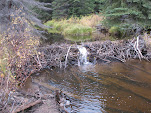
10/  Allow Beavers to Repopulate Every Stream Possible
Beavers have a number of effects with respect to carbon sequestration.
1) by raising the water table around their dams, Beavers increase the growth of all the vegetation.
2) by capturing the spent salmon after they have spawned, Beavers hold a valuable source of nutrients which came up from the sea.  These nutrients are cycled away from the dam in the droppings of all the animals that get some of their food from the beaver pond and its immediate surroundings.  Plant growth including forests is stimulated, sequestering more carbon.
3) by burying cellulostic material,  Beaver dams settle out silt from the water and capture 'bed-load'.  All the bits of cellulose and even their lodges and dams are eventually buried and become a deep carbon rich deposit.  When agricultural man found this rich bottom land, he drained it and mined it with his crops much as was done in the Hula.  The more Beaver dams we can allow to flourish, the more carbon we will remove from the atmosphere

11/ Protect Boreal forests
The tree line is moving northward with climate change.  This mimics what happened when the continental glaciers left the land.  Forests reestablished and much carbon was sequestered.  The forests are going to creep northward.  We must just let them do so without hindrance.

Final Note
Most of the systems above involve getting nutrients back into natural systems and then protecting them so that they can build up their biomasses and lock up carbon dioxide.  With a population that is already decreasing in many of the countries of the world and the means available to assist countries that haven't reached this favourable situation, we should soon be able to return land to nature*.  Most important, though, is that we cease to use fossil fuels.  Besides they are far to valuable to burn.

*See the TED talk by Monbiot  on re-wilding.

Sunday, March 10, 2013

The real strength of methane

Methane, (CH4) as everyone knows is a more powerful green house gas than CO2.  It is often quoted as being 20 times as powerful as carbon dioxide and often there is a further phrase in the sentence; namely "on a one hundred year basis".  What does this mean.

When methane is released into the atmosphere, it begins to react with oxygen (as OH) and turn into carbon dioxide.  The half life of methane has been variously estimated.  I will use the often quoted 7 years for illustration.  Put a kilogram of methane into the atmosphere today and in 7 years half of it will be left,  in 14 years a quarter.  In 21 years an eighth, in 28 years a sixteenth and so forth.  Over a hundred years, the warming that this kilogram of methane will contribute to the earth is a certain amount.  The exact amount is not important for this example since we just want to be able to compare methane and Carbon dioxide.

When Carbon dioxide is released into the atmosphere it is stable.  It is not broken down or combined with anything.  However, photosynthesis takes it up.  A figure I have heard quoted for the half life of a quantity of carbon dioxide released into the atmosphere is 100 years.  If you release a kg of Carbon dioxide into the atmosphere today, in 100 years, half of it will still be there.*

*If you have better figures for the half life of these two gases, plug them into the formula below and see what result you come up with.


If you are fluent in calculus you can do a better calculation than I will do below but the following calculation, while not exact, will be easier to follow.  It is a pretty good first approximation.

First off we need the formula for the amount of a gas left in the atmosphere.  It is:

At = A0 x 1/2t/h

Where:
At = the amount at time t
A0 = the amount at time 0 (when you released the gas)
t is the time in years that has elapsed since the release
h is the half life of the gas in the air in years
     note that t/h is the number of half lives that have passed.

Looking at methane first:
After the first 7 years, half a kg of methane is left from a kg released.  You start with 1, end with a half.  The average is (1 + 1/2)/2 = 3/4.  Do the second 7 year period.  It is (1/2 + 1/4)/2 = 3/8.  You see the way this is going.  The next few are 3/16, 3/32, 3/64 etc.  If I add up 14 of these which nearly makes up 100 years you come up with a number very close to 1.5.

Note I could have done one year intervals to find the total effect over 100 years when compared with the effect in the first year but as long as I use the same interval for Carbon dioxide, the relationship between the numbers remains almost the same. 
Online Graphing
Make a graph


The pink shaded area is a graphic representation of the amount of methane which causes global warming over a hundred year period following an initial release.

Now for Carbon dioxide
Using h as 100 years and t as seven years, for the first 7 year period, you start with 1kg and end with 0.9256kg.  Average 0.9763.  Continue for each 7 year period and add them up and you come to 9.621.

Online Graphing
Create a graph

The pink shading represents the amount of Carbon dioxide remaining after an initial release.  That large amount of Carbon dioxide has only 1/20th the green house gas effect as the small amount of Methane in the first graph


In numbers, despite a relative 6.414 (9.621/1.5) times as much Carbon dioxide in the atmosphere over the 100 year period as methane, from an initial release of a kg of each, methane still caused 20 times as much warming as the Carbon dioxide.

Since 6.414 X 20 = 128,  Methane,  is 128 times as potent a green house gas as carbon dioxide.  Note that I am simply reverse engineering what the scientist worked out for the relative effectiveness of these two gasses  They then calculated the true value based on the difference in their half lives.  I can't find the original work that says how effective a greenhouse gas each gas is.  Does anyone out there know where the original work is to be found.

So what does all this mean.  As long as methane is being released at a more or less constant rate, the X20 figure makes sense.  It reaches an equilibrium between  release into the atmosphere and oxidation and indeed the times 20 figure expresses the long term effect of the same amount of each gas released over a hundred year period.  Where this nice scenario breaks down is if the amount of methane being released is accelerating and it seems to be doing just that.

Massive methane seeps have been observed, especially over the vast Russian Arctic continental shelf where areas of bubbling of a km in diameter have been observed.  Methane is also coming out of the thawing permafrost.  Worse still, the amount of methane stored in these two locations plus deep sea methane is of the same order of magnitude with respect to the quantity of carbon contained, as all the carbon we have burnt so far plus all the reserves we know about.

I can't even imagine the implications of releasing just the Arctic methane over, say a decade,  with a potency kilogram for kilogram of more than 100 times that of carbon dioxide.  It would almost certainly cause enough warming to release a lot of the rest of the stored clathrates on, for instance, the ocean bottom.

It may be too late.  The only solution I can come up with is to sit on a chair, put your head between your knees and kiss your nether regions  good by.  I hope I am just being an alarmist and I have this all wrong.

Incidentally, as counter intuitive as it seems, if we could find a way to light most of the methane seeps and turn them into carbon dioxide, that would be a great help.


Three days later
I wish I could say I had got out my calculus books and worked out the integral but I didn't.  I found this most amazing site on the web.  You put in your formula and it does the integration for you.  I can't seem to get my blog to do mathematical notation.  If anyone knows how to do this, please let me know. The notation in the following paragraph is messy.
  Check it out.

The integral of A times (1/2)(t/h) is minus A times h times 2(-t/h) divided by log2.  Doing the calculation over 100 years for both Methane, using a half life of 7 years and Carbon dioxide, using a half life of 100 years, there is 7.14 as much CO2 in the air over that period, from the same initial release, as there is CH4.  In other words, with only 1/7.14 as much CH4 as carbon dioxide, the warming effect is 20 times as much.  The instantaneous heating effect is therefore 7.14 times 20 equals 143 and not 128 which I calculated using the interval method.

If you look at this site, the situation seems even more dire.  If you scroll down to the chart on radiative forcing you will see that for 2019, the radiative forcing of the amount of Carbon dioxide that was in the atmosphere then was 2.076W/m2.  Go the next column to the right and you will see that the radiative forcing of methane in 2019 was 0.516W/m2.  Now go to this site and you will see that in 2019, the concentration of CO2 was 409ppm while CH4 was 1860ppb (1.86ppm).
 
In other words, even though methane was only 1.86/409  = 1/220 (0.0045) as much as CO2. it has 2.076/.516 = 1/4 (0.25) as much radiative forcing as CO2.  Doing a crude calculation, if Methane was 4 times as concentrated; In other words 7.44ppm it would have the same radiative forcing as the 409ppm of CO2.  It would appear then that the relative strength of Methane is 409/7.44 = 55 times as strong as Carbon dioxide.    Whatever figure you take, the prospect of a sudden evolution of methane from any source is not something to be ignored.
 

ie.  If we had a serious evolution of methane from the bottom of the Russian Arctic continental shelf or from the permafrost of the northern regions, the warming in that year would be spectacular.*  If no more methane was released, the effect would half each 7 years but the likelihood is that a big increase of methane would trigger off more and more deposits to release their methane.  Since the methane deposits are said to be greater than all the fossil fuel we have used so far and since, in the short term, methane is so much more powerful than Carbon dioxide, we may just possibly be in a spot of bother fairly soon.

There is another possibility, unfortunately.  With the present rate of release of methane, the OH system seems to be able to keep up with oxidizing it and turning it into Carbon dioxide.  If, somehow, OH generation increased, presumably  the half life of methane would decrease.  Conversly if the concentration of OH decreased, the half life of Methane would increase.  I don't know how the chemistry works in this case but it seems possible that a huge evolution of methane might overcome the OH generation system and the half life of methane would shoot up. 

*  Note that the West Antarctic ice sheet is said to be in the process of disintegrating and there are some indications that methane may be trapped under the Antarctic Ice sheets.

Incidentally, this may be an explanation for the end of glacials such as occurred 11,500 years ago and periodically during this present ice age which is 2.5 million years old so far.  If methane clathrate collected under the continental ice sheets, from buried swamps and seeps from fossil fuel deposits, it would sit there ready to be released if the ice started to melt.  Since methane is so powerful, an amount only a hundredth as much as would be needed than if it was Carbon dioxide to start a run away green house melting.  We wouldn't see the methane in ice bubbles since it is rapidly oxidized to carbon dioxide   This may also be part of the explanation for the sudden rise in Carbon dioxide seen in ice bubbles during the end of the glacial.  Note that a top so called Firn layer of an ice sheet doesn't yet have closed bubbles and has some exchange of gas with the Atmosphere.  It is about 70 years deep.

There is another little wrinkle to this story.  Clathrates are a sort of permafrost.  The clathrate ice holds sediments together on the Continental shelves and slopes.  As the clathrate disintegrates, not only does this "glue" disappear but the evolving bubbles expand and make the sediment into sort of a fluidized bed.  Have a wee tremor and this porridge can start to collapse and flow down hill.  There are indications that land slides on other continental shelves have caused localized but very severe tsunamis.  One would suspect that the first place we might see such tsunamis would be in the Arctic where methane evolution from the bottom is accelerating.

As Pat Condell would say, raising two fingers.  "Peace"


Friday, December 14, 2012

Modeling the Whale Pump

Trying to model the whale pump will probably be horribly complex but for all of that, very worthwhile to do.  It could effect the fisheries of the world and the policies we adopt.  So what is the Whale Pump.

Many whales feed in deep water and defecate and excrete (pee) in surface waters.  They are pumping nutrients from deep dark waters into the photic zone where algae, utilizing the energy from the sun, can  rebuild these mineralized compounds back into energy rich fats, proteins etc.  Many whales also feed on the surface and equally, defecate on the surface, circulating nutrients to power the web of life.  I don't know where to start so I'll just plunge in, in the middle and see where we get to.

Let's suppose we are in the Antarctic and, for the sake of the argument, that the upwhelling that occurs there is bringing up all the nutrients needed.  Nutrients are not  limiting  primary production and hence not limiting secondary, tertiary etc. production.  A bunch of whales now add their nutrients to the photic zone.   We are already at the sun limit (all the primary production that the sun can power is already taking place) so primary production does not increase.  That is the "first approximation" but here comes the first wrinkle.

Some algae can use more complex molecules such as amino acids in addition to the fully mineralized nutrients such as nitrates, phosphates and all the other 'ates' they require.   In a previous blog, I discuss the detritus cycle. In the detritus cycle bacteria which secrete the enzyme, cellulase use the chemical energy from the cellulose rather than sun energy to build their bodies.  This forms the base of a food chain that is independent of sun light.  It is likely that the algae which can utilize amino acids and perhaps a range of other energy rich compounds also get at least part of their energy from these energy rich molecules.  Here we have a likely way around the limit to primary productivity set by the sun.  Whale poo is likely to be rich in such compounds.  Lets  look now at what primary productivity we could expect from whale poo in water which has less than adequate nutrients.

If you were to make a first approximation of the effect of Whale Poo, you might say that the amount of nutrient given out by the whales could support X amount of primary productivity (algae), 0.1X of secondary productivity (krill), and 0.01X of tertiary productivity (penguin)* and so on up the food chain.  However it is not that simple.  Each tropic layer, including the algae, is excreting into the water and providing nutrients for the sun to build back into more energetic compounds.  The actions of all these organisms act to lock nutrients in the surface sunlit waters and they are only slowly  lost to deep water.

*Note that about 10% of the substance (or energy if you like) from one tropic layer is transferred to the next layer.

So already, the situation is complicated.  How about when the whales migrate to oligotrophic (nutrient poor) waters.  A number of whale species migrate to the Gulf of California and other nutrient poor tropical waters to give birth to their young.  Once the Colorado river flowed into the head of this semi confined body of water.  It undoubtedly carried masses of nutrients in the form of dissolved and particulate material.  This flow has almost ceased as water extraction has increased for agriculture.  Into this sheltered water adult female whales migrate and give birth to their young. Even if the adults do not feed and therefore, do not defecate, they suckle their young and the young poop out nutrients.  If they are similar to most animals, 90% of the nutrients the young consume as milk are pooped out into the water.  Since whales are probably down to one or two percent of the population* that  existed at before the advent of whaling, you can imagine the reduction in nutrients and the potential if whales returned to their original abundance.  The Gulf of California is surrounded by desert.  It has a large number of sun hours and so the potential primary productivity is great if nutrients are made available**.

 *This site gives the population of Right Whales in 1997 compared with the historical estimates and includes the rate of growth of the population.  If you invert the growth rate and project it back to the end of industrial whaling, you realize that this species was very close to extinction when whaling ceased.

A well known migration of whales are the Humpbacks of the Southern ocean.  They migrate from the Antarctic to the warm waters of various south sea islands via New Zealand waters to give birth.  There is no food  for the adult females in the tropics (New Zealand Geographic, Jan-Feb 2013 p36) but they have gorged on two tons of krill a day over the Antarctic winter and now feed their young 200l of rich milk per day.  Nutrients are being shifted from Antarctic waters to tropical waters and as we have seen, these nutrients cycle around in surface sunlit waters only slowly being sequestered in deep water.  A little nutrient goes a long way in nutrient poor areas.  Imagine what sort of fisheries could result from whale populations restored to their former levels.

Hopefully, this sort of argument might convince the remaining few whaling countries to cease killing whales.  These same nations are also fishing nations and are reducing their own fish catches by killing whales.